


What's Involved in a Full Roof Inspection
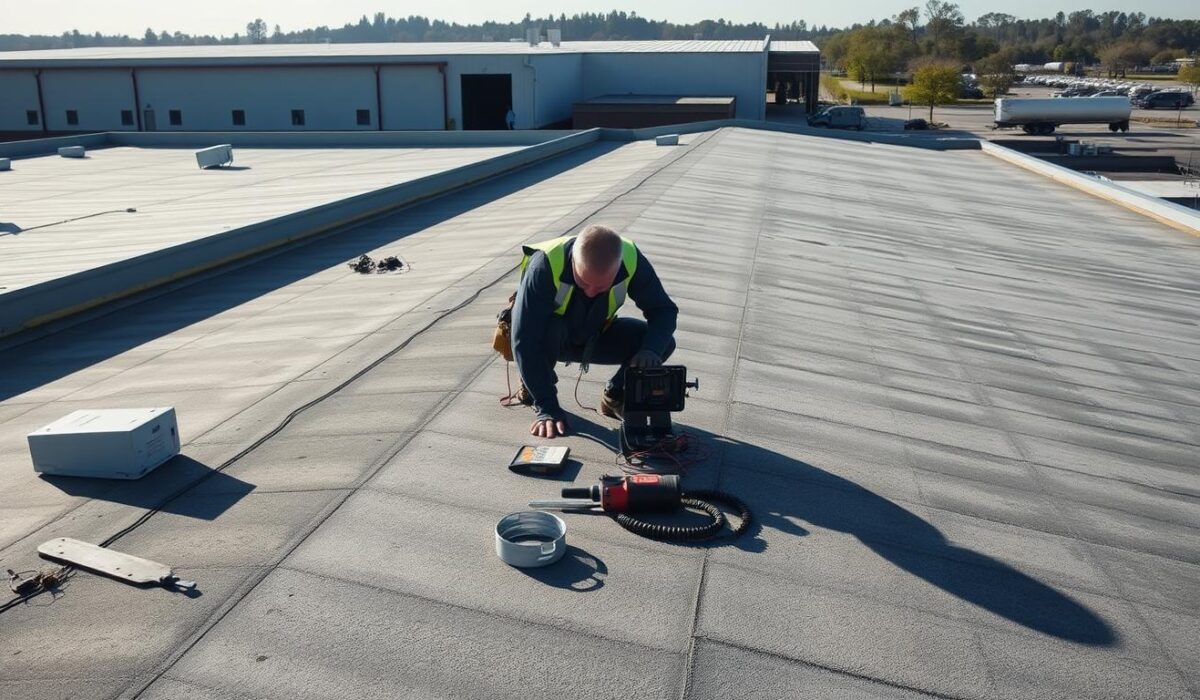

A full roof inspection is a systematic two-part evaluation of your roof's exterior and interior, performed to find damage, leaks, wear, and structural problems before they turn into failures. A standard inspection on a single-family home takes about 30 minutes to an hour, and covers five areas in sequence: the exterior surface and covering, the flashings and seals, the gutters and drainage, the structure and roof deck, and the interior and attic. Below we walk through each of those five areas in the order an inspector works through them, explain what counts as a failing condition, cover how tile, metal, and low-slope commercial roofs differ from the shingle roofs most checklists are written for, and lay out what belongs in the report you receive at the end.
Key Takeaways
- A full inspection is exterior and interior, because attic evidence is what confirms whether exterior damage has let water into the structure.
- The five areas are surface and covering, flashings and seals, gutters and drainage, structure and deck, and interior and attic.
- Expect 30 minutes to an hour on a standard home, and one to three hours on large, steep, or multi-section roofs according to the National Roof Certification and Inspection Association.
- Schedule a professional inspection at least once a year, and again after every named storm, with the National Roofing Contractors Association recommending twice-yearly checks in spring and fall.
- Tile roofs fail at the headlap and the fastener, metal roofs at the seam and the screw, and low-slope commercial roofs at seams, drains, and curb flashing.
- Florida Statute 627.7011 gives a roof 15 years or older the right to an inspection, and a finding of 5 or more years of remaining useful life blocks an age-based refusal to renew.
- A usable report carries elevation photographs, component findings, measurements, remaining useful life, and recommendations sorted into immediate, short-term, and long-term tiers.
What Is Included in a Full Roof Inspection?
A full roof inspection includes five areas worked in sequence: the exterior surface and covering, the flashings and seals at every penetration, the gutters and drainage path, the structure and roof deck, and the interior and attic space beneath the deck. Each area is examined on its own, then read against the others.
Sequence is what separates a full inspection from a look around. Exterior findings tell the inspector where to search inside, and interior findings confirm whether a breach has actually let water through. Water passing through a breach changes the recommendation entirely, because a cracked tile above a dry deck is a repair while the same tile above a stained deck is a leak with a history.
Roof type sets the detail of the sweep. Asphalt shingles, concrete and clay tile, standing seam metal, metal tile, and low-slope membrane each fail in a different way, so a competent inspector adjusts the checklist to the assembly in front of them. We inspect every covering we install across our roofing systems using a checklist matched to that assembly rather than one generic form.
What Do They Look For in a Roof Inspection?
In a roof inspection they look for damaged or displaced covering, granule loss, exposed or backed-out fasteners, corroded or lifted flashing, deteriorated pipe boots and sealant, blocked gutters and downspouts, sagging or soft decking, and water staining inside the attic. Every item on that list is a path for water to reach the structure.
The exterior sweep begins at the field of the roof and works toward the edges. Field condition shows the general age and wear of the covering, while the edges, valleys, and penetrations carry the most water volume and fail first. Penetrations are where the inspector slows down, because pipe boots, vent collars, skylight curbs, and chimney flashings account for a large share of the leaks found on otherwise sound roofs.
Drainage gets its own pass. Gutters are checked for blockages, separation, sagging hangers, and accumulated granules, and downspouts are checked for clear flow and proper discharge away from the foundation. Granules collecting in the trough are the clearest sign that an asphalt surface is wearing through, and fascia and soffit are examined at the same time for rot, staining, and pest entry.
Does a Roof Inspector Walk on the Roof?
A roof inspector walks on the roof whenever the pitch, covering, and condition allow it safely, because hands-on contact reveals soft decking and broken seals that no photograph shows. Soft decking in particular announces itself underfoot long before it shows from the ground.
Some assemblies get inspected without foot traffic. Concrete and clay tile crack under careless weight, very steep pitches exceed safe working angles, and storm-damaged decks can be unsound, so inspectors switch to edge access, drone imagery, or pole cameras in those cases. Drone imagery covers the surface thoroughly, though it does not replace the attic portion of the inspection.
What Do Inspectors Check on a Tile Roof?
On a tile roof, inspectors check cracked and broken tiles, slipped or lifted courses, broken headlap, fastener and clip condition, mortar at the hip and ridge, and the underlayment visible at any displaced tile. Tile roofs behave differently from shingle roofs because the tile is a shield and the underlayment is the actual waterproofing layer.
Headlap is the measurement that matters most. Headlap is the overlap between tile courses that keeps wind-driven rain from reaching the underlayment, and a tile can look perfectly intact while the course beneath it has shifted enough to break that overlap. Underlayment exposed by broken headlap degrades under heat and ultraviolet load, which is why a tile roof can fail quietly for years with no visible damage from the street.
Mortar and hip-and-ridge details carry their own inspection. Cracked or missing mortar at the ridge lets water enter at the highest point of the roof, where it then travels along the underlayment and surfaces somewhere else entirely. Tracing that path is exactly why the attic portion of the inspection exists, since unaddressed moisture damage spreads fastest in Florida humidity.
What Do Inspectors Check on a Metal Roof?
On a metal roof, inspectors check seam engagement, panel flatness, fastener seating and gasket condition, clip attachment, panel end laps, and the condition of the finish at cut edges and penetrations. Metal assemblies rarely fail across the field. They fail at the connections.
Fastener backout is the condition to catch early. Thermal cycling expands and contracts panels daily, and that movement gradually works exposed fasteners loose while compressing the neoprene washers underneath. A compressed or cracked washer leaves an open hole directly through the panel, which is a small defect with a direct path to the deck.
Standing seam assemblies add seam inspection to the list. A panel that lifted during a gust may reseat itself and look normal while leaving an elongated fastener hole and a strained clip behind, and strained clips reduce the uplift rating of the whole assembly. Our coverage of metal roofing explains how those assemblies are built and where the stress concentrates.
How Long Should a Roof Inspection Take?
A roof inspection should take about 30 minutes to an hour on a standard single-family home, and one to three hours on large, steep, or multi-section roofs, according to figures published by the National Roof Certification and Inspection Association. Size, pitch, and the number of penetrations set the pace.
Anything substantially faster is a drive-by. A fifteen-minute visit that never reaches the attic cannot produce the interior evidence that makes exterior findings meaningful, and the resulting report carries little weight with an insurer or a buyer.
Does a Roof Inspection Include the Attic?
Yes, a full roof inspection includes the attic, because the underside of the roof deck shows whether water has actually passed through the covering. Exterior damage establishes where to look, and attic evidence establishes what reached the structure.
Attic work starts with a flashlight and the daylight test. Pinpricks of daylight at joints, around penetrations, or along the ridge indicate openings in the assembly, and dark staining on the sheathing marks where water has repeatedly run. Repeated running leaves tide lines on rafters and trusses that an experienced inspector can read for frequency and duration.
Moisture measurement follows the visual check. Inspectors use moisture meters on sheathing, rafters, and insulation to confirm whether dampness is current or historical, and current dampness upgrades a finding from a note to an action item. Wet or compressed insulation also signals a ventilation problem rather than a simple leak, which is why the airflow check happens in the same visit.
How Do Inspectors Check Attic Ventilation?
Inspectors check attic ventilation by calculating net free area against the attic floor space and confirming the balance between intake vents at the soffit and exhaust vents at or near the ridge. Code provisions adopted in Florida call for a minimum of 1 square foot of net free ventilating area per 150 square feet of attic space, or per 300 square feet where a vapor retarder or a balanced intake and exhaust arrangement applies.
Balance matters as much as total area. Intake and exhaust work as a pair, so an attic with ample ridge venting and blocked soffit intake pulls air from the conditioned space below instead of from outside. Pulling conditioned air upward raises attic humidity, and sustained humidity shortens the service life of sheathing, fasteners, and the covering above it.
Blocked intake is a common and fixable finding. Insulation pushed into the soffit, painted-over vent screens, and debris packed behind the fascia all choke intake without being visible from the exterior.
What Will Fail a Roof Inspection?
A roof will fail an inspection for active leaks, soft or delaminated decking, missing or displaced covering, broken headlap on tile, corroded or separated flashing, backed-out fasteners, sagging rooflines, and widespread granule loss. The common thread is water reaching a layer that was never meant to get wet.
Findings are not equal in urgency. Sorted from most to least urgent, a typical set looks like this:
- Active water intrusion. Current dampness at the deck or a visible drip means immediate work, since every rain event compounds the damage.
- Structural findings. Soft decking, delaminated sheathing, rafter deflection, and sagging indicate the framing or the deck has already been compromised.
- Open assemblies. Missing covering, displaced tiles, lifted panels, or separated flashing leave the underlayment directly exposed.
- Penetration defects. Dry-rotted pipe boots, split collars, and failed curb seals are small, cheap, and responsible for a large share of leaks.
- Surface wear. Granule loss, finish chalking, and sealant shrinkage mark an aging assembly that needs planning rather than emergency work.
Planning is the whole point of catching items at the bottom of that list. A roof addressed at the surface-wear stage stays a maintenance item, while the same roof left alone until the structural stage becomes a replacement. The everyday warning signs homeowners notice from the ground usually correspond to findings already well up this list.
How to Tell When a Roof Is Bad
You can tell a roof is bad when leaks recur after repair, the roofline sags or dips, granules fill the gutters after every rain, multiple slopes show displaced covering, and the attic holds staining or damp insulation. One of those is a repair. Three or more together point to a system at the end of its service life.
Repeat repairs are the most reliable signal. Patching the same slope season after season costs more over time than a planned replacement, and each patch leaves a seam that becomes the next weak point. Weak points accumulate faster than they get fixed on an aging assembly, which is how a roof crosses from maintainable to failed.
What Are the Five Most Common Roofing Problems?
The five most common roofing problems are flashing failure, inadequate ventilation, surface wear and granule loss, drainage backup, and leaks at penetrations such as pipe boots, vents, and skylight curbs. Inspectors find these far more often than dramatic storm damage.
Flashing failure leads the list because flashing sits at every transition on the roof. Transitions at chimneys, walls, skylights, and valleys concentrate water, and the metal and sealant holding those joints are the components most exposed to thermal movement. Thermal movement cracks sealant beads long before it damages the covering itself.
Ventilation problems and drainage problems both work slowly. Poor airflow cooks the underside of the deck and shortens covering life from beneath, while blocked gutters back water up under the edge course and rot the fascia and deck edge. Both conditions are cheap to correct and expensive to ignore, and a roof's resistance to each depends partly on the assembly itself, which is why metal roof performance differs from asphalt in the same climate.
Storm damage sits alongside these everyday problems rather than replacing them. Wind and hail perils accounted for 51 percent of all United States property claims in the third quarter of 2025 according to Verisk, and the Insurance Information Institute estimates that roof damage represents 70 to 90 percent of insured residential catastrophe losses tied to hail events.
What's Involved in a Commercial Roof Inspection?
A commercial roof inspection involves examining the membrane field and seams, the drains and scuppers, the perimeter and parapet flashing, the curbs around rooftop equipment, every penetration, and the insulation beneath the membrane for trapped moisture. Low-slope assemblies drain slowly by design, so the inspection centers on water that sits rather than water that runs.
Seams carry the highest risk on a membrane roof. Heat-welded or adhered seams age, shrink, and separate at the edges, and a seam that opens a quarter of an inch admits water across the entire length of the lap. Lap failures often appear first at corners and at the base of curbs, where the membrane is stretched over a change in plane.
Rooftop equipment creates the second cluster of problems. Air handlers, exhaust fans, conduit supports, and antenna bases each penetrate or load the membrane, and service technicians walking between them wear paths into the surface. Buildings across South Florida carry heavy equipment loads and intense sun exposure at once. Our commercial roofing inspections therefore treat equipment curbs as a dedicated section rather than a footnote.
What Is Checked on a Flat or Low-Slope Roof?
On a flat or low-slope roof, inspectors check ponding water, membrane seams and laps, surface blisters and punctures, drain and scupper flow, parapet and edge metal, curb flashing, and the moisture content of the insulation layer. Ponding is the first thing noted because standing water magnifies every other defect.
Trapped moisture is the finding that visual inspection alone cannot produce. Water that enters a membrane defect spreads sideways through the insulation, far from the entry point, and stays there. Infrared scanning locates it by reading temperature differences after sunset, since saturated insulation holds heat longer than dry insulation and shows up as a warm signature on the scan. Core samples or moisture meter readings then confirm what the scan suggests.
How Often Should a Commercial Roof Be Inspected?
A commercial roof should be inspected at least twice a year, plus after any severe weather event, which matches the twice-yearly spring and fall schedule the National Roofing Contractors Association recommends. Larger assemblies and roofs carrying equipment justify the higher frequency.
Scheduled inspection also protects the warranty. Manufacturer guarantees on commercial membrane systems commonly require documented periodic inspection and maintenance, and a gap in that record can complicate a claim later. Documented records give a building owner a defensible maintenance history, which is worth far more than the inspection itself costs.
How Often Should You Get a Roof Inspection in Florida?
You should get a roof inspection in Florida at least once a year, again after every named storm, and once more before hurricane season begins. Annual inspection is the baseline the industry recommends nationally, and the storm schedule is what this climate adds on top of it.
Annual records do more than catch defects. A dated inspection history establishes the condition of the roof before any given storm, which is the evidence that separates new damage from long-term wear when something does happen. Separating the two is the single most contested point in any storm claim, and homeowners with a documented baseline start that conversation from a stronger position. Keeping a storm-ready roofing system under annual review is simply cheaper than reacting after the fact.
When Should You Get a Roof Inspected Outside the Annual Schedule?
You should get a roof inspected outside the annual schedule after any storm with high wind or hail, when buying or selling a home, when an insurer requests documentation, after any interior water stain appears, and before installing solar or other rooftop equipment. Each of those events changes what the roof is being asked to do.
Rooftop equipment deserves particular attention. Mounting hardware penetrates the covering, and a roof near the end of its life should be addressed before panels go on top of it rather than after. Addressing it first avoids removing and reinstalling equipment during a replacement later.
Can You Inspect Your Own Roof From the Ground?
Yes, you can inspect your own roof from the ground, and a ground-level check twice a year is a useful supplement to a professional inspection rather than a replacement for one. Binoculars from the yard reveal more than most homeowners expect.
Walk the full perimeter and look for displaced or missing covering, dark patches, debris accumulation, sagging lines, and granules collecting at the downspout outlet. Then step inside and check ceilings and the attic for staining, damp insulation, or daylight. Daylight visible from the attic is the one finding that warrants a call the same week rather than at the next scheduled visit. A simple roof audit from the ground takes fifteen minutes and tells you whether to wait or to call.
How Do You Choose a Qualified Roof Inspector?
You choose a qualified roof inspector by verifying the state license and insurance, confirming experience with your specific roof type, asking to see a sample report, and checking that the inspection covers the attic rather than the exterior alone. License verification takes a couple of minutes through the state licensing portal and settles most questions.
Specialization is the differentiator. A roof is a system of coverings, fasteners, flashings, underlayment, deck, and ventilation working together, and an inspector who works on these assemblies daily sees relationships between findings that a generalist records as separate items. Recording a backed-out fastener next to a stained rafter as one connected finding is what a specialist does differently.
Ask what happens after the inspection as well. An inspector who performs repairs should still be willing to document findings honestly, including the items that need nothing, and the written workmanship warranty behind any recommended work tells you how much confidence stands behind the assessment.
What Is the Difference Between a Roof Inspection and a Home Inspection?
The difference between a roof inspection and a home inspection is that a home inspection evaluates the whole property at a general level, while a roof inspection evaluates the roof assembly in depth. A home inspector typically views the roof from the ground or a ladder and notes obvious conditions.
Depth is what the specialized inspection adds. Component-level evaluation of fasteners, flashing laps, underlayment exposure, deck firmness, and ventilation balance produces findings a general walkthrough does not reach. Those findings are also what insurers, buyers, and manufacturers accept as documentation.
Do You Have to Be Present for a Roof Inspection?
You do not have to be present for a roof inspection, though being there helps, because the inspector can show you findings on the spot and answer questions while standing in front of the evidence. Attic access usually requires someone at the property anyway.
Being present also speeds up the decision afterward. Seeing a dry-rotted pipe boot or a stained rafter in person makes the written recommendation easier to act on than a line item in a report read a week later.
How Do You Prepare for a Roof Inspection?
Prepare for a roof inspection by clearing access and gathering the roof's paperwork, which lets the inspector spend the visit inspecting rather than moving obstacles. A short list covers it:
- Move vehicles from the driveway and clear patio furniture, grills, and planters from the perimeter so a ladder can be placed safely.
- Clear the path to the attic hatch or crawlspace and remove stored items blocking access.
- Secure pets indoors and away from the work area.
- Gather past repair invoices, the original permit, and any manufacturer warranty documents.
- Note where interior stains have appeared and when you first saw them.
- Trim branches overhanging the roof if they prevent safe access to a slope.
Permit records are worth digging out in particular. The permit tells the inspector when the roof was installed and which code edition governed it, and that detail affects both the remaining service life estimate and how any future repair gets scoped.
What Should a Roof Inspection Report Include?
A roof inspection report should include the property address and inspection date, a description of the roof system and its approximate age, photographs of every elevation, component-by-component findings tied to those photographs, measurements, an estimate of remaining useful life, and recommendations sorted by urgency. A pass-or-fail checklist with no photographs is not a report.
Prioritization is what makes the document usable. Findings sorted into immediate concerns, short-term work needed within six to twelve months, and long-term maintenance give a homeowner or building owner a sequence to budget against rather than a wall of problems. Sequencing also lets you handle the urgent item now and schedule the rest deliberately.
Remaining useful life deserves its own line. Insurers, buyers, and lenders all ask that question, and an inspector who states it with the reasoning behind it produces a document that travels well beyond your own file.
Does a Roof Inspection Affect Your Insurance?
Yes, a roof inspection affects your insurance, because Florida law uses inspection findings to decide whether an insurer can refuse coverage based on roof age, and documented mitigation features determine the windstorm discount applied to your premium. The inspection is the mechanism behind both rules.
Florida Statute 627.7011 sets the age rules. An insurer may not refuse to issue or renew a homeowner's policy on a roof less than 15 years old solely because of the age of the roof, and for a roof at least 15 years old the insurer must allow an inspection by an authorized inspector before requiring replacement as a condition of coverage. A finding of 5 or more years of remaining useful life blocks an age-based refusal outright.
Premium credits run on the same evidence. Florida Statute 627.0629 requires insurers to discount the windstorm portion of the premium for documented mitigation features, with credits running 10 to 45 percent depending on the combination documented on the inspection form. Features such as roof-to-wall connections, deck attachment, and secondary water resistance all get recorded during an inspection, and homes that pair those with full storm protection at every opening reach the upper end of the credit range.
What Happens After a Roof Inspection?
After a roof inspection, you receive the written report, decide which findings to act on first, schedule any repair work, pull a permit where the scope requires one, and set the date for the next inspection. The report is a plan rather than a verdict.
Repair scope decides the permitting path. Minor work such as replacing a pipe boot or resealing a flashing joint is routine maintenance, while larger repairs trigger inspection and documentation through the building department. Local permit requirements also differ from one county to the next, so the timeline shifts with the address.
Close the file properly when the work finishes. Keep the report, the photographs, the invoice, and the final inspection record together, because that package becomes the baseline the next inspection measures against. We handle the roof repair work and the paperwork together so the record stays complete rather than scattered across three sources.
Frequently Asked Questions
How Much Does a Typical Roof Inspection Cost?
A typical roof inspection costs between $125 and $571 nationally, with an average near $331, according to figures published by the National Roof Certification and Inspection Association, which also cites a narrower HomeAdvisor range of roughly $120 to $321. Roof size, pitch, accessibility, covering material, and the type of inspection requested all move the figure. Many contractors fold a basic assessment into a free estimate visit.
How Many Years Does a Roof Usually Last?
A roof usually lasts 15 to 30 years for asphalt shingles, 40 to 70 years for metal, and 50 years or more for concrete and clay tile when the underlayment is maintained. Service life depends more on ventilation, installation quality, and maintenance than on the covering alone. Roofs in coastal climates age faster because salt air, ultraviolet exposure, and heat cycling work on the assembly year round.
Do You Need an Inspection for a New Roof?
Yes, a new roof still benefits from inspection, both at the end of installation through the municipal final inspection and periodically afterward. Installation errors and material defects are not always visible from the ground, and catching them within the warranty period is far easier than arguing about them years later. An inspection on a new roof also establishes the baseline every future assessment compares against.
Can a Roof Inspection Be Done Right After a Storm?
A roof inspection can be done right after a storm once the roof is safe to access, and prompt inspection is the right move because fresh damage is easiest to document accurately. Inspectors wait for standing water to clear and for wind to drop before walking any surface. Photographs taken within the first 24 to 48 hours carry the clearest evidence of what the event caused.
Does a Roof Inspection Include the Gutters?
Yes, a roof inspection includes the gutters, downspouts, fascia, and soffit, because drainage is part of the roof system rather than an accessory to it. Inspectors check for blockages, separation, sagging hangers, and granule accumulation in the trough. Blocked gutters back water up under the edge course, which rots the deck edge and fascia from a problem that started as leaves.
The Bottom Line
A full roof inspection is five areas worked in sequence: the exterior surface and covering, the flashings and seals, the gutters and drainage, the structure and deck, and the interior and attic. Exterior findings tell the inspector where to look inside, and attic evidence settles whether water has actually reached the structure. Expect 30 minutes to an hour on a standard home, longer on a large or steep roof, and expect a report with elevation photographs, component findings, remaining useful life, and recommendations sorted by urgency.
Frequency is the part most homeowners underestimate. Once a year is the baseline, with another look after every named storm, and a documented history is what separates new damage from old when a claim or a renewal is on the line. Roof age, remaining useful life, and recorded mitigation features all run through that same inspection record.
We have been inspecting, repairing, and installing roofs across South Florida since 2006 with licensed, in-house crews, and we are glad to walk your roof and put the findings in writing. ASP SuperHome documents what we find whether or not it leads to work.
Reach out whenever you want a visit scheduled through our contact us page.
Meet With a Project Manager
Your first conversation is with a Project Manager who takes the time to understand your goals, walk you through your options, and stays connected throughout your project — from the initial consultation through the final walkthrough.
.avif)
.avif)
.avif)
%201.avif)
Insights & Resources
Stay informed with expert tips on roofing materials, hurricane codes, repairs, and South Florida construction standards.


%201.avif)
%201%20(1).avif)

%201.svg)
%201%20(1)%20(1).png)
.png.png)
.png%20(1).png)
.png%20(2).png)
.avif)
.avif)


.png)
.svg)
.png)