


Maximize storm protection with impact doors & windows
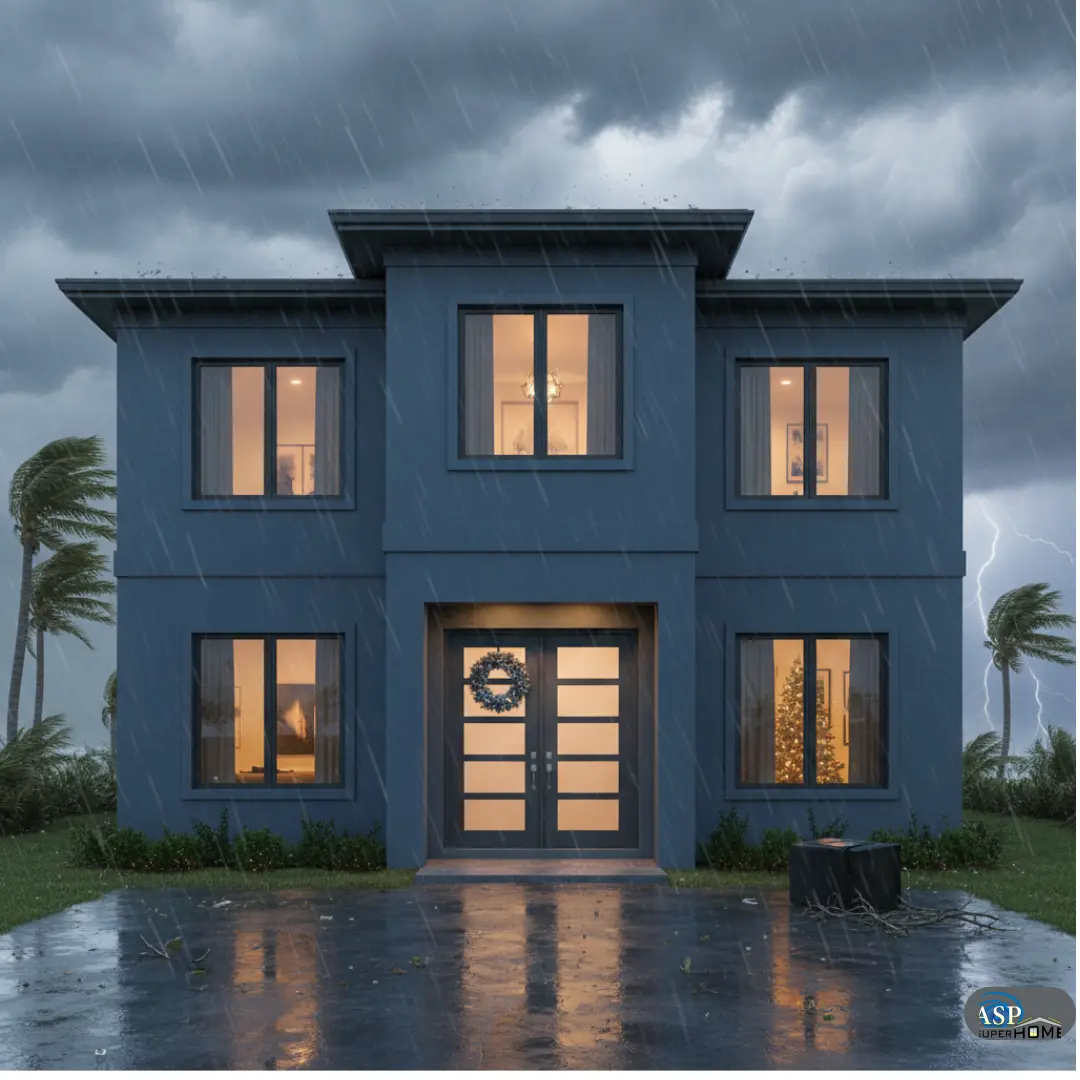
Maximizing storm protection with impact doors and windows requires installing certified products at all structural openings, achieving design pressure ratings of DP-40 or higher, ensuring continuous building envelope protection preventing internal pressurization, and maintaining proper installation with structural anchoring spaced 12 inches maximum around perimeters.

Maximizing storm protection with impact doors and windows requires installing certified products at all structural openings, achieving design pressure ratings of DP-40 or higher, ensuring continuous building envelope protection preventing internal pressurization, and maintaining proper installation with structural anchoring spaced 12 inches maximum around perimeters. According to the Insurance Institute for Business & Home Safety, homes with complete impact protection at windows AND doors suffer 85% less hurricane damage compared to properties protecting only windows or doors individually. Partial protection creates dangerous failure points where 140-180 mph winds exploit unprotected openings, increasing internal pressure by 20-30 PSF causing catastrophic roof uplift and structural collapse during Category 3-5 hurricanes.
South Florida homeowners in Miami, Fort Lauderdale, and Naples face annual hurricane threats requiring comprehensive protection strategies beyond individual component upgrades. Impact resistant windows protect against debris penetration and wind pressure, but unprotected doors create vulnerability points allowing wind infiltration that pressurizes building interiors. Understanding integrated protection systems, proper product selection matching design pressure requirements, professional installation standards, and maintenance protocols helps homeowners achieve maximum storm survival capabilities. This comprehensive guide explains how impact windows and doors in Miami work together creating unified building envelope protection exceeding individual component performance.
Storm Protection for Windows and Doors: Why Both Matter Equally
Storm protection for windows and doors requires equal attention because structural openings of any type create potential failure points during hurricanes, with unprotected doors accounting for 35-45% of envelope breaches according to FEMA post-hurricane damage assessments. Windows may cover larger total square footage, but doors experience higher concentrated wind pressures due to taller dimensions and larger individual openings. A standard 3x7 foot entry door contains 21 square feet exposed to wind forces, while typical 3x5 foot windows contain only 15 square feet, making doors 40% more vulnerable to pressure-related failures without proper impact protection.
Understanding Building Envelope Integrity
Building envelope integrity refers to the continuous protective barrier separating interior conditioned spaces from exterior environmental conditions. Florida Building Code Section 1609 requires all structural openings in High Velocity Hurricane Zones to resist wind-borne debris impact and design pressure loads simultaneously. Protecting windows while leaving doors unprotected creates discontinuous envelopes allowing wind infiltration during storms.
Wind infiltration through failed doors increases internal building pressure by 15-25 PSF within seconds of breach. This internal pressurization combines with external negative pressures on leeward walls and roof surfaces, creating 35-50 PSF total pressure differentials that lift roofs from wall attachments. The Insurance Institute for Business & Home Safety wind tunnel testing demonstrates that single unprotected door failures cause total roof losses on otherwise well-constructed homes during 140+ mph wind events.
Door Vulnerability Factors
Entry doors face unique vulnerability factors that windows don't experience. Double-door configurations create center mullion weak points where two door panels meet, requiring specialized astragal seals and flush bolts preventing separation. Single doors rely on deadbolt and strike plate connections transferring wind loads to door frames, creating concentrated stress points that fail under hurricane pressures without impact-rated reinforcement.
Sliding glass doors present maximum vulnerability due to large openings spanning 6-8 feet wide and 6.5-8 feet tall. These openings contain 40-64 square feet of exposed area experiencing wind pressures of 5,600-8,960 pounds during 140 mph hurricanes. Standard sliding door tracks and frame assemblies cannot resist these forces, requiring impact-rated systems with structural reinforcement and multi-point locking mechanisms. Homeowners installing sliding glass doors in Fort Lauderdale must specify impact ratings matching or exceeding window protection levels.
Coordinated Protection Requirements
Miami-Dade County Building Code requires all products protecting structural openings to achieve minimum DP-30 design pressure ratings in inland areas and DP-40 to DP-50 ratings within 1 mile of coastlines. Mismatched protection levels where windows achieve DP-50 ratings while doors provide only DP-30 protection create system-wide vulnerabilities as wind exploits weakest openings first.
Professional storm protection strategies specify consistent design pressure ratings across all opening types, ensuring uniform resistance throughout building envelopes. A home with DP-50 impact windows should install DP-50 impact doors maintaining equivalent protection levels. This coordination prevents progressive failure scenarios where individual component breaches cascade into total structural failures during sustained hurricane exposures lasting 6-12 hours as storms pass overhead.
How to Install Hurricane Impact Windows and Doors for Maximum Protection
Installing hurricane impact windows and doors for maximum protection requires structural anchoring with #10 or larger screws penetrating framing members minimum 1-1/2 inches, fastener spacing at 12-inch maximum intervals around entire perimeters, multi-layer weatherproofing with self-adhering flashing and sealants meeting ASTM C920 standards, and professional installation by licensed contractors following manufacturer specifications and Florida Building Code Section 1626 requirements. According to ASTM E2068 installation standards, proper structural attachment accounts for 60-70% of total hurricane resistance, making installation quality equally important as product selection for achieving design pressure ratings.
Pre-Installation Structural Assessment
Professional installations begin with comprehensive structural assessments evaluating rough opening conditions, framing member sizes and spacing, wall construction types, and existing damage requiring repair before new product installation. Concrete block walls common in South Florida provide excellent structural support when block cells contain grout and rebar reinforcement. Wood frame construction requires solid lumber framing members minimum 2x6 dimensions supporting impact-rated product attachments.
Older homes built before 1992 Hurricane Andrew frequently lack adequate framing reinforcement, requiring structural upgrades adding king studs, jack studs, and headers meeting current load requirements. Engineers calculate wind loads based on building height, exposure category, and design wind speeds, specifying reinforcement details ensuring framing supports impact product anchoring. These structural corrections add $500-1,500 per opening but prove essential for achieving certified protection levels.
Impact Window Installation Steps
Impact window installation follows systematic processes ensuring proper fit, structural attachment, and weatherproofing. Installers remove existing windows carefully preserving surrounding finishes, inspect and repair rough openings addressing deteriorated materials, apply self-adhering flashing tape to perimeter creating primary water barriers, and position new window units using temporary shims achieving plumb and level within 1/16 inch tolerances.
Structural anchoring proceeds through pre-drilled holes in window frames using corrosion-resistant screws penetrating framing minimum 1-1/2 inches. Fastener placement maintains 12-inch maximum spacing with additional reinforcement at corners and mid-spans on large units. After securing frames, installers apply closed-cell foam backer rod in gaps between frames and rough openings, then seal with polyurethane or silicone sealants tooled smooth shedding water away from joints.
Interior and exterior trim installation conceals rough opening edges while protecting weatherproofing materials from UV degradation. Proper trim details include sealing all joints between trim and adjacent surfaces preventing water infiltration behind wall systems. Final operation testing verifies smooth function and complete locking engagement before project completion. Homeowners installing impact windows in Naples should verify contractor licensing and insurance before authorizing installations.
Impact Door Installation Requirements
Impact door installations require enhanced structural reinforcement compared to window installations due to larger openings and higher concentrated loads. Door frames typically measure 3-4 inches deep versus 2-3 inches for windows, requiring additional rough opening preparation ensuring adequate wall thickness accommodates frame depths. Concrete block walls need reinforced block cells at door jamb locations providing solid anchoring substrates.
Entry door installations use continuous hinge reinforcement along full height of hinge jambs distributing loads uniformly across multiple attachment points. Strike plates mount to solid wood blocking or steel reinforcement plates preventing lock-side jamb failures under wind pressure. Multi-point locking systems engage at 3-5 locations around door perimeters, requiring precise alignment during installation ensuring simultaneous engagement at all lock points.
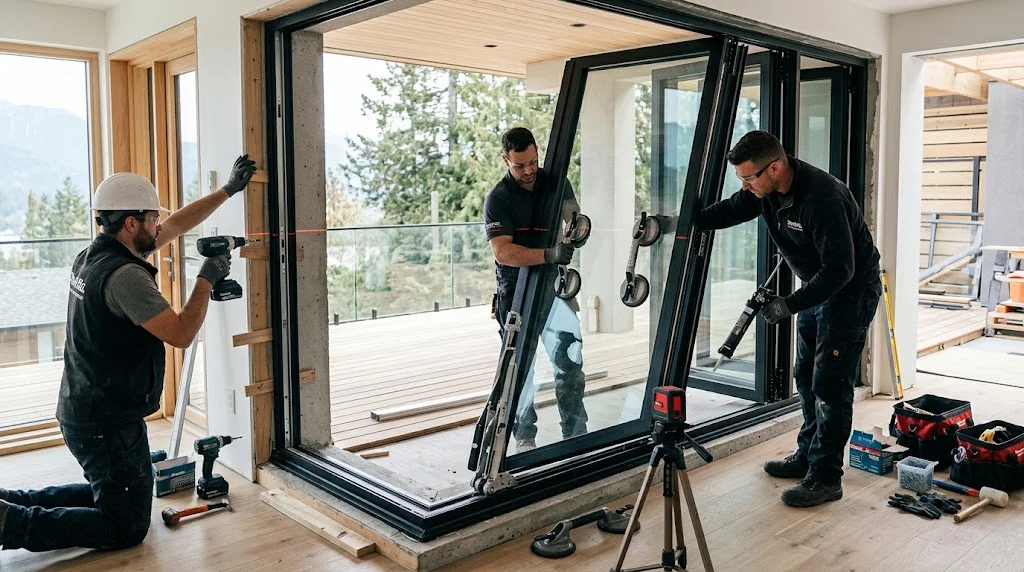
Sliding glass door installations present unique challenges due to 6-8 foot wide openings and 200-400 pound door panel weights. Heavy-duty aluminum track systems anchor to structural framing at 12-inch intervals using 1/4-inch diameter lag screws or concrete anchors. Multi-panel sliders require tandem rollers supporting panel weights and anti-lift blocks preventing wind uplift. Professional installers use specialized equipment including suction cups and panel carts safely positioning large glass units preventing damage during handling.
Weatherproofing and Seal Integration
Complete weatherproofing systems integrate multiple barrier layers preventing water infiltration during wind-driven rain events delivering 8+ inches precipitation hourly. Primary barriers include self-adhering flashing tapes extending 4-6 inches beyond rough opening perimeters lapping over drainage planes behind exterior cladding. Secondary barriers use sealant beads at frame-to-wall interfaces creating redundant water stops.
Compression weatherstripping on operable windows and doors provides tertiary sealing when units close against frames. High-quality EPDM or silicone weatherstripping maintains compression force for 10-15 years before requiring replacement. Door bottom sweeps and threshold seals complete weatherproofing at lower transitions where water accumulation concentrates during storms. Proper drainage detailing ensures water reaching rough openings drains to building exteriors rather than infiltrating wall cavities.
Professional installations include water testing using garden hoses simulating wind-driven rain conditions. Installers spray water at window and door perimeters for 5-10 minutes while observers check interior surfaces for moisture penetration. Failed tests require additional sealing before project acceptance. This quality verification ensures installations meet ASTM E547 water penetration standards protecting homes during actual hurricane conditions.
What Design Pressure Ratings Do You Need for Complete Protection?
Complete protection requires design pressure ratings of DP-40 minimum for inland South Florida locations, DP-50 for properties within 1-2 miles of coastlines, and DP-60 to DP-70 for beachfront properties experiencing maximum wind exposure and salt spray conditions. Design pressure ratings indicate tested performance under positive and negative pressure cycles equivalent to specific wind speeds, with DP-40 supporting 140 mph, DP-50 supporting 150 mph, DP-60 supporting 170 mph, and DP-70 supporting 180+ mph sustained winds according to ASTM E330 testing protocols. The Insurance Institute for Business & Home Safety recommends selecting ratings exceeding minimum code requirements by 10-20% providing safety margins accounting for localized wind acceleration around building corners and roof edges.
Geographic Location Requirements
Miami-Dade and Broward counties classify as High Velocity Hurricane Zone requiring all products to achieve Miami-Dade NOA certification with minimum DP-40 ratings inland and DP-50 ratings within coastal exposure zones. Monroe County including the Florida Keys mandates DP-50 minimum throughout due to extreme hurricane exposure and limited evacuation options. Palm Beach County requires DP-40 minimum with DP-50 recommended for coastal properties.
Building elevation affects required design pressure ratings significantly. Ground-level single-story homes experience baseline wind pressures, while second-story openings face 15-20% higher pressures due to increased exposure above surrounding structures and vegetation. Third-story and higher openings require DP ratings 25-35% above baseline accounting for exponential wind speed increases with elevation. Professional wind load calculations using ASCE 7 standards determine exact requirements for specific properties and opening locations.
Building Exposure Category Impact
ASCE 7 defines exposure categories determining wind pressure calculations based on surrounding terrain features. Exposure B includes urban and suburban areas with numerous closely-spaced obstructions providing wind sheltering. Exposure C covers open terrain with scattered obstructions including coastal areas and flat inland regions. Exposure D applies to flat unobstructed coastal areas experiencing extreme wind conditions.
Properties in Exposure C require 20-30% higher design pressure ratings than Exposure B locations at equivalent distances from coastlines. Exposure D properties need 35-50% higher ratings due to lack of upwind sheltering reducing wind speeds. A home 5 miles inland in suburban Miami (Exposure B) might require DP-40 ratings, while a comparable home 5 miles inland in flat agricultural areas (Exposure C) needs DP-50 ratings achieving equivalent protection levels.
Product Selection Matching Requirements
Impact window and door manufacturers clearly specify design pressure ratings in product literature and NOA certifications. PGT Winguard products achieve DP-30 through DP-70 ratings depending on specific models and sizes. CGI Sentinel series achieves DP-40 through DP-80 ratings for high-performance applications. Andersen A-Series impact products achieve DP-50 through DP-70 ratings targeting premium residential markets.
Homeowners should verify actual tested ratings rather than relying on generic product line ratings, as performance varies significantly with unit sizes. A 3x5 foot window might achieve DP-60 rating while a 6x8 foot unit from the same product line achieves only DP-40 due to increased area and deflection under pressure. Professional contractors reference specific NOA certificates confirming ratings for exact sizes and configurations being installed. Installing metal roofing in West Palm Beach alongside impact windows and doors creates comprehensive building envelope protection maximizing insurance discounts.
How Do Multi-Point Locking Systems Enhance Door Protection?
Multi-point locking systems enhance door protection by engaging 3-7 locking points simultaneously around door perimeters distributing wind loads across multiple structural connections rather than concentrating forces at single deadbolt locations. According to door manufacturer testing, multi-point systems provide 300-500% greater resistance to forced entry and wind pressure compared to single-point deadbolt locks. These systems engage top, middle, and bottom locking points with single handle operation, preventing door bowing and maintaining weatherseal compression during hurricane-force winds. Impact-rated doors with multi-point locking achieve design pressure ratings 20-40% higher than equivalent doors using standard locking hardware.
Multi-Point System Design Features
Multi-point locking systems incorporate vertical drive rods connecting multiple locking bolts to single operating handles or key cylinders. Activating handles simultaneously extends bolts at top, middle, and bottom locations engaging strike plates mounted in door frames. Premium systems include additional mid-panel bolts and corner engagement points creating 5-7 total connection points securing doors to frames.
Locking bolts typically measure 3/4 to 1 inch diameter fabricated from hardened steel resisting wind pressure and forced entry attempts. Bolt throw distances of 3/4 to 1-1/4 inches ensure deep engagement into strike plates even if door frames deflect slightly under pressure. Strike plates mount using 3-inch structural screws penetrating solid wood blocking or reinforcement plates within wall framing, transferring loads to structural systems rather than surface-mounted trim.
Wind Pressure Load Distribution
Single-point deadbolt locks concentrate all wind pressure loads at lock-side jamb centers creating 1,000-2,000 pound concentrated forces during hurricane conditions. Door frames and jambs deflect under these concentrated loads, allowing doors to bow inward reducing weatherseal effectiveness and potentially causing complete lock failures. Multi-point systems distribute equivalent loads across 3-7 locations reducing individual connection forces to 150-400 pounds, well within structural capacity of properly anchored frames.
Load distribution prevents door panel bowing maintaining constant weatherstrip compression around entire perimeters. This consistent sealing prevents water infiltration and maintains building envelope integrity during sustained wind exposures. ASTM E331 water penetration testing demonstrates multi-point locked doors resist 3-4 times greater water infiltration rates compared to single-point systems when tested at equivalent wind pressures.
Operation and Maintenance Requirements
Multi-point locking systems require proper adjustment maintaining simultaneous engagement at all locking points. Misaligned systems where some bolts engage while others miss strike plates compromise overall door protection. Professional installers use precision shimming and adjustment procedures ensuring all bolts engage within 1/32 inch simultaneously when handles activate.
Annual maintenance includes lubricating drive rods and locking bolts using silicone-based spray lubricants, testing all engagement points verifying complete activation, adjusting strike plate positions if engagement becomes difficult, and tightening mounting screws preventing hardware loosening. Binding or stiff operation indicates adjustment needs or worn components requiring professional service. Homeowners installing impact windows in Doral should ensure coordinating impact doors include multi-point locking systems providing equivalent protection levels.
What Maintenance Do Impact Windows and Doors Need?
Impact windows and doors need quarterly glass cleaning with ammonia-free cleaners, annual sealant inspections checking for cracks or separation, biannual hardware lubrication using silicone spray, monthly weatherstripping checks during first year, and five-year comprehensive evaluations including structural attachment verification costing $400-600. Properly maintained systems provide 20-30 year service lives with minimal component replacements. Coastal properties require more frequent maintenance due to salt air corrosion affecting hardware and weatherstripping. Deferred maintenance reduces design pressure performance by 15-30% as weatherseals deteriorate and hardware loosens, compromising building envelope integrity during storms.
Cleaning and Inspection Schedules
Impact window and door glass requires gentle cleaning preserving Low-E coatings and laminated interlayer bonds. Use ammonia-free glass cleaners or mild soap solutions applied with soft microfiber cloths avoiding abrasive materials scratching protective coatings. Clean glass quarterly maintaining visibility and detecting chips or cracks requiring professional evaluation. Interior and exterior glass surfaces need separate cleaning addressing different contamination types.
Frame cleaning requirements vary by material. Vinyl frames clean easily using household detergents without special treatments. Aluminum frames benefit from automotive wax applications twice yearly providing additional corrosion protection in coastal environments. Fiberglass frames require only soap and water maintaining appearance without painting. Clean weatherstripping channels and tracks removing dirt and debris that interferes with proper sealing and operation.
Sealant and Weatherstripping Maintenance
Annual sealant inspections identify deterioration before failures cause water damage during storms. Examine exterior sealant beads checking for continuous coverage without gaps, adhesion to both frame and wall surfaces, flexibility maintaining rubber-like consistency, and absence of cracks exceeding 1/8 inch requiring repair. UV exposure and thermal cycling degrade sealants over 7-10 year periods in South Florida requiring proactive replacement.
Weatherstripping compression seals deteriorate from repeated operation and UV exposure over 10-15 year periods. Inspect weatherstripping annually checking for compression set where materials no longer spring back after closure, tears or separation from frames, hardening or cracking from age, and gaps allowing visible light penetration when doors close. Replace deteriorated weatherstripping maintaining airtight seals and water resistance. Professional maintenance services cost $150-300 annually providing comprehensive inspections and minor repairs.
Hardware Operation and Lubrication
Impact door hardware requires biannual lubrication preventing corrosion and maintaining smooth operation. Apply silicone spray lubricants to hinges, multi-point lock mechanisms, handle assemblies, and roller assemblies on sliding doors. Operate doors through full range of motion distributing lubricant evenly through moving parts. Wipe excess lubricant preventing dirt accumulation on exposed surfaces.
Test all locking points monthly ensuring complete engagement. Multi-point systems should engage all bolts simultaneously without forcing. Binding or incomplete engagement indicates adjustment needs or worn components. Sliding door rollers wear over time causing difficult operation and incomplete closure. Professional technicians adjust rollers maintaining proper door height and smooth travel along tracks. Replace worn rollers every 8-12 years maintaining optimal operation.
Long-Term Component Replacement
Impact window and door components require replacement at predictable intervals maintaining design pressure performance. Weatherstripping lasts 10-15 years before compression set or material degradation necessitates replacement costing $8-15 per linear foot installed. Hardware components including handles, locks, and hinges last 15-20 years before wear requires replacement costing $150-400 per door depending on system complexity.
Sealant replacement every 7-10 years maintains waterproofing integrity costing $150-300 per window or door. Glass seal failures allowing condensation between panes occur after 15-20 years requiring insulated glass unit replacement costing $200-500 per window depending on size and specifications. Planning these maintenance investments prevents emergency repairs and maintains continuous storm protection. Homeowners with residential solar panels in Fort Myers should coordinate window, door, and roof maintenance maximizing service visit efficiency.
How Do Impact Windows and Doors Reduce Insurance Costs?
Impact windows and doors reduce insurance costs by 15-55% on windstorm coverage portions representing 40-60% of total premiums through wind mitigation credits, with typical $5,000 annual premiums decreasing to $3,500-4,250 saving $750-1,500 yearly according to Insurance Information Institute data. Complete opening protection covering 100% of windows and doors qualifies for maximum discounts, while partial protection receives proportionally reduced credits. Miami-Dade NOA certified products provide highest discount levels, with Florida Product Approval rated systems receiving 5-10% lower credits. Combined with roof upgrades and secondary water resistance features, comprehensive protection achieves 35-55% total premium reductions worth $1,750-2,750 annually on typical South Florida policies.
Wind Mitigation Credit Structure
Florida insurance companies follow standardized wind mitigation credit schedules established by the Office of Insurance Regulation. Opening protection credits range from 15-45% depending on protection type and coverage percentages. Homes protecting 100% of openings with impact-rated products receive maximum 40-45% credits. Properties protecting 90-99% receive 30-35% credits, while 75-89% coverage earns 20-25% credits.
Protection type affects credit levels significantly. Impact-rated windows and doors receive highest credits because they provide permanent protection without deployment requirements. Hurricane shutters receive 5-10% lower credits due to deployment needs and potential failure from improper installation before storms. Combination protection using impact products on some openings and shutters on others receives blended credits based on coverage percentages and types.
Wind Mitigation Inspection Process
Form OIR-B1-1802 wind mitigation inspections document specific hurricane protection features determining insurance premium credits. Licensed inspectors verify opening protection types, roof covering materials, roof-to-wall connection methods, roof deck attachment types, and secondary water resistance presence. Inspectors photograph each opening type and note NOA certification numbers or Florida Product Approval numbers proving code compliance.
Inspection reports remain valid until property modifications occur affecting rated features. Installing impact windows and doors requires updated inspections documenting new protection levels. Inspections cost $75-150 but generate $750-2,750 annual savings throughout ownership periods. Submit completed inspection reports to insurance carriers requesting premium recalculations effective at next policy renewal dates. Most carriers process wind mitigation updates within 30-60 days applying retroactive credits from inspection dates.
Cumulative Savings Over Ownership Periods
Insurance savings accumulate substantially over 20-30 year window and door lifespans. A homeowner saving $1,200 annually from opening protection credits accumulates $24,000 over 20 years, often exceeding complete installation costs. Base premium increases of 4-6% annually compound savings as percentage discounts apply to larger premium bases. Year 10 annual savings reach $1,700 and year 20 savings exceed $2,400 assuming continued premium inflation.
These savings calculations exclude additional benefits from avoided deductibles and damage repairs during actual hurricane events. IBHS studies confirm properly protected homes experience 70-85% less damage than unprotected comparable properties during equivalent storm exposures. Avoided damage costs including $10,000-25,000 typical deductibles and $5,000-15,000 uninsured losses from business interruption and temporary housing substantially enhance total financial benefits beyond premium savings alone.
Conclusion
Maximizing storm protection with impact doors and windows requires comprehensive building envelope strategies installing certified products at all structural openings, achieving consistent design pressure ratings of DP-40 or higher throughout properties, ensuring professional installation with proper structural anchoring and weatherproofing, and maintaining systems through regular inspections and component replacements. Complete protection systems reduce hurricane damage by 70-85% compared to partial protection while generating insurance premium savings of 15-55% worth $750-2,750 annually. Strategic homeowners coordinate window and door installations with roof upgrades creating integrated protection systems qualifying for maximum insurance discounts and providing superior storm survival capabilities.
Contact ASP SuperHome at (786) 933-9815 to schedule your comprehensive storm protection consultation today. Our certified installers (CGC1513274) serve Miami, Fort Lauderdale, Naples, West Palm Beach, Doral, and Fort Myers with complete impact window and door solutions achieving maximum hurricane protection and insurance savings. We provide Miami-Dade NOA-approved systems, professional installation following Florida Building Code requirements, manufacturer warranties spanning 10-20 years, and over 19 years of South Florida experience protecting 10,000+ homes. Visit our Doral showroom at 3400 NW 114th Ave to review complete storm protection systems, receive wind load calculations for your specific property, and discuss integrated solutions including metal roofing and solar panels maximizing both protection and property values.
Meet With a Project Manager
Your first conversation is with a Project Manager who takes the time to understand your goals, walk you through your options, and stays connected throughout your project — from the initial consultation through the final walkthrough.
.avif)
.avif)
.avif)
%201.avif)
Insights & Resources
Stay informed with expert tips on roofing materials, hurricane codes, repairs, and South Florida construction standards.


%201.avif)
%201%20(1).avif)
%201.svg)
%201%20(1)%20(1).png)
.png.png)
.png%20(1).png)
.png%20(2).png)
.avif)
.avif)


.png)
.svg)
.png)