


Metal Roof Miami: Top Choice for 2026 Home Renovations (Updated)
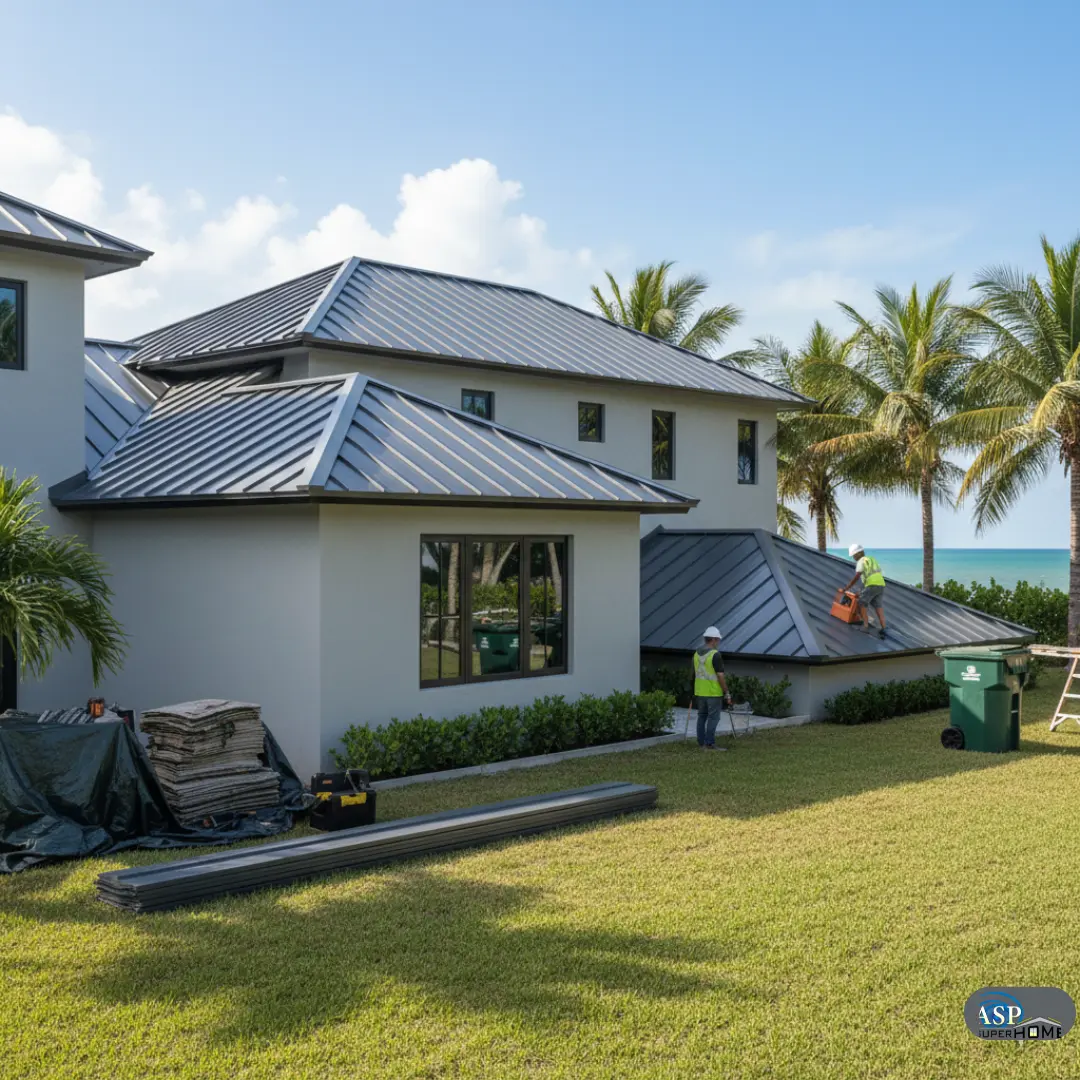
Metal roofs are the top choice for 2026 Miami home renovations because they withstand 140-180 mph hurricane winds, last 40-70 years versus 12-18 years for asphalt shingles, reduce cooling costs by 20-40% through solar heat reflection, and qualify for 10-35% insurance premium discounts according to Insurance Information Institute data.

Metal roofs are the top choice for 2026 Miami home renovations because they withstand 140-180 mph hurricane winds, last 40-70 years versus 12-18 years for asphalt shingles, reduce cooling costs by 20-40% through solar heat reflection, and qualify for 10-35% insurance premium discounts according to Insurance Information Institute data. Miami-Dade County Building Code requires all roofing products to achieve Miami-Dade NOA certification with wind uplift ratings of 180-240 PSF, standards that metal roofing systems consistently exceed while providing superior corrosion resistance essential for coastal salt air exposure. South Florida homeowners investing $18,000-35,000 in metal roof installations achieve 60-85% ROI at resale while generating $1,200-2,400 annual savings through reduced insurance premiums and energy costs.
Miami's 2026 renovation market prioritizes climate-resilient materials responding to increasing hurricane intensity, insurance market pressures, and energy efficiency mandates. Metal roofing installations in Miami grew 35-45% annually since 2022 according to Florida Building Commission permit data, reflecting homeowner recognition that upfront premium costs deliver superior long-term value compared to traditional materials requiring replacement every 15-20 years. Understanding metal roofing material options, installation requirements, energy performance specifications, and maintenance needs helps homeowners maximize returns from metal roof installation in Miami projects. This comprehensive guide explains why metal roofing dominates Miami's 2026 renovation priorities and how homeowners achieve maximum benefits from strategic material selection and professional installation.
Why Metal Roofing Dominates Miami's 2026 Renovation Market
Metal roofing dominates Miami's 2026 renovation market because it addresses three critical homeowner concerns simultaneously: hurricane protection requirements mandated by Florida Building Code Section 1504, insurance premium reduction opportunities averaging 15-30%, and energy efficiency improvements decreasing cooling costs by 20-40% in subtropical climates. According to National Roofing Contractors Association data, metal roofing market share in South Florida increased from 18% in 2020 to 42% in 2025, representing 135% growth driven by superior performance during Hurricanes Ian, Idalia, and other recent major storms demonstrating catastrophic failures of traditional asphalt shingle systems.
Hurricane Performance Driving Material Selection
Hurricane Ian in 2022 caused $113 billion damages with 80% of insurance claims involving roof failures according to FEMA disaster assessments. Post-storm damage surveys revealed that properly installed metal roofs maintained structural integrity during 155 mph sustained winds while asphalt shingles failed catastrophically at 90-120 mph. These performance differences convince Miami homeowners that metal roofing represents essential hurricane protection rather than optional upgrades.
Miami-Dade County requires all roofing products to pass large missile impact testing simulating 9-pound 2x4 lumber projectiles traveling 50 feet per second, cyclic pressure testing with 9,000 pressure cycles, and wind uplift testing confirming 180-240 PSF resistance. Standing seam metal roofing systems achieve these certifications through concealed fastener designs eliminating exposed screw penetrations that create leak points and structural weak spots on screw-down metal systems.
Insurance Market Pressures Accelerating Adoption
Florida property insurance premiums increased 42% from 2021-2024 according to Insurance Information Institute reports, with average Miami homeowners paying $5,000-8,000 annually for coverage. Insurance companies reduce premiums 10-35% for homes with certified metal roofing due to proven loss prevention during hurricanes. A home with $6,000 annual premiums saves $600-2,100 yearly after metal roof installation, recovering substantial portions of installation costs through ongoing insurance savings.
Citizens Property Insurance Corporation, Florida's insurer of last resort, provides enhanced wind mitigation credits for metal roofing installations documented through Form OIR-B1-1802 inspections. These credits combine with opening protection credits from impact windows creating total premium reductions of 35-55% for comprehensively protected homes. Homeowners installing standing seam metal roofs in Doral maximize insurance benefits while ensuring long-term hurricane protection.
Energy Efficiency Mandates and Cost Pressures
Miami-Dade County adopted Energy Conservation Code amendments requiring minimum Solar Reflectance Index values of 29 for steep-slope roofing products installed after 2024. Metal roofing with cool roof coatings achieves SRI values of 70-85, far exceeding minimum requirements while providing maximum cooling cost reductions. The Department of Energy confirms that reflective metal roofing reduces attic temperatures by 30-50 degrees compared to dark asphalt shingles, decreasing air conditioning loads by 20-40%.
Florida electricity rates averaging $0.12-0.14 per kWh increased 3.2% annually over past decade. A 2,500 square foot home consuming 24,000 kWh yearly with 50% for cooling saves 2,400-4,800 kWh annually after metal roof installation, translating to $288-672 yearly savings. Combined with insurance premium reductions, total annual savings of $900-2,800 provide compelling financial incentives driving metal roofing adoption in Miami's 2026 renovation market.
What Metal Roofing Materials Work Best in Miami's Climate?
The best metal roofing materials for Miami's climate are aluminum for coastal properties within 2 miles of saltwater offering superior corrosion resistance, Galvalume steel coated with 55% aluminum for inland locations providing optimal strength-to-cost ratios, and zinc or copper for premium architectural applications requiring 50-100 year lifespans with natural patina finishes. According to Metal Construction Association standards, aluminum roofing maintains structural integrity in salt air environments for 50+ years while steel products require protective coatings and periodic maintenance preventing rust formation. Material selection significantly impacts long-term performance, maintenance requirements, and total ownership costs in South Florida's demanding coastal climate.
Aluminum Roofing for Coastal Applications
Aluminum roofing provides maximum corrosion resistance for Miami properties experiencing salt air exposure. The metal forms protective aluminum oxide surface layers preventing rust formation even in direct saltwater contact. Coastal homes in Miami Beach, Key Biscayne, and Surfside benefit most from aluminum's performance characteristics maintaining appearance and structural integrity throughout 50-70 year lifespans.
Aluminum's lightweight properties at 40-60 pounds per square reduce structural loading on roof framing compared to 100-150 pounds per square for steel systems. This weight advantage proves particularly valuable for older homes with undersized framing members unable to support heavier roofing materials. However, aluminum costs $12-18 per square foot installed versus $9-14 for steel, representing 30-40% price premiums justified by superior coastal performance.
Galvalume Steel for Inland Properties
Galvalume steel coated with 55% aluminum-zinc alloy provides excellent corrosion resistance at moderate costs for inland Miami properties beyond direct salt spray zones. The coating protects underlying steel from moisture and oxygen exposure preventing rust formation for 30-50 years when properly maintained with periodic recoating. Galvalume achieves superior strength compared to aluminum, supporting longer panel spans with less visible deflection.
Steel roofing costs $9-14 per square foot installed, making it most economical option for budget-conscious homeowners prioritizing performance over maximum longevity. Properties in Kendall, Hialeah, and western Miami-Dade County achieve excellent value from Galvalume installations lasting 40-50 years with proper maintenance. Steel's higher thermal conductivity requires enhanced insulation strategies maximizing energy efficiency compared to aluminum installations.
Premium Materials for Architectural Applications
Zinc and copper roofing provide 50-100 year lifespans with distinctive patina finishes appealing to luxury homeowners prioritizing aesthetics and ultimate longevity. Copper develops rich green patina over 10-20 years while zinc creates attractive gray-blue patination. These premium materials cost $18-28 per square foot installed, limiting applications to high-end residential and architectural projects in Coral Gables, Coconut Grove, and Pinecrest neighborhoods.
Stone-coated steel combines steel structural performance with aesthetic profiles mimicking traditional tile or shake roofing. Granular coatings provide texture and color variety while protecting steel substrates. These hybrid systems cost $11-16 per square foot installed, positioning between standard metal and premium materials. Stone-coated products appeal to homeowners in historic districts or HOA communities restricting exposed metal roofing aesthetics. Installing tile roof alternatives in Fort Lauderdale using stone-coated metal provides traditional appearance with modern performance.
How Do Standing Seam Metal Roofs Perform in Hurricanes?
Standing seam metal roofs perform exceptionally in hurricanes by achieving wind uplift resistance of 180-240 PSF through concealed clip fastening systems allowing thermal expansion while maintaining structural attachment, eliminating exposed screw penetrations creating leak points during wind-driven rain, and utilizing continuous panel interlocking preventing wind infiltration under roofing materials. According to Insurance Institute for Business & Home Safety wind tunnel testing, standing seam metal roofs maintain complete integrity during simulated Category 5 hurricane conditions with 180+ mph winds while screw-down metal systems experience fastener backing-out and panel uplift beginning at 130-140 mph. Miami-Dade NOA certified standing seam systems provide superior hurricane protection justifying 15-25% cost premiums over screw-down alternatives.
Concealed Fastener Advantages
Standing seam systems use hidden clips attaching roof panels to structural decking without exposing fasteners to weather. Clips incorporate sliding mechanisms allowing 1-2 inches thermal expansion and contraction as metal temperatures fluctuate 80-120 degrees between night and day in Miami's climate. This expansion accommodation prevents stress concentration at fastening points that causes screw-down system failures during temperature cycling.
Concealed fasteners eliminate 2,000-3,000 exposed screw penetrations typical on screw-down metal roofs. Each exposed fastener creates potential leak points as rubber washers deteriorate from UV exposure over 5-10 years. Standing seam installations avoid these maintenance requirements and leak risks throughout 40-70 year service lives. The Insurance Institute for Business & Home Safety confirms that properly installed standing seam systems experience 90% fewer leak claims compared to screw-down alternatives during 10-year periods.
Panel Interlock Performance
Standing seam panels interlock along longitudinal seams creating continuous weather barriers spanning entire roof lengths from eave to ridge. Male and female panel edges crimp together during installation forming mechanical locks resisting separation under wind uplift pressures. These interlocks achieve wind resistance ratings 40-60% higher than individual panel strengths through load distribution across multiple connected panels.
Vertical panel orientation with raised seams channels water downslope preventing ponding and lateral water migration that penetrates horizontal seam systems. This drainage efficiency proves critical during hurricane rainfall delivering 8-15 inches precipitation in 6-12 hour periods. Proper panel installation with 1:12 or greater slopes ensures complete water shedding without infiltration even during sustained wind-driven rain exposure.
Installation Quality Requirements
Standing seam performance depends entirely on proper installation following manufacturer specifications and Miami-Dade NOA requirements. Panel clips must attach to structural decking using approved fasteners at specified spacing, typically 12-18 inches on center. Inadequate fastening reduces wind uplift resistance by 30-50%, negating system advantages. Professional installers understand these critical requirements ensuring installations achieve certified performance levels.
Seam crimping requires specialized equipment creating consistent mechanical locks throughout panel lengths. Hand-formed seams or improper crimping tools produce inconsistent locks with 40-60% reduced wind resistance. Licensed contractors invest in proper seaming equipment and installer training programs offered by manufacturers like Metal Sales, McElroy Metal, and Pac-Clad ensuring quality installations. Homeowners installing metal roofing in Naples should verify contractor equipment and manufacturer certifications before authorizing installations.
What Cool Roof Coatings Maximize Miami Energy Savings?
Cool roof coatings maximizing Miami energy savings include Kynar 500 PVDF resin systems achieving Solar Reflectance Index values of 80-85, polyester-based coatings providing SRI values of 60-75 at lower costs, and specialty silicone coatings for re-coating applications restoring aged metal roof reflectivity to like-new performance levels. According to Cool Roof Rating Council testing standards, light-colored metal roofing with PVDF coatings reflects 70-75% of solar radiation while absorbing only 25-30%, maintaining roof surface temperatures within 10-15 degrees of ambient air versus 60-80 degree temperature rises on dark asphalt shingles. Proper coating selection reduces cooling costs by 20-40% while extending metal roofing service life by preventing UV degradation of underlying metal substrates and paint systems.
PVDF Resin Coating Performance
Kynar 500 and Hylar 5000 PVDF resin coatings represent premium options providing maximum solar reflectance, color retention, and weathering resistance. These fluoropolymer coatings maintain reflectivity for 30-40 years without chalking or fading that degrades performance in inferior products. PVDF coatings cost $1.50-2.50 per square foot additional but deliver superior long-term value through sustained energy savings and appearance retention.
Energy Star certification requires metal roofing products to achieve minimum initial solar reflectance of 0.25 and aged reflectance of 0.15 after three years weathering exposure. PVDF coatings exceed these minimums achieving initial reflectance of 0.65-0.75 and aged reflectance of 0.55-0.65, maintaining high performance throughout service lives. This sustained reflectivity provides consistent energy savings while inferior coatings lose 30-50% effectiveness within 10-15 years.
Color Selection Impact on Performance
Light colors including white, light gray, and beige achieve maximum solar reflectance of 70-80% while dark colors including bronze, charcoal, and forest green reflect only 30-40% of solar radiation. This reflectance difference translates to 15-25 degree roof surface temperature variations affecting attic heat gain and cooling loads. Homeowners prioritizing energy efficiency should select lightest colors compatible with aesthetic preferences and HOA requirements.
Cool color technology allows darker appearance while maintaining enhanced reflectivity through infrared-reflective pigments. Cool dark colors achieve 45-55% total solar reflectance versus 30-40% for standard dark pigments, providing 10-15 degree cooler surface temperatures. These specialty coatings cost $0.50-1.00 per square foot additional but enable dark roof aesthetics with improved energy performance. Properties in historic districts or luxury neighborhoods benefit from cool color technology maintaining architectural compatibility while maximizing efficiency.
Re-Coating for Aged Metal Roofs
Existing metal roofs experiencing coating degradation after 20-30 years benefit from re-coating applications restoring reflectivity and appearance without complete roof replacement. Silicone roof coatings applied over cleaned and prepared metal surfaces achieve 0.80-0.85 solar reflectance, exceeding new roof performance. Re-coating costs $3-6 per square foot versus $12-18 for complete replacement, providing cost-effective performance restoration.
Acrylic and elastomeric coatings offer lower-cost re-coating alternatives at $2-4 per square foot with 10-15 year service lives before requiring reapplication. These products work well for budget-conscious homeowners extending roof lifespans 10-20 years beyond original coating warranties. Professional roof coating contractors prepare surfaces through power washing and minor repairs ensuring proper coating adhesion and performance. Homeowners with metal roofs in West Palm Beach should consider re-coating when coatings show visible chalking or color fading indicating performance degradation.
How Much Do Metal Roofs Cost for Miami Homes in 2026?
Metal roofs cost $12-18 per square foot installed for standard 26-gauge steel standing seam systems, $15-22 per square foot for aluminum standing seam installations, and $18-28 per square foot for premium copper or zinc applications on typical Miami homes. A 2,000 square foot home requires approximately 2,200 square feet of roofing including overhangs and waste factors, totaling $26,400-39,600 for steel, $33,000-48,400 for aluminum, and $39,600-61,600 for premium materials. According to Remodeling Magazine's 2025 Cost vs Value Report, metal roofing installations in Miami return 60-85% of costs at resale while generating $1,200-2,400 annual savings through reduced insurance premiums and energy costs, achieving total payback periods of 12-18 years for long-term homeowners.
Material Cost Components
Metal roofing material costs range from $3-8 per square foot depending on metal type, coating quality, and gauge thickness. Standard 26-gauge Galvalume steel costs $3-4.50 per square foot, while 24-gauge aluminum costs $5-7 per square foot, and premium copper costs $12-18 per square foot. Thicker gauge materials provide enhanced dent resistance and longer lifespans justifying 20-30% cost premiums for homes in areas with frequent hail or debris exposure.
Accessories including ridge caps, valley flashing, drip edges, and trim pieces add $1.50-3.00 per square foot to material costs. Standing seam clip systems cost $0.75-1.25 per square foot additional compared to screw-down fastening. Underlayment requirements including synthetic materials or self-adhering ice and water shield add $0.50-1.50 per square foot. Complete material packages total $6-12 per square foot for standard installations and $10-20 for premium systems.
Labor and Installation Costs
Professional metal roofing installation labor costs $6-10 per square foot depending on roof complexity, height, and accessibility. Simple gable roofs with minimal valleys and penetrations install at lower rates while complex hip roofs with multiple dormers, skylights, and chimneys require premium pricing. Second-story and three-story installations add 15-30% labor costs for safety equipment and material handling logistics.
Removal and disposal of existing roofing materials adds $1.50-3.00 per square foot to total project costs. One-layer asphalt shingle removal proves straightforward while multiple-layer tear-offs or concrete tile removal increases costs 50-100% due to additional labor and disposal fees. Some metal roofing installations proceed over existing shingles using batten systems, eliminating tear-off costs but adding $2-4 per square foot for batten materials and installation.
Additional Project Costs
Building permits cost $200-600 for residential metal roofing projects in Miami-Dade County depending on project scope and home value. Engineering calculations required for older homes or complex roof geometries add $400-800 to total costs. Structural modifications including rafter reinforcement for heavier roofing materials or inadequate framing add $2,000-6,000 depending on extent of required work.
Roof decking replacement for deteriorated plywood or OSB panels adds $3-6 per square foot to project costs. Professional inspectors identify decking issues during tear-off requiring immediate repair before metal installation proceeds. Budgeting 10-15% contingency allowances covers unforeseen conditions discovered during construction. Homeowners should obtain detailed written estimates specifying all cost components before authorizing installations. Installing residential solar panels in Miami on metal roofs provides additional benefits with coordinated installations reducing total project costs.
What Maintenance Do Metal Roofs Need in Miami?
Metal roofs need annual inspections checking fastener tightness and sealant condition, biannual cleaning removing debris and organic growth, immediate repair of scratches or coating damage preventing corrosion, and re-coating every 20-30 years restoring protective finishes and reflectivity. Properly maintained metal roofs provide 40-70 year service lives with minimal component replacement costs averaging $200-400 annually including professional inspections and minor repairs. Coastal properties require more frequent maintenance addressing salt accumulation and accelerated corrosion compared to inland locations. Deferred maintenance reduces service life by 30-50% as minor issues progress into expensive structural repairs requiring panel replacement.
Annual Inspection Requirements
Professional roof inspections identify potential issues before they cause damage or leaks. Inspectors examine fastener tightness on screw-down systems checking for loose screws or deteriorated rubber washers, verify standing seam clip integrity and panel interlock security, inspect sealant conditions at penetrations including vents, chimneys, and skylights, and identify coating damage from fallen branches or hail impacts requiring immediate repair.
Inspections cost $150-300 annually providing documentation supporting warranty claims and insurance coverage. Inspectors photograph identified issues creating repair priority lists and cost estimates. Addressing minor problems during inspections prevents expensive emergency repairs during hurricane season. Professional inspections should occur during January-March allowing repair completion before summer storm season begins.
Cleaning and Debris Removal
Metal roofs require cleaning twice yearly removing accumulated dirt, pollen, leaves, and organic growth that retain moisture accelerating corrosion. Pressure washing using low-pressure settings (800-1,200 PSI) removes surface contaminants without damaging coatings. Higher pressures strip protective finishes requiring premature re-coating. Professional cleaning services cost $200-400 for typical residential roofs.
Moss and algae growth occurs in shaded roof areas experiencing limited direct sunlight and airflow. Organic growth retains moisture against metal surfaces promoting corrosion beneath coatings. Zinc or copper strips installed along roof ridges prevent organic growth through metal ion runoff inhibiting biological activity. These strips cost $2-4 per linear foot installed providing 5-10 years maintenance reduction benefits.
Fastener and Seal Maintenance
Screw-down metal roofing systems require fastener inspections every 3-5 years checking for loose screws or deteriorated rubber washers. Exposed fasteners experience thermal cycling loosening connections over time. Tightening loose fasteners prevents water infiltration and wind uplift vulnerabilities. Severely deteriorated washers require replacement using oversize washers covering original penetration holes.
Sealant applications at roof penetrations, valleys, and flashing transitions require inspection and renewal every 5-10 years. UV exposure and thermal cycling degrade sealants causing cracking and adhesion loss. Remove failed sealant completely, clean surfaces, and apply fresh polyurethane or silicone products meeting ASTM C920 standards. Professional sealant renewal costs $200-500 depending on extent of required work. Homeowners with metal roofs in Fort Myers should schedule maintenance before hurricane season ensuring maximum storm protection.
Conclusion
Metal roofs represent the top choice for Miami's 2026 home renovations because they provide 140-180 mph hurricane wind resistance, 40-70 year service lives, 20-40% cooling cost reductions, and 10-35% insurance premium savings totaling $1,200-2,400 annually. Standing seam metal roofing systems with concealed fasteners achieve superior hurricane performance compared to screw-down alternatives while eliminating exposed penetration leak risks. Aluminum materials provide maximum corrosion resistance for coastal properties while Galvalume steel offers optimal value for inland locations. Cool roof coatings with PVDF resins maximize energy efficiency through sustained high reflectivity throughout decades-long service lives.
Contact ASP SuperHome at (786) 933-9815 to schedule your metal roofing consultation today. Our certified installers (CGC1513274) serve Miami, Fort Lauderdale, Naples, West Palm Beach, Doral, and Fort Myers with Miami-Dade NOA-approved metal roofing systems providing maximum hurricane protection and energy efficiency. We offer standing seam and architectural metal roofing options, cool roof coating selections, manufacturer warranties spanning 20-50 years, flexible $0 down PACE financing, and over 19 years of South Florida installation experience protecting 10,000+ homes. Visit our Doral showroom at 3400 NW 114th Ave to review metal roofing samples, discuss material and coating options, and receive customized installation proposals including insurance savings projections and energy efficiency calculations for your specific property.
Meet With a Project Manager
Your first conversation is with a Project Manager who takes the time to understand your goals, walk you through your options, and stays connected throughout your project — from the initial consultation through the final walkthrough.
.avif)
.avif)
.avif)
%201.avif)
Insights & Resources
Stay informed with expert tips on roofing materials, hurricane codes, repairs, and South Florida construction standards.


%201.avif)
%201%20(1).avif)
%201.svg)
%201%20(1)%20(1).png)
.png.png)
.png%20(1).png)
.png%20(2).png)
.avif)
.avif)


.png)
.svg)
.png)