


What Causes Leaks after Roof Window Installation
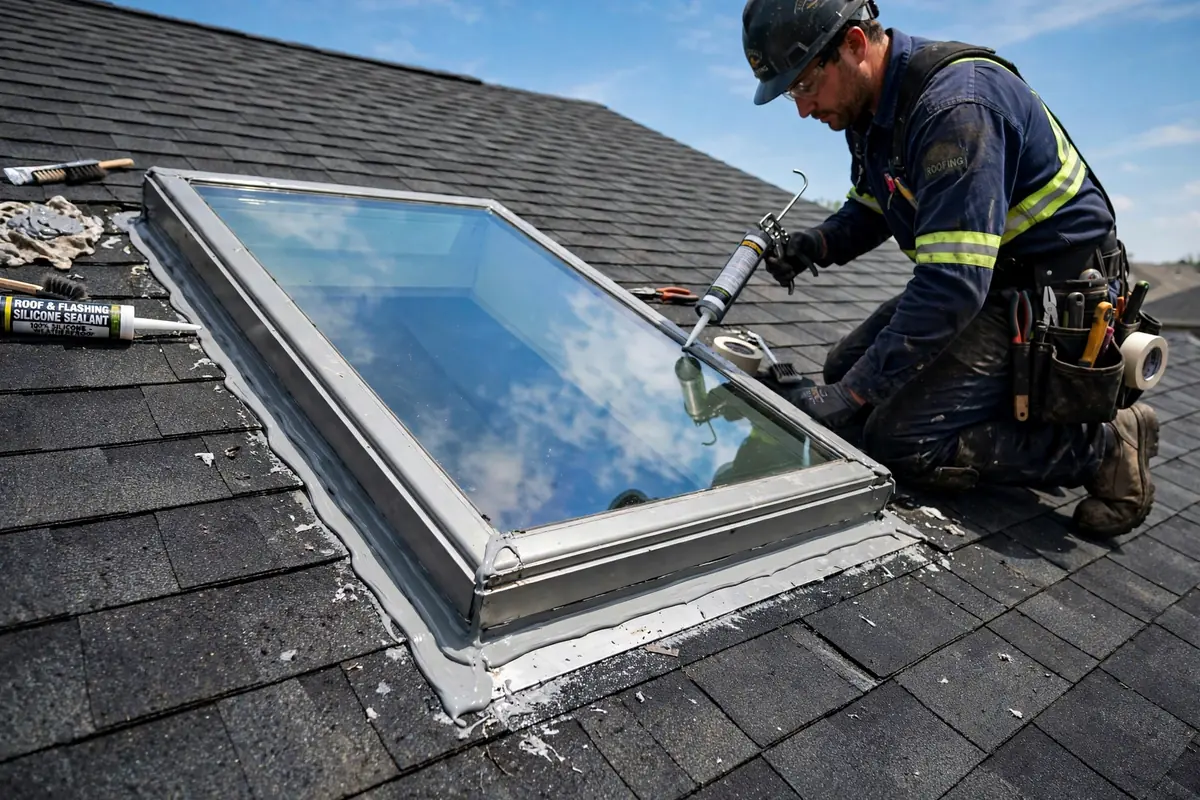

Leaks after a roof window or skylight installation are almost always caused by improper flashing, installation errors, or degraded seals, not by the window unit itself. The most common causes, in order, are flashing installed incorrectly or layered backwards, underlayment that was torn or never tied into the roof deck, nails driven through the flashing apron or placed where they puncture the waterproof layer, a roof pitch too shallow for the model installed, sealant used in place of proper mechanical flashing, clogged weep holes and drainage channels, condensation misdiagnosed as a leak, and old flashing reused during a reroof. Below we walk through each cause, show how to tell a real leak from condensation, explain how the flashing assembly differs on tile and metal roofs, and lay out how to trace water back to its actual entry point.
Key Takeaways
- The unit is rarely the problem. A properly mounted and flashed roof window can last 20 to 30 years without leaking, and manufacturer leak warranties commonly run 10 years or longer.
- Flashing is the single largest cause, and site-made flashing that relies on caulk at the corners can fail within 5 to 10 years while a manufacturer kit matched to the unit does not.
- Water entering at the lower edge points to the glass-to-frame seal, while water at the top or sides points to flashing or to a problem higher up the roof.
- The point where water enters and the point where it appears indoors are usually different, because water travels along the deck until it finds a gap.
- In this climate, summer condensation forms when humid outside air meets glass and metal chilled by air conditioning, which is the reverse of the winter condensation most guides describe.
- Reroofing is the most common trigger for a previously dry unit to start leaking, which is why manufacturers recommend replacing units older than 10 years during a roof replacement rather than resetting them.
- Old flashing should never be reused on a new roof, since old nail holes and compressed gaskets leak even under fresh sealant.
What Causes a Skylight to Leak After Installation?
A skylight leaks after installation because of flashing installed incorrectly, underlayment left out or damaged, nails placed where they breach the waterproof layer, a roof pitch too shallow for the model, sealant substituted for mechanical flashing, blocked weep holes, condensation mistaken for a leak, or old flashing reused during a reroof. Each one is a workmanship or detailing failure at the roof, not a defect in the glass.
Ranked by how often they turn up, the causes sort out like this:
- Improper flashing installation. The metal that seals the gap between the unit and the roof was installed in the wrong order, layered backwards, or missing its step-flashing pieces.
- Missing or damaged underlayment. The waterproof membrane around the opening was torn, left out, or never tied into the roof deck.
- Nailing mistakes. Nails driven through the top flashing apron, or placed in spots the manufacturer marks as off limits, punch straight through the water barrier.
- Incorrect roof pitch. The unit was installed on a slope too flat for that model, so water pools against the frame instead of draining away.
- Deteriorated or inadequate sealant. The installer leaned on roof cement or caulk rather than layered mechanical flashing, and the sealant has since shrunk and cracked.
- Clogged weep holes and drainage channels. The internal channels that carry away condensation and wind-driven water are packed with leaves, dust, or construction debris.
- Condensation misdiagnosed as a leak. Humid air meeting a cold glass or metal surface drips in a pattern that looks exactly like water intrusion.
- Reused flashing during a reroof. An existing unit was kept through a reroof, and old nail holes and degraded gaskets were covered with fresh sealant instead of replaced.
Age of the installation narrows the list quickly. Water appearing within the first few rain events after the work points at the first five causes, while water appearing years later points at sealant, gaskets, and drainage. Drainage and sealant problems also develop quietly, which is why the first step is always confirming that water is actually coming from outside.
How Do You Know If It's a Leak or Condensation?
You know it's condensation rather than a leak when water appears on the inside surface of the glass or frame, shows up without rain, forms in a thin even film rather than running from one point, and worsens after showers, cooking, or on humid days. A true leak tracks rainfall and runs from a specific location.
Condensation works differently here than in most published guidance. Northern guides describe warm indoor air meeting cold glass in winter, while across South Florida the common case runs in reverse: humid outside air meets glass and metal framing chilled by air conditioning, and moisture condenses on surfaces inside the opening through the warm months. Warm months are therefore peak condensation season in this market, not the coldest weeks of the year.
Attic ventilation shapes how much of it forms. Code-based calculations call for 1 square foot of net free ventilating area per 150 square feet of attic space, or per 300 square feet where a vapor retarder or balanced intake and exhaust applies, and an attic running short of that figure holds humid air against the underside of the deck and around every penetration.
Why Is My Roof Leaking Even Though It's Not Raining?
Your roof leaks when it is not raining because the water is condensation, meltwater, irrigation spray, or stored water released slowly from saturated insulation after an earlier rain. Saturated insulation is the one homeowners rarely consider.
Water that entered days ago can sit in insulation or in a low spot on the deck and release gradually, appearing on a clear afternoon with no obvious cause. Clear-day drips also follow sprinkler schedules more often than people expect, since irrigation heads aimed at a wall can push water behind trim and flashing just as rain does.
What Are Weep Holes on a Skylight?
Weep holes on a skylight are small drainage openings in the frame that carry away condensation and the small amount of water that gets past the outer seal. They are a designed part of the assembly rather than a defect.
Blocked weep holes turn a working drainage path into a reservoir. Leaves, pine needles, dust, and construction debris left behind after installation pack the channels, water backs up inside the frame, and the overflow runs into the room looking exactly like a failed seal. Clearing the channels gently with a soft brush or low-pressure air resolves a surprising share of reported leaks.
Why Is My Roof Window Leaking?
Your roof window is leaking at the glass-to-frame seal if water appears along the lower edge, and at the flashing or somewhere higher on the roof if water appears at the top or along the sides. Location is the fastest diagnostic available without getting on the roof.
Entry point and appearance point are rarely the same place. Water that gets under the covering travels along the deck and the framing until it reaches a gap, a seam, or a fastener, and that first opening is where it drips into the room. A drip at the bottom corner of a frame can easily originate several feet upslope, which is why chasing the stain instead of the path leads to repairs that change nothing.
Interior staining patterns help as well. A ring that grows with every rain indicates an active path, while a dry, discolored stain that never changes usually marks a leak that was already corrected. Corrected leaks still leave evidence, so the age of a stain matters as much as its size.
Why Does My Roof Leak Sometimes and Not Others?
Your roof leaks sometimes and not others because wind direction, rain intensity, and duration decide whether water gets pushed under a lap that sheds ordinary rainfall just fine. Vertical rain runs off. Pressurized rain travels sideways and upward.
Wind-driven rain is the mechanism behind most intermittent leaks in this region. Sustained pressure against one elevation forces water up under flashing legs and headlaps that were installed slightly short, and the same assembly stays dry in a calm shower from any other direction. Direction-dependent leaks are a strong signal that a lap is marginal rather than failed, which is why homes built for full storm protection get detailed to higher overlaps at every opening.
Where Are the Most Common Places for Roof Leaks to Occur?
The most common places for roof leaks to occur are penetrations and transitions: skylight and roof window curbs, pipe boots, vent collars, chimney flashing, valleys, wall-to-roof junctions, and the eave edge. Open field areas of a roof leak far less often than the places where the plane is interrupted.
Interruptions concentrate water and depend on layered metal rather than continuous covering. Layered metal has to be installed in the right sequence, because each piece only works if it sits under the one above it and over the one below it.
What Is Skylight Flashing and Why Does It Fail?
Skylight flashing is a layered metal assembly that sheds water around the unit by directing it over the roof covering below, and it fails when the pieces are installed out of sequence, cut short, fastened through the water path, or replaced with caulk. Flashing sheds water. It does not seal it out.
Sequence is the whole mechanism. Each piece has to overlap the one below it and tuck under the one above it, so that water always lands on top of the next layer down. Layering reversed at any point sends water underneath the assembly, where it reaches the underlayment and then the deck. Sealant applied over a reversed lap hides the error for a season or two and then shrinks.
Kit against site-made is the other dividing line. Manufacturer flashing kits are formed for a specific unit and roof covering, while site-made flashings depend heavily on caulk at the corners and commonly fail within 5 to 10 years. We detail every penetration on the roofing systems we install with flashing matched to the covering rather than formed on the tailgate.
What Is Step Flashing and Head Flashing?
Step flashing is a series of L-shaped metal pieces woven into each course along the sides of the opening, and head flashing, sometimes called the back pan, is the piece at the top that carries water around and over the covering below. Both are required. Neither substitutes for the other.
Side leaks usually mean step flashing was skipped or overlapped too little, and head leaks usually mean the back pan was tucked the wrong way or left too narrow. Narrow back pans are especially common on units set near a valley or a wall, where the installer had less room to work and shortened the piece to fit.
Can Nails Cause a Skylight to Leak?
Yes, nails cause skylight leaks when they are driven through the top flashing apron or placed anywhere the manufacturer marks as a no-fasten zone. A fastener through the water path is a hole in the water path.
Exposed fasteners compound the problem over time. An exposed nail head relies entirely on a dab of sealant, and once that sealant shrinks the head corrodes and water follows the shank straight to the deck. Manufacturer instructions specify where fasteners go precisely so that every one of them lands above the water line of the assembly.
Does Roof Pitch Affect Whether a Skylight Leaks?
Yes, roof pitch affects whether a skylight leaks, because every unit carries a minimum slope rating, and installing one on a flatter roof than that rating allows lets water pool against the frame instead of draining past it. Pooling water finds every marginal lap given enough time.
Low slopes also reduce the margin for error in the flashing itself. A steep roof moves water off quickly and forgives a short lap, while a shallow roof keeps water in contact with the assembly long enough to work through any gap. Shallow installations therefore call for taller curbs, longer laps, and in many cases a different model entirely.
Why the Underlayment Decides Whether a Flashing Error Becomes a Leak
The underlayment decides whether a flashing error becomes a leak because it is the secondary water barrier that catches anything the flashing misses and drains it back out onto the roof surface. Flashing is the first line. Underlayment is the one that matters when the first line is imperfect.
Tie-in is where it succeeds or fails. The membrane has to run up the curb or lap onto the frame and integrate with the field underlayment above and below the opening, so that water landing on it travels downslope and back outside. Water landing on a torn or untied membrane instead runs to the nearest fastener hole or seam and enters the structure.
Installations that skip this step often look perfect for a year. A flashing assembly in good condition carries all the water by itself at first, and the missing secondary barrier only reveals itself once a lap loosens, a gasket ages, or a storm drives water past the primary layer.
How Do Tile Roofs Flash Around a Roof Window?
Tile roofs flash around a roof window with a formed pan flashing at the sides, a saddle or cricket above the unit to split water around it, and underlayment carried up the curb, because on a tile roof the underlayment is the actual waterproofing layer and the tile is the shield above it. Most published skylight guidance assumes asphalt shingles and does not transfer.
The saddle above the opening is the detail that gets skipped. Water flowing down a tile roof hits the uphill side of the curb and has to be split and carried around it, and without a properly sized saddle that water dams, backs up under the tile courses, and runs along the underlayment until it finds a nail hole. Nail holes in a tile field are plentiful, which is why an undersized saddle produces leaks far from the opening.
Headlap governs the rest. Tile courses have to keep their overlap all the way around the opening, and tiles cut to fit near a curb lose coverage if they are trimmed too aggressively. Trimmed coverage is also a factor in how these assemblies age, which is one reason metal roof performance around penetrations differs so much from tile in the same climate.
How Do Metal Roofs Flash Around a Roof Window?
Metal roofs flash around a roof window with a curb built taller than the panel ribs, a saddle at the uphill side, and panel ends terminated into the curb flashing rather than cut and sealed. Panel ribs are the complication, because they carry water in channels that the curb interrupts.
Interrupted channels have to be rebuilt around the opening. Water running in a rib reaches the curb and needs somewhere to go, and a saddle sized to the panel profile diverts it into the adjacent channels. Adjacent channels then carry the combined flow downslope, which is why saddles on a metal roof are usually wider than the curb they serve. Our overview of metal roofing covers how those panel systems are assembled.
What Changes on a Low-Slope or Flat Roof?
On a low-slope or flat roof, the unit sits on a raised curb and the membrane is turned up the curb face and terminated under a counterflashing or termination bar. Curb height is the controlling detail, because a curb that sits too low lets standing water reach the termination.
Ponding makes everything worse on these assemblies. Water that sits for days works at every seam and fastener around the curb, so drainage away from the opening matters as much as the flashing itself. Drains and scuppers kept clear are part of keeping a low-slope penetration dry.
Why Does a Skylight Leak After a New Roof?
A skylight leaks after a new roof because removing and resetting an existing unit breaks aged seals, disturbs flashing laps, and reopens old fastener holes. Hammering, scraping, and foot traffic across the roof plane during a tear-off work the unit in its opening even when nobody touches it directly.
Age of the unit decides the right call. Manufacturers recommend replacing units older than 10 years during a roof replacement rather than resetting them, because brittle gaskets and compressed seals rarely survive the handling. Surviving the handling is the whole question, and a seal that cracks during removal will not announce itself until the first driving rain.
Timing also favors replacement on cost. Installing a new unit while the roof is open costs far less than returning to open the roof again later, and it aligns the unit warranty with the roof warranty instead of leaving two clocks running out of step.
Can Old Flashing Be Reused During a Reroof?
No, old flashing should not be reused during a reroof, because old nail holes, work-hardened metal, corroded edges, and compressed gaskets leak even under fresh sealant. New roofing over reused flashing is one of the most reliable ways to produce a leak on an otherwise sound roof.
Fresh sealant hides the condition rather than fixing it. Sealant over an old nail hole holds through the first season and then shrinks away from the metal, and by then the new covering sits over the top making access harder than it was during the tear-off.
How Do You Find Where a Roof Leak Is Coming From?
You find where a roof leak is coming from by working inside out and low to high: note where water appears indoors, trace the path in the attic, then examine the roof above that point, testing one section at a time. Working low to high keeps you from soaking the whole area and losing the answer.
Attic work usually produces the answer. A flashlight across the underside of the deck shows staining, tide lines, and darkened sheathing that run uphill from the drip toward the real entry point, and a moisture meter separates current wetting from old marks. Old marks mislead more homeowners than any other clue, since a stain from a leak repaired two years ago looks much like a fresh one from below.
Exterior work comes last and should be done safely. Steep pitch, tile, wet surfaces, and storm-damaged decking all make roof access hazardous, which is why we handle the diagnostic and the roof repair together rather than asking a homeowner to climb up and narrow it down first.
What Is the Hose Test for a Roof Leak?
The hose test for a roof leak is a controlled method where one person runs water on the roof in isolated sections while a second person watches inside, starting at the lowest point and moving up until the drip appears. Isolation is what makes it diagnostic rather than just wetting the roof.
Run water on the lowest section only, for several minutes, then wait. Waiting matters because water takes time to travel the deck, and moving up too quickly produces a result that cannot be traced to a section. Sections move upward in order: the bottom of the unit, then the sides, then the head, then the roof plane above it, with the first appearance of water marking the general entry zone.
Who Is Responsible If a Skylight Leaks After Installation?
If a skylight leaks after installation, the installer's workmanship warranty covers flashing, fastening, and detailing errors, while the manufacturer's product warranty covers the unit, the glass seal, and factory flashing components. Most post-installation leaks fall on the workmanship side, since the unit itself rarely fails that early.
Raise it in writing and raise it early. Call the installer, describe where the water appears and under what conditions, and follow the call with a short email summarizing the conversation, because warranty terms carry time limits and a documented report date protects your position. Documented dates matter again if the damage ever becomes an insurance question. Our own workmanship warranty sets out what we stand behind on the roofing work we perform.
Permit records help here as well. Roof work in Florida requires a permit and a municipal inspection, and the inspection record establishes what was approved and when. Local permit requirements vary from one county to the next, so pull the record for the address rather than assuming.
What Happens If a Roof Leak Is Left Untreated?
If a roof leak is left untreated, the deck sheathing softens and delaminates, insulation saturates and stops insulating, framing members rot, mold develops in the cavity, and ceiling finishes stain and eventually fail. A leak that drips a cup of water per storm still delivers gallons over a season.
Progression is faster in this climate than in most. High humidity keeps wet materials from drying between rain events, so moisture damage compounds rather than resets. Compounding damage also expands the repair from a flashing correction to deck replacement, which is a different job at a different scale.
Early action keeps the fix small. A flashing correction caught in the first season is routine work, and the same leak left for two years often means sheathing replacement and interior repairs. Watching for the ordinary warning signs between rain events is what keeps a problem in the first category.
How Do You Prevent Leaks Around a Roof Window?
You prevent leaks around a roof window by using manufacturer flashing kits matched to the roof covering, tying the underlayment into the curb, keeping weep holes and the surrounding roof clear, inspecting annually and after storms, and replacing an aging unit during a reroof rather than resetting it. Prevention is almost entirely about detailing and maintenance.
A short maintenance routine covers most of it:
- Clear leaves, needles, and debris from the frame, the drainage channels, and the roof area directly above the unit.
- Check gaskets and weatherstripping on operable units for cracking, compression, or gaps when closed.
- Look for displaced covering, lifted flashing, or cracked sealant around the opening after every named storm.
- Keep gutters and downspouts flowing so water does not back up onto the roof plane.
- Confirm attic intake and exhaust vents are open and unobstructed to limit condensation.
- Trim branches that drop debris onto the roof or shade the area enough to hold moisture.
Mounting style also shapes the risk profile, which is worth knowing before any replacement decision:
Annual inspection closes the loop on all of it. A documented look at the roof once a year and again after every storm catches displaced flashing and cracked sealant while they are still a half-hour correction, and a simple roof audit from the ground tells you whether to call sooner.
Plan penetrations into the roof itself rather than around it. A storm-ready roofing system detailed with correct curbs, saddles, flashing kits, and underlayment tie-ins keeps every opening dry through wind-driven rain.
Whole-envelope thinking produces the same result at every other opening in the house. Openings all fail the same way, through laps that are marginal under pressure rather than through the product itself, which is why impact windows and doors and the roof get specified together on homes built for this climate.
Frequently Asked Questions
Do All Skylights Eventually Leak?
No, not all skylights eventually leak. A quality unit mounted and flashed to the manufacturer's instructions can last 20 to 30 years without water intrusion, and manufacturer leak warranties commonly run 10 years or longer. The reputation dates to plastic dome units from the 1970s and 1980s, which used far less advanced materials than current glass units. Leaks today trace to installation and flashing far more often than to the product.
Does Homeowners Insurance Cover Skylight Leaks?
Homeowners insurance generally covers skylight leaks that result from a sudden covered event such as a storm or a fallen limb, and generally excludes leaks from wear, age, or faulty workmanship. Faulty installation is usually a warranty matter with the installer rather than a claim. Check your policy language and your declarations page, since coverage terms and exclusions vary between carriers.
Should You Repair or Replace a Leaking Skylight?
Repair a leaking skylight when the unit is under about 10 years old and the cause is flashing, sealant, or a gasket, and replace it when the frame is warped, the glass is cracked, or moisture is fogging between the panes. Fogging between panes means the insulated glass seal has failed, which cannot be repaired. Replacement also makes sense whenever the roof is being replaced anyway.
How Long Should a Skylight Last Without Leaking?
A skylight should last 20 to 30 years without leaking when it is installed correctly with a matched flashing kit and maintained. Service life drops sharply when site-made flashing is used, since caulk-dependent corner details often fail within 5 to 10 years. Coastal heat, ultraviolet exposure, and wind-driven rain shorten the life of gaskets and sealants faster than milder climates do.
Can You Seal a Leaking Skylight With Roofing Cement?
You can seal a leaking skylight with roofing cement as a temporary emergency measure, but it is not a repair. Cement traps moisture against the deck, hides the actual entry point, and makes the eventual correction harder and more expensive. Use it to get through a storm, then have the flashing assessed and corrected properly.
The Bottom Line
Leaks after a roof window installation come from the roof, not the window. Flashing installed out of sequence, underlayment left untied, fasteners through the water path, a slope too shallow for the model, caulk standing in for metal, blocked weep holes, and old flashing reused during a reroof account for nearly all of them. Condensation accounts for a good share of the rest, and across South Florida it shows up in the humid months rather than the cool ones, which is the opposite of what most guidance describes.
Diagnosis follows a fixed order: rule out condensation, map where the water appears, trace the path in the attic, then test the roof above it low to high. Water enters in one place and appears in another, so chasing the stain wastes time while tracing the path finds the cause. Correct flashing, a properly tied underlayment, and an annual look at every penetration keep these openings dry for decades.
We have been detailing roofs and their penetrations across South Florida since 2006 with licensed, in-house crews, and we are glad to find the source before anyone starts cutting. ASP SuperHome puts the findings in writing whether the fix is ours to make or your installer's.
Reach out whenever you want a visit scheduled through our contact us page.
Meet With a Project Manager
Your first conversation is with a Project Manager who takes the time to understand your goals, walk you through your options, and stays connected throughout your project — from the initial consultation through the final walkthrough.
.avif)
.avif)
.avif)
%201.avif)
Insights & Resources
Stay informed with expert tips on roofing materials, hurricane codes, repairs, and South Florida construction standards.


%201.avif)
%201%20(1).avif)

%201.svg)
%201%20(1)%20(1).png)
.png.png)
.png%20(1).png)
.png%20(2).png)
.avif)
.avif)


.png)
.svg)
.png)