What's the Process for Getting a Roof Inspection

The process for getting a roof inspection has 5 steps. You request the visit, schedule a time, let the inspector check the roof, review the written report and decide on next steps. A typical visit takes 30 minutes to 2 hours, depending on the size and condition of the roof. Choosing a licensed, insured inspector first keeps every later step simple.
Key Takeaways
- The process for getting a roof inspection starts with a request and ends with a written report and a decision.
- An inspector checks the roof surface, flashing, edges, attic and ceilings, well beyond the shingles or tiles.
- A basic visit takes about 30 to 45 minutes, while a detailed inspection with an attic check takes longer.
- Loose or missing materials, active leaks and soft decking are the findings that fail a roof inspection.
- The report shows whether the roof needs maintenance, a repair or a replacement.
What Is the Process for Getting a Roof Inspection
The process for getting a roof inspection follows 5 steps, from the first call to the final decision. Each step builds on the one before it. A clear order also helps you compare one provider with another.
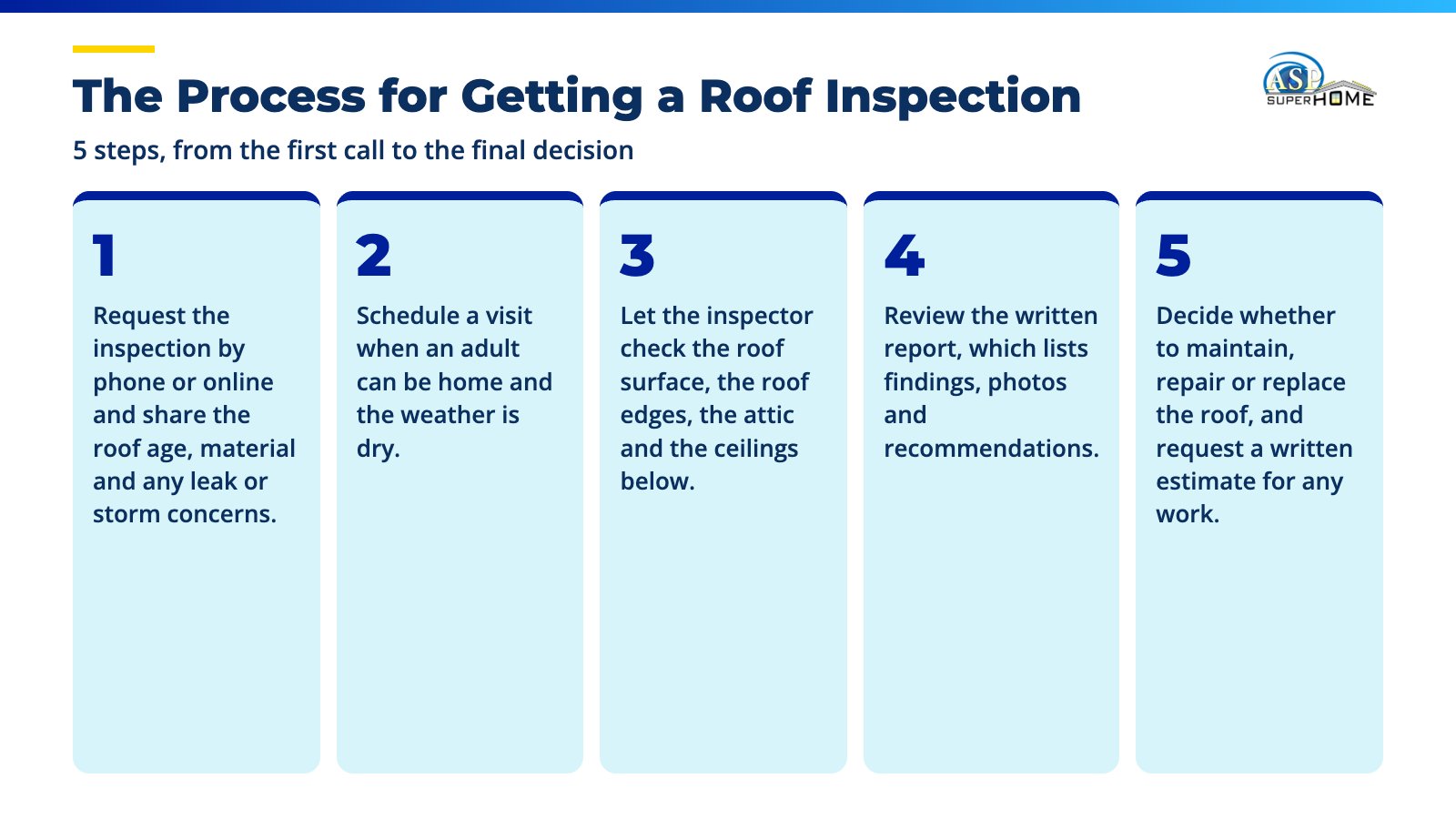
- Request the inspection by phone or online and share the roof age, material and any leak or storm concerns.
- Schedule a visit when an adult can be home and the weather is dry.
- Let the inspector check the roof surface, the roof edges, the attic and the ceilings below.
- Review the written report, which lists findings, photos and recommendations.
- Decide whether to maintain, repair or replace the roof, and request a written estimate for any work.
A licensed roofing company can handle all 5 steps, while an independent inspector usually stops at the report. The right choice depends on the reason for the inspection, which the next section covers.
How to Get a Roof Inspection
To get a roof inspection, contact a licensed roofing contractor, an independent roof inspector or a certified home inspector. Each option fits a different goal. A contractor can inspect and then quote repairs, while an independent inspector only reports on the roof.
Start by confirming the license and the insurance of whoever you call. Ask what the visit includes, how long it takes and whether a written report comes with it. Then ask whether the company charges for the visit, because policies differ from one company to the next.
The reason for the inspection also guides the choice. Storm damage points toward a contractor who can document the roof and discuss repairs. A home sale points toward a neutral inspector. The next question is how many times a year a roof needs this attention.
How Many Times a Year Should a Roof Be Inspected
A roof should be inspected at least once a year and again after any major storm. Regular checks catch small problems, such as a lifted tile or a cracked sealant line, before water gets inside. Older roofs deserve a closer look every year.
In South Florida, timing matters because the Atlantic hurricane season lasts from June 1 through November 30. An inspection before June gives you time to fix weak spots. An inspection after a storm records any new damage while it is fresh.
Other triggers include a home sale, a new ceiling leak stain and a roof near the end of its service life. Our guide to signs of wear lists what to watch for between visits. Once the visit is booked, the next question is what the inspector actually does.
What Happens During a Roof Inspection
A roof inspection starts outside, moves to the attic and ends inside with a check of the ceilings. The inspector follows the path water would take through the house. That order shows where a roof is failing and where it is still sound.
The visit usually covers these areas:
- The exterior surface, including shingles, tiles or metal panels, for cracks, slipped pieces and worn spots
- The flashing, which is the metal that seals joints around chimneys, vents and wall edges
- The roof edges, gutters, fascia and soffits for moisture damage
- The attic, for damp wood, stains, mold, insulation condition and ventilation
- The ceilings and upper walls inside, for stains or peeling paint
Each area tells part of the story. A stain on a ceiling, for example, may trace back to one failed seal on the roof. The next question is whether the inspector climbs onto the roof to see it.
Do Inspectors Go Up on the Roof
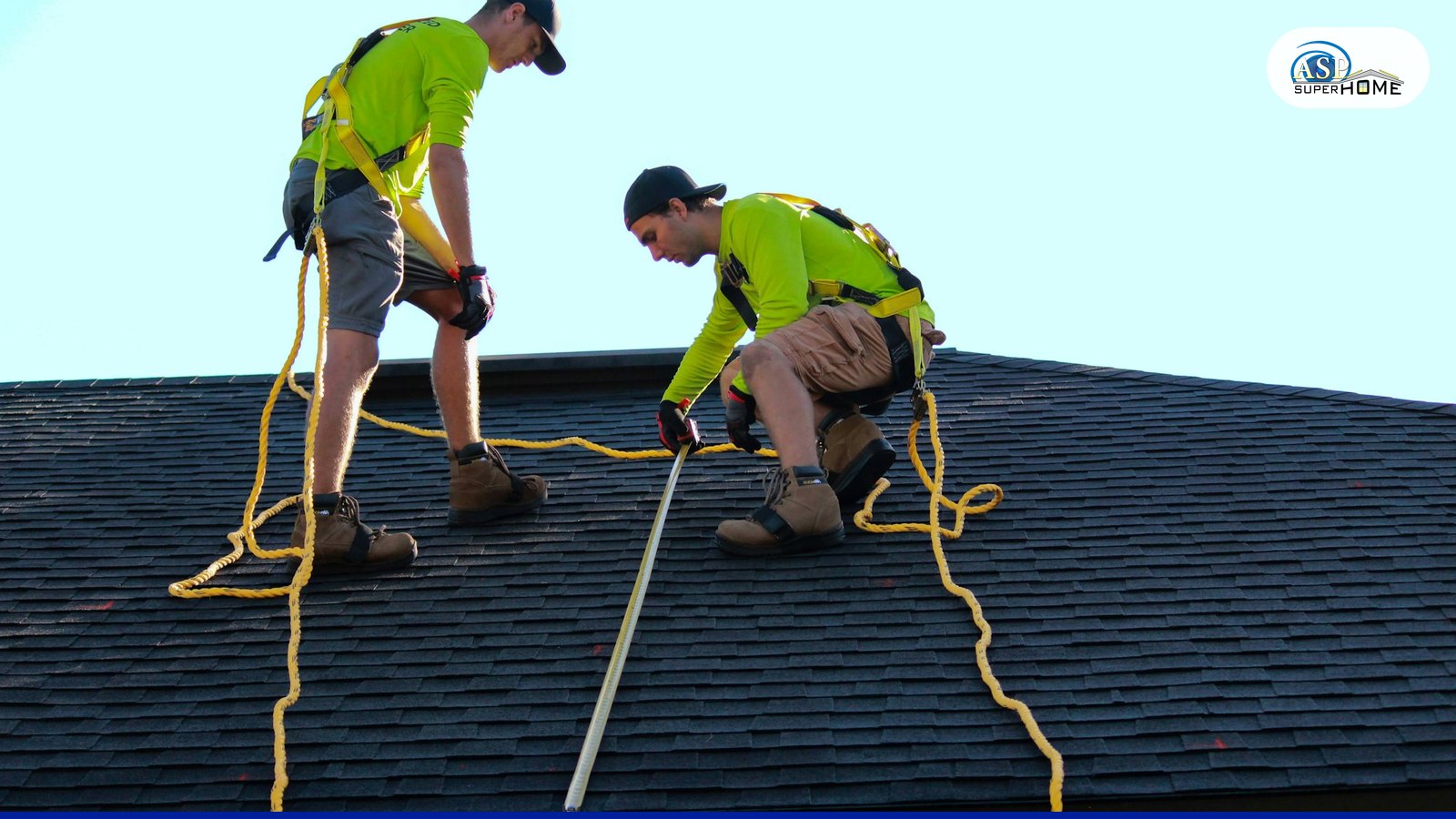
Inspectors do go up on the roof when the surface is dry, stable and safe to walk. They use a secured ladder and walk the roof planes to check each section up close. Walking the roof lets them see damage that a view from the ground can miss.
Some roofs are not safe to walk. Steep slopes, wet surfaces and fragile tile can all limit access. In those cases the inspector may work from a ladder, from the edge or from the ground with binoculars.
The decision belongs to the inspector, because safety comes before coverage. A report should state which areas were reached and which were viewed from a distance. That detail leads into what the inspector is looking for.
What Do They Look For in a Roof Inspection
An inspector looks for damaged materials, failed seals, standing water, poor drainage and signs of moisture inside the home. The exact checklist changes with the roof material. Every roof gets the same basic test of where water could get in.
Common checks by material include:
- Shingle roofs: missing, curling or cracked shingles and granule loss in the gutters
- Tile roofs: cracked, slipped or loose tiles and worn underlayment at the edges
- Metal roofs: loose fasteners, lifted seams and worn sealant at penetrations
Our page on tile roof construction describes how one of those materials is built. Knowing what a passing roof looks like also helps explain how long the visit lasts.
How Long Does a Roof Inspection Take
A roof inspection takes about 30 minutes to 2 hours for a typical home. A basic visual check runs near the short end. A detailed inspection that includes the attic, decking and ventilation runs near the long end or longer.
Four factors change the time:
- Roof size and the number of stories
- Complexity, such as multiple slopes, valleys, chimneys and skylights
- Pitch and access, because steep roofs need extra safety steps
- Condition, since older or storm-damaged roofs need a closer look
The report usually arrives after the visit rather than during it. Our post on a full inspection breaks down the longer version. The next question is what causes a roof to fail.
What Will Fail a Roof Inspection
A roof fails an inspection when it shows damage that lets water in or signals that a failure is close. A single cracked tile does not condemn a roof, but widespread problems do. The findings fall into a few groups.

- Missing, broken or badly worn roofing materials across a wide area
- Active leaks or water stains in the attic or ceilings
- Soft, sagging or rotted decking under the surface
- Failed flashing around chimneys, vents and wall joints
- Poor drainage that leaves standing water or wet edges
Age can also matter, since a roof near the end of its service life may not satisfy a buyer or an insurer. A failed finding is a to-do list rather than a verdict. The report puts that list in writing.
What Does a Roof Inspection Report Look Like
A roof inspection report looks like a short written summary with photos, notes on each area and a list of recommended actions. It records the roof type, its condition and any problems the inspector found. Good reports label each photo by location.
Typical reports include the inspection date, the areas reached and a condition rating for each part of the roof. They also separate urgent repairs from routine maintenance. Our guide to the inspection report shows a sample layout. The report leads straight into the decision about what to do next.
What Happens After a Roof Inspection
After a roof inspection, you receive the report and decide between maintenance, repair and replacement. Small, isolated damage usually calls for a repair. Widespread wear, repeated leaks or an aging roof point toward replacement.
Comparing the two options starts with the extent of the damage. A repair is practical when the rest of the roof is sound. A replacement makes sense when repairs would only cover part of a larger problem. A qualified provider can handle repair options or a full replacement and explain which one fits.
Replacement work also needs permits and final inspections in South Florida, which our permit steps post explains. The short answers below cover the other questions homeowners ask.
What Else Should You Know About Roof Inspections
Roof inspections also raise questions about cost, insurance, weak spots and unwanted sales calls. The short answers below address each one.
How Much Does a Roof Inspection Cost
A roof inspection costs different amounts depending on the provider, the roof size and the level of detail. Contractor visits and independent inspector visits are priced differently. Our breakdown of inspection pricing explains what drives the number.
Do You Have to Pay for a Roof Inspection
You may or may not pay for a roof inspection, because each company sets its own policy. Some contractors fold the visit into an estimate, while independent inspectors charge for their time and report. Ask about the charge when you book.
Will My Insurance Company Inspect My Roof
An insurance company may inspect your roof when you file a claim or when you apply for or renew a policy. Some insurers ask for a roof condition report on older homes. Our post on an insurance claim inspection covers the claim side.
What Are the 4-Point and Wind Mitigation Inspections
A 4-point inspection reviews the roof, electrical system, plumbing and heating and cooling system, while a wind mitigation inspection documents wind-resistant features. Insurers in Florida may ask for either one. Licensed inspectors perform these reports, so ask who provides them.
Where Is a Roof Likely to Fail
A roof is likely to fail at its joints and openings, such as flashing, valleys, vent pipes and edges. Those spots hold seams and seals that wear faster than flat sections. Clogged gutters add moisture at the edges.
Why Do I Keep Getting Calls About Roof Inspections
You keep getting calls about roof inspections because many roofing companies and lead lists contact homeowners after storms. Calls cost nothing to ignore. Book an inspection only with a licensed company you contact yourself, and ask for the license number first.
How ASP Super Home Helps With Roof Inspections
ASP Super Home helps with roof inspections by checking the roof and explaining the findings in plain terms. Our licensed, in-house crews handle repairs and new roofs across tile, shingle and metal systems. One project manager stays in contact from the first visit through the final walkthrough.
Homeowners learning the process for getting a roof inspection can start with a talk about the roof's age and any leak concerns. We then put the findings in a written estimate with no pressure. Our team also handles permits and inspections when work moves forward.
To get started, request a free roof estimate or call 786-933-9815.
Homeowners planning a larger project can also review our new roof options.
South Florida homeowners count on ASP Super Home for roofing, impact windows and solar.
Meet With a Project Manager
Your first conversation is with a Project Manager who takes the time to understand your goals, walk you through your options, and stays connected throughout your project — from the initial consultation through the final walkthrough.


Insights & Resources
Stay informed with expert tips on roofing materials, hurricane codes, repairs, and South Florida construction standards.