


How Long Window Installation Takes and What Affects It
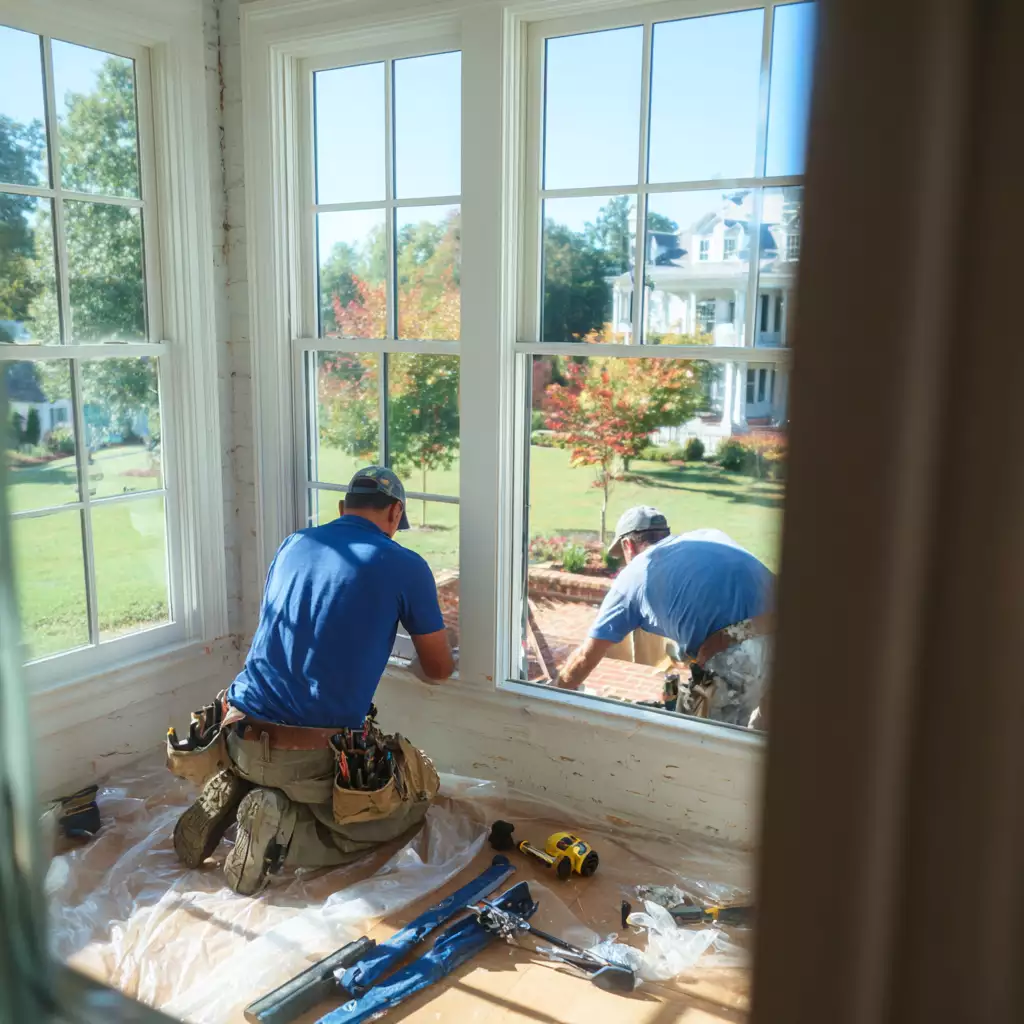

Window installation takes 1 to 3 days of on-site work for a typical 10 to 15 window home, and 8 to 12 weeks from signed contract to closed permit. Both numbers are correct, and the distance between them is what surprises most homeowners. The crew days are the shortest phase of the project. Permit review, manufacturing lead time, and final inspection consume the rest, and every one of those phases runs longer in Florida than almost anywhere else in the country. Below we break down each phase with its real duration, explain the statutory clocks that govern permit review and what leverage they give you, cover why impact windows take weeks to arrive, walk through how to prepare and what installation days actually feel like, and show how to count backward from June 1 so the work finishes before hurricane season.
Key Takeaways
- On-site installation runs 1 to 3 days for 10 to 15 windows. Total project time from contract to permit closure runs 8 to 12 weeks.
- A single standard window installs in 45 to 90 minutes, and a professional crew completes 6 to 10 standard units per day.
- Florida Statutes section 553.792 requires a local government to approve, approve with conditions, or deny a residential permit within 30 business days of a complete application.
- Thirty business days is roughly six calendar weeks, which is where most schedule estimates go wrong.
- If a single-family dwelling permit runs past the deadline without the required written notice, the statute requires the permit fee to be reduced by 10% for every business day of delay.
- Section 553.791 allows plan review through a private provider on a 20 business day clock instead of the local queue.
- Impact windows are manufactured to your exact openings against a specific product approval, so nothing ships from stock. Standard runs 4 to 8 weeks, custom 8 to 12.
- The project is not finished at the walkthrough. It is finished when the final inspection closes the permit.
How Long Does Window Installation Take?
Window installation takes 1 to 3 days on site for a typical 10 to 15 window project, and 8 to 12 weeks total from contract signing to final inspection. Custom sizes, specialty shapes, and larger homes push the total to 12 to 16 weeks.
The two numbers answer two different questions. The crew days answer how long your house is disrupted. The total weeks answer when the project is actually complete, permit closed and paperwork filed. Most homeowners plan around the first number and get caught out by the second.
Installation itself is efficient. A standard window comes out and goes in within 45 to 90 minutes, and a working crew completes 6 to 10 standard units in a day. Nothing about the physical work explains a three-month calendar. What explains it sits before and after the crew arrives, in phases that are largely administrative and largely invisible from the homeowner's side. That is why we walk through the full sequence before quoting a date on any impact window installation.
Why Is My Window Install Taking So Long?
Your window install is taking so long because permit review and manufacturing lead time consume most of the schedule, and the installation you are waiting for is the shortest phase of the entire project. Two administrative phases and one production phase sit between a signature and a crew on your driveway.
National guidance sets a poor expectation here. Most published timelines quote three to six weeks from consultation to completion, and those figures come from markets where a window swap is a same-week job with no permit and no product approval. Florida is not one of those markets. Windows are a structural alteration to the building envelope, they require permitted work, and inside the High-Velocity Hurricane Zone they require an approved assembly with prescribed anchoring. Every one of those requirements adds calendar time.
Delays cluster in five places. Permit applications get returned as incomplete. Manufacturing runs long on custom sizes. Measurements come back wrong and units have to be reordered. Hidden damage appears when the old frame comes out. Inspections fail and require correction before the permit can close. Choosing a contractor who manages all five is the single largest variable in your timeline, which is why we treat the process as part of choosing a team rather than as an afterthought.
Communication is what usually breaks, not the schedule. A project sitting in permit review for four weeks is normal. A project sitting in permit review for four weeks while nobody tells you that is what a bad experience feels like.
What Are the Phases of a Window Replacement Project?
A window replacement project runs through six phases: consultation and measurement, permit application and review, manufacturing and delivery, installation, walkthrough, and final inspection. Each phase has a different duration and a different party controlling it, which matters because you can only influence some of them.
Phase
Typical Duration
Who Controls It
What Stalls It
Consultation and Measurement
1 to 2 hours on site, scheduled within days
You and the contractor
Product selection indecision, access to openings
Permit Application and Review
Up to 30 business days by statute
The building department
Incomplete applications, missing approval numbers
Manufacturing and Delivery
4 to 8 weeks standard, 8 to 12 custom
The manufacturer
Custom shapes, finish colors, peak season backlog
Installation
1 to 3 days for 10 to 15 windows
The contractor
Weather, hidden frame damage, access
Walkthrough
Same day as completion
You and the crew lead
Punch list items needing a return visit
Final Inspection
1 to 2 weeks after completion
The building department
Inspector availability, correction and reinspection
Sources: Florida Statutes §553.792 and §553.791; Florida Building Code, Building, 8th Edition; Miami-Dade County Product Control; ASP SuperHome published project data.
Notice which rows the contractor actually controls. Two of six. The building department controls two, the manufacturer controls one, and the sixth is shared. A contractor who submits complete applications and orders accurately shortens the phases they do not control, which is the whole value of end-to-end project management on impact windows and doors.
The first phase deserves more attention than it usually gets. Consultation and measurement takes one to two hours on site, and the measurements taken during it determine whether anything fits in phase four. Getting a free estimate with laser measurement rather than tape approximation is what prevents a reorder ten weeks later.
How Long Does It Take to Get a Window Permit in Florida?
A local government must approve, approve with conditions, or deny a residential building permit within 30 business days of receiving a complete and sufficient application, under Florida Statutes section 553.792. Thirty business days works out to roughly six calendar weeks, not thirty calendar days, and misreading that difference is the most common scheduling error homeowners make.
The statute sets several clocks, and knowing them tells you whether a delay is normal or unusual. Within 5 business days of submission, the local government must provide written notice stating what information is needed to deem the application properly completed. For residential structures under 7,500 square feet the decision deadline is 30 business days after a complete application. Structures of 7,500 square feet or more get 60 business days. Local ordinances can set tighter deadlines than the statute, though not looser ones.
Deficiencies restart a shorter loop rather than sending you to the back of the line. If the agency issues written notice identifying why the application fails, you have 10 business days to submit revisions, and the agency then has 10 business days after receiving them to approve or deny. That structure rewards contractors who submit complete packages the first time and penalizes those who do not.
Homeowners have real leverage in the statute, and almost nobody knows it. House Bill 267, signed May 17, 2024, amended section 553.792 so that where a single-family dwelling permit runs past the applicable deadline without the required written notice, the permit fee must be reduced by 10% for every business day of delay. That provision exists to make slow review expensive for the jurisdiction rather than invisible to the applicant.
A second option bypasses the queue entirely. Section 553.791 permits plan review and inspection through a licensed private provider, operating on a 20 business day issuance clock rather than the local government's schedule. Private provider review costs more and is not right for every project, and on schedule-critical work it can recover weeks. Homeowners in Doral and elsewhere inside the High-Velocity Hurricane Zone should ask their contractor whether it applies to their project.
Product approval documentation drives whether any of those clocks start cleanly. Every window and door assembly installed in Miami-Dade or Broward requires a Miami-Dade Notice of Acceptance covering the specific configuration, tested under Testing Application Standards 201, 202, and 203. Large-missile testing under those standards fires a nine-pound two-by-four at 50 feet per second, then subjects the assembly to 9,000 cycles of alternating pressure. Applications submitted without the correct approval numbers come back as incomplete, and the clock does not start until they are right.
Why Do Impact Windows Take Weeks to Arrive?
Impact windows take 4 to 8 weeks to arrive because every unit is manufactured to the exact dimensions of your openings against a specific approved assembly, so nothing ships from existing stock. Custom sizes, specialty shapes, and non-standard finishes extend that to 8 to 12 weeks.
Made-to-order is a code consequence, not a marketing choice. The Notice of Acceptance covering an assembly specifies the glass composition, the frame profile, the maximum dimensions, and the anchoring pattern. Building an approved unit means building it inside those parameters for your specific opening, and a stocked window sized for a different opening cannot substitute.
Lead times stretch further in three situations. Arched, circular, and trapezoidal openings require tooling and hand assembly. Frame finishes outside the standard palette are batched, so an unusual color waits for a production run. Peak season demand from May through July backs up every manufacturer at once as homeowners across the region order ahead of hurricane season.
Larger openings run longer than window count suggests. A single wide slider carries more glass weight and more hardware than three standard windows, and sliding glass doors often sit at the far end of a manufacturing schedule for that reason.
Entry and patio units follow similar logic on their own cycle. Ordering impact doors alongside windows in a single package keeps both on one delivery rather than splitting a project across two installation visits weeks apart.
Combining custom impact windows and doors into one order is usually the faster path even when the door decision feels less urgent.
How Long Does a Window Install Take Per Window?
A standard window installs in 45 to 90 minutes, and large or specialty units take 2 to 4 hours each. A professional crew completes 6 to 10 standard units in a working day.
Those minutes break down predictably. Interior trim removal runs 5 to 10 minutes. Exterior sealant and trim removal takes 10 to 15. Extracting the old unit takes 8 to 12. Cleaning and preparing the rough opening takes 10 to 15. Setting, shimming, and squaring the new unit takes 8 to 12. Anchoring to the approved pattern takes 5 to 8. Sealing and weatherproofing takes 10 to 15, and interior and exterior finish work takes 15 to 20.
Several conditions add time per opening. Second-story work adds 20 to 30 minutes for staging and safety rigging. Tight interior access or heavy landscaping outside adds 10 to 25 minutes. Deteriorated framing discovered on removal adds 30 to 90 minutes depending on the extent. Structural modification to change an opening size adds hours rather than minutes and is usually scoped in advance.
How Long Does It Take to Replace 20 Windows in a House?
Replacing 20 windows in a house takes 2 to 4 days of on-site work. Crew size drives that range as much as window count does, since a larger team works several openings in parallel.
Full-frame replacement with stucco cutting on 20 openings sits at the longer end. Straightforward work on standard-size openings sits at the shorter end. Second-story units, arched shapes, and any opening needing structural repair add time a per-window average will not capture.
Can Window Installation Be Done in One Day?
Window installation can be done in one day for projects of roughly 5 to 10 standard windows on a single-story home with good access. Beyond that count, single-day completion starts trading quality for speed.
Single-day work depends on conditions lining up. The permit has to be issued and posted, materials have to be delivered and verified against the order in advance, the home has to be prepared, and the forecast has to cooperate. Projects above ten openings are better scheduled across two or three days, which lets crews work at a consistent pace and absorb an afternoon storm without rushing the weatherproofing step at five o'clock.
What to Do Before Window Installation
Before window installation, clear a working zone around every opening, take down all window treatments, secure pets, and arrange parking for the crew and the material delivery. Preparation done the day before saves crew hours and protects your belongings.
Work the list in this order, since some steps depend on others:
- Confirm the permit is issued and the delivery has arrived. Verify with your contractor a few days out that both are in hand, because either one missing cancels the day.
- Remove all window treatments and hardware. Blinds, curtains, rods, brackets, and shutters come down. Anything left mounted is likely to be damaged.
- Clear a working zone. Move furniture 4 to 6 feet back from every opening and take down wall hangings within about three feet, since removal work transmits vibration through the wall.
- Disconnect window alarm sensors. Coordinate with your monitoring company in advance rather than discovering the issue when the first sash comes out.
- Cover what stays. Drape remaining furniture and electronics, even though crews set their own drop cloths, because fine dust travels further than most people expect.
- Clear the exterior. Trim landscaping back about three feet from each opening, move planters, grills, and patio furniture, unlock gates, and turn off irrigation for the day.
- Sort out parking and pets. Reserve driveway and street space for crew vehicles and the delivery truck, and keep pets in a closed room away from the work.
- Plan to be reachable. Stay home or designate an adult who can answer questions about trim, hardware finish, and anything unexpected found inside a wall.
How Messy Is New Window Installation?
New window installation is moderately messy, producing fine dust from stucco cutting, debris from old frame removal, and sealant odor, with the heaviest mess concentrated during the removal hours. It is not a clean job, and a contractor who tells you otherwise is managing expectations poorly.
Stucco cutting generates the most dust and it travels. Fine particles settle on surfaces well beyond the room being worked, which is why covering electronics matters more than covering furniture. Old sealant, caulk, fasteners, and frame fragments come out with the unit and collect in the work zone until the crew clears them at the end of each opening.
Noise runs alongside the dust. Removal involves prying, cutting, and occasional hammer work, and the loudest stretch lasts 20 to 30 minutes per opening. Households with infants, night-shift workers, or anyone taking calls from home do better knowing the crew's room-by-room order in advance so they can move ahead of it.
Cleanup is the part to specify in writing. Crews should sweep, vacuum, wipe surfaces in the work zone, and remove all debris and packaging from the property before leaving. Whether interior dust cleanup extends beyond the immediate work area is a scope question worth settling before the deposit rather than at the end of day three.
How Can You Tell If a Window Is Installed Correctly?
You can tell a window is installed correctly by testing operation, checking for square and level, inspecting the seal lines, and confirming the exterior drains water away rather than into the wall. Walk every opening with the crew lead before they leave the property, while corrections still cost nothing.
- Operation. Open, close, lock, and unlock every unit yourself. Binding, dragging, or a lock that needs force means the frame is not square.
- Square and level. Reveal gaps around the sash should be even top to bottom and side to side. An uneven reveal is the visible symptom of a shimming problem.
- Interior seal. Sealant lines should be continuous and tooled smooth, with no gaps at corners where two runs meet.
- Exterior seal and slope. The exterior perimeter should be fully sealed, and the sill should slope away from the house so water runs out rather than in.
- Stucco patch. Patched areas should match the surrounding texture. A rushed patch telegraphs through paint within months.
- Glass and labels. Check for scratches, chips, and internal fogging, and confirm the product labels match the assemblies on your contract and permit.
- Screens and hardware. Screens should seat properly, locks should align, and no fastener should sit proud of the frame.
- Water test. Run a hose over a completed opening and check the interior. A correct installation stays dry.
What Does a Bad Window Installation Look Like?
A bad window installation looks like uneven reveal gaps, sashes that stick or fail to lock, gapped or missing sealant, and visible daylight around the frame perimeter. Most of these appear within the first walkthrough if you know to look for them.
Water intrusion is the failure that costs the most and shows up last. Staining on interior sills, softness in the drywall below an opening, or a musty smell near the wall all point to a seal that was never continuous. Fasteners driven at the wrong spacing, foam insulation packed so tightly that it bows the frame, and stucco patched over an unsealed perimeter are the common causes, and every one traces back to installation rather than product.
Do You Tape the Bottom of a Window When Installing?
The bottom of a window opening gets a sill pan or pan flashing rather than tape alone, and the flashing sequence runs bottom first, then sides, then head. Sequence matters more than material, because each layer must shed water onto the layer below it.
Flashing tape across the bottom flange before the sides go on is a common and consequential error. Taping the bottom flange seals water in rather than letting it escape, because the sill is the drainage path of last resort. When water gets past the exterior seal, and over twenty years it will, the sill pan carries it back out. A taped-shut bottom traps it against the framing instead.
The correct order is sill pan or bottom flashing first, then the window set into it, then side flashing lapping over the sill flashing, then head flashing lapping over the sides. Each piece overlaps the one beneath it, so gravity does the work. Asking a contractor to describe their flashing sequence is one of the fastest ways to gauge whether their crews know what they are doing.
What Happens If a Window Inspection Fails?
A failed window inspection requires correction and reinspection, adding roughly 3 to 7 days to the project, and the permit stays open until the corrected work passes. The project is not complete at the walkthrough. It is complete when the permit closes.
Inspectors verify that the installed assembly matches the approved product on the permit, that anchoring follows the specified pattern and spacing, and that flashing and sealing were done to code. The frequent findings are fastener spacing that deviates from the approval document, incomplete perimeter sealing, and substituted products that were never approved for the permit.
Leaving a permit open causes trouble later rather than immediately. Open permits surface during a home sale, during a refinance, and during insurance underwriting, and resolving one years after the fact is considerably harder than closing it on schedule. Most inspection failures come from a small set of avoidable errors, which we cover in our rundown of installation mistakes.
Warranty documentation should arrive alongside the closed permit. Product, glass, and labor warranties carry separate terms, and collecting all three at project close is easier than reconstructing them later. Our own warranty coverage is published rather than buried in the contract, and any contractor should hand you the full set at completion.
When Should You Schedule Window Replacement in Florida?
Schedule window replacement between December and March if you want the work finished before hurricane season, because an 8 to 12 week project started in April will not close its permit before June 1. Atlantic hurricane season runs June 1 through November 30 according to the National Hurricane Center, and that date is the deadline the whole schedule should be built around.
Counting backward makes the math obvious. A project needing 10 weeks and finishing before June 1 has to start in mid-March at the latest, and that assumes no permit deficiency and no manufacturing delay. Building in a two to three week buffer moves the realistic start date to February.
Off-peak scheduling helps at every phase. Permit queues are shorter in winter, manufacturers are not working through a regional order surge, crews have open calendar, and the weather cooperates instead of dropping an afternoon storm on an open wall. Homeowners across South Florida who start in winter routinely finish faster than those who start in spring, on identical scopes. We make the seasonal case in more detail in our piece on December replacements.
The protection argument runs alongside the scheduling one. Finishing before June 1 means the assemblies are installed, inspected, and covered for the season rather than sitting on a manufacturing floor while a storm forms, a point we develop further in our hurricane prep overview. Many insurers also offer discounts of 15% to 45% for hurricane-rated impact windows and doors, and the discount applies once the work is complete and documented rather than once it is ordered.
Waiting until a storm is named is the most expensive timing decision available. Post-storm demand consumes crew capacity, manufacturers prioritize backlog, and permit offices absorb a surge of emergency applications all at once. Ordering residential impact windows in the quiet months is the same product on a shorter calendar.
Frequently Asked Questions
Do I Have to Be Home During Window Installation?
You do not have to be home for the entire installation, but you or another adult should be present at the start and at the final walkthrough. Crews need interior access to every opening and occasionally need a decision about trim, hardware, or something unexpected found inside a wall. Being reachable by phone covers most of the middle hours.
What Happens If Windows Are Measured Wrong?
Windows measured wrong have to be reordered, which restarts the manufacturing phase and adds 4 to 8 weeks to the project. This is the most expensive error in the entire sequence and it happens during a phase that takes two hours. Contractors using laser measurement and verifying every opening before submitting the order avoid it, and the reorder cost should sit with whoever took the measurement.
Do Window Installers Come Inside the House?
Window installers come inside the house, because every window is removed and set from both sides and all interior finish work happens indoors. There is no version of a replacement performed entirely from outside. Plan on interior access to every opening on the schedule.
How Long Does the Final Inspection Take?
The final inspection itself takes under an hour, but scheduling it typically adds 1 to 2 weeks after installation finishes. Inspector availability drives the wait rather than the inspection. A passing inspection closes the permit, which is the actual end of the project.
Can You Speed Up a Window Permit in Florida?
You can speed up a window permit in Florida by submitting a complete application the first time and by using a private provider for plan review under Florida Statutes section 553.791, which operates on a 20 business day issuance clock. Complete applications matter most, since the statutory 30 business day decision clock only starts once the application is deemed complete and sufficient. Deficient submissions restart a 10 business day revision loop instead.
Does Replacing Windows Require a Permit in Florida?
Replacing windows requires a permit in Florida, because the work alters the building envelope and the assemblies must be verified against approved products and code wind loads. Inside Miami-Dade and Broward, the permit application must reference the Notice of Acceptance for each specific assembly. The licensed contractor pulls the permit and schedules the inspections.
Putting It All Together
Window installation takes 1 to 3 days of crew time and 8 to 12 weeks of calendar time, and understanding why those numbers differ is most of what a homeowner needs. Permit review can run 30 business days by statute, roughly six calendar weeks. Manufacturing runs 4 to 8 weeks because impact assemblies are built to your openings against a specific approval. Final inspection adds another one to two weeks after the crew has gone. The installation you are waiting for is the shortest part of what you bought, and a contractor who explains that at the contract stage rather than at week six is telling you something useful about how the rest of the project will run.
Two pieces of Florida law are worth carrying into the conversation. Section 553.792 puts a 30 business day ceiling on residential permit decisions and requires the fee to be reduced 10% per business day where a single-family permit runs late without proper notice. Section 553.791 offers private provider review on a 20 business day clock when the calendar is tight. Neither is common knowledge, and both give you something concrete to ask about.
If you are planning window work anywhere across South Florida and want a realistic date rather than an optimistic one, the team at ASP SuperHome will map the full sequence against your specific openings and permit jurisdiction before you sign anything.
Reach us any time through our contact us page.
Meet With a Project Manager
Your first conversation is with a Project Manager who takes the time to understand your goals, walk you through your options, and stays connected throughout your project — from the initial consultation through the final walkthrough.
.avif)
.avif)
.avif)
%201.avif)
Insights & Resources
Stay informed with expert tips on roofing materials, hurricane codes, repairs, and South Florida construction standards.



%201.avif)
%201%20(1).avif)


%201.svg)
%201%20(1)%20(1).png)
.png.png)
.png%20(1).png)
.png%20(2).png)
.avif)
.avif)


.png)
.svg)
.png)