


Impact Sliding Glass Doors vs Regular Sliding Doors
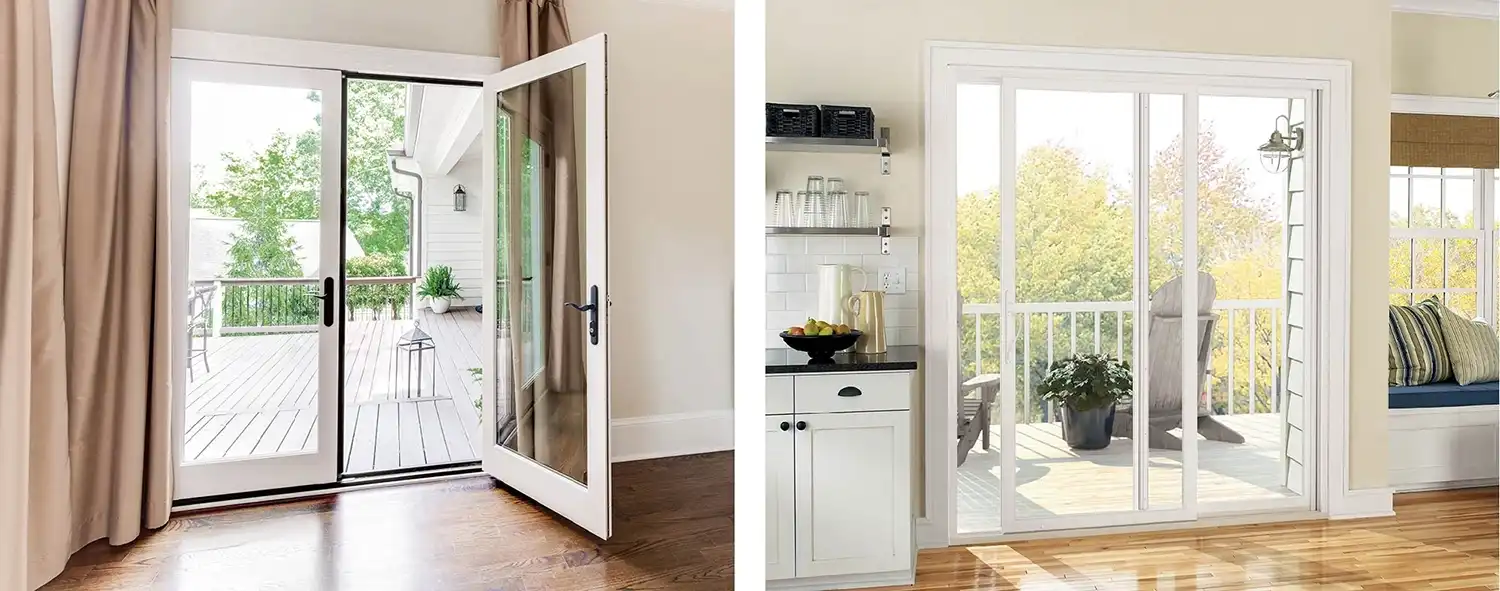

Impact sliding glass doors are built with laminated safety glass, reinforced frames, and heavy-duty hardware that resist hurricane winds, flying debris, and forced entry. Regular sliding glass doors use standard tempered or annealed glass that can shatter on impact, leaving your home exposed to storms, intruders, and energy loss. The difference between the two goes far beyond strength. Impact sliding doors also save energy, block UV rays, reduce noise, lower insurance premiums, and increase your home's value. This guide covers every major difference so you can decide which option is right for your home.
What Is the Difference Between Impact Sliding Glass Doors and Regular Sliding Doors?
The difference between impact sliding glass doors and regular sliding doors starts with the glass itself. Impact sliding doors use two panes of glass bonded together with a tough polyvinyl butyral (PVB) or ethylene-vinyl acetate (EVA) interlayer. If the glass cracks from a debris strike or a break-in attempt, the interlayer holds everything together. The glass may spider-web, but it does not fall apart or create an opening. This is the same technology used in car windshields, but engineered to meet strict hurricane building codes.
Regular sliding glass doors typically use a single pane of tempered glass or, in some cases, standard annealed glass. Tempered glass is stronger than annealed glass and breaks into small, rounded pieces instead of sharp shards. But it still shatters completely on impact, leaving the entire opening exposed. There is no interlayer to hold the pieces in place. Once the glass breaks, wind, rain, and debris pour into your home.
The frames are different too. Impact sliding doors use reinforced aluminum or vinyl frames with heavy-duty rollers, multi-point locking systems, and interlocking rails that resist wind pressure and water infiltration. Regular sliding doors often use lighter frames with basic latches that can be forced open, lifted off the track, or pried apart. According to the International Association of Certified Home Inspectors (InterNACHI), 81% of burglars enter through a first-floor entry point, and sliding glass doors are one of the most commonly targeted openings.
What Kind of Sliding Glass Door Is Best?
The best kind of sliding glass door for a Florida home is an impact-rated sliding glass door. Impact sliding doors provide year-round protection from hurricanes, break-ins, noise, UV damage, and energy loss without requiring any additional coverings or shutters. They look and function like regular sliding doors but are built to a completely different standard.
Regular sliding doors only do one job: open and close. They let in natural light and connect your indoor space to the outdoors, but they offer almost no protection against storms, intruders, or heat transfer. In Florida, where hurricane season runs from June through November and the sun beats down nearly every day, a standard sliding door leaves your home vulnerable in multiple ways. According to NOAA, the U.S. experienced 27 billion-dollar weather disasters in 2024 alone, causing $182.7 billion in total damages. A sliding glass door is one of the largest openings in most homes, and protecting it with impact-rated glass is one of the smartest upgrades you can make.
For homeowners in the High Velocity Hurricane Zone (HVHZ), which covers Miami-Dade and Broward counties, the Florida Building Code requires all exterior glazed openings, including sliding glass doors, to be impact-rated or covered with approved hurricane shutters. Even outside the HVHZ, impact doors are strongly recommended by building professionals for any home in a hurricane-prone area.
Are There Different Grades of Impact Windows?
Yes, there are different grades of impact windows and doors. Impact products are rated by Design Pressure (DP), which measures the maximum wind load the product can handle in pounds per square foot. A higher DP rating means the door or window can withstand stronger winds and greater pressure changes during a hurricane.
Impact products also fall into two main testing categories based on the ASTM E1886 and E1996 standards. Large Missile testing fires a 9-pound 2x4 lumber projectile at the glass at 50 feet per second. This is the standard required in the HVHZ (Miami-Dade and Broward counties). Small Missile testing uses smaller projectiles at lower speeds and applies to areas outside the HVHZ. Products that pass Large Missile testing provide the highest level of protection.
Products also carry either a Miami-Dade County Notice of Acceptance (NOA) or a Florida Product Approval number, or both. Miami-Dade NOA certification is the strictest in the country. Products with this approval have been tested to the most demanding standards available and are accepted for installation anywhere in Florida.
Can Impact Sliding Glass Doors Withstand a Hurricane?
Yes, impact sliding glass doors can withstand a hurricane, including Category 5 conditions with sustained winds of 157 mph or higher. The laminated glass, reinforced frame, and multi-point locking system work together to resist both the direct impact of flying debris and the extreme pressure changes that occur during a hurricane. Even if the outer layer of glass cracks, the PVB interlayer keeps the door sealed so wind and rain stay outside.
During ASTM testing, impact-rated products must survive a direct hit from a 9-pound 2x4 projectile followed by 9,000 cycles of intense positive and negative pressure changes. This simulates the sustained and fluctuating forces of a major hurricane. According to NOAA, hurricane damage increases exponentially with wind speed, not proportionally. A doubling of wind speed from 75 mph to 150 mph multiplies the damage potential by a factor of roughly 256. That is why having a door rated for the highest wind loads matters so much.
Regular sliding glass doors fail almost immediately under these same conditions. Standard tempered glass shatters on the first impact, and the lightweight frame has no chance of holding up against sustained hurricane-force winds. Once the glass is gone, the pressure inside your home skyrockets, which can blow off the roof and cause catastrophic structural damage.
Do Impact Sliding Doors Help With Home Security?
Yes, impact sliding doors help with home security significantly. Standard sliding glass doors are one of the weakest security points in most homes. According to the FBI's 2023 Uniform Crime Report, roughly 21% of residential break-ins start through sliding doors. ADT's Protect Your Home data puts the number at around 22% for back or sliding door entries. A SafeWise test showed that a standard sliding glass door can be forced open in under 10 seconds using simple techniques like lifting, jiggling the latch, or smashing the glass.
Impact-rated doors eliminate these vulnerabilities. The laminated glass resists repeated blows and stays intact even when cracked. The reinforced frame with multi-point locking hardware cannot be lifted off the track or pried open the way a standard frame can. An intruder would need sustained effort and heavy tools to even attempt a breach, and the noise and time involved make it far too risky.
This is a year-round benefit, not just a storm-season benefit. Your regular sliding door sits exposed 365 days a year. An impact sliding door provides the same daily protection that it provides during a hurricane, keeping your family and belongings safe at all times.
How Hard Is It to Break Into an Impact Sliding Glass Door?
It is extremely hard to break into an impact sliding glass door. The laminated glass absorbs repeated impacts without creating an opening. Even after multiple strikes with a heavy object, the PVB interlayer holds the cracked glass in place. Combined with the reinforced frame, anti-lift hardware, and multi-point locking system, an impact sliding door is one of the most secure entry points you can install in a home. Burglars looking for a quick and quiet entry will almost always move on to an easier target.
Are Impact Sliding Glass Doors Energy Efficient?
Yes, impact sliding glass doors are energy efficient. According to the U.S. Department of Energy, heat gain and heat loss through windows and doors account for 25% to 30% of residential heating and cooling energy use. Sliding glass doors are some of the largest glazed openings in a home, so their energy performance has a major effect on your monthly electric bill.
Impact sliding doors with Low-E (low-emissivity) coatings reflect infrared heat while still allowing natural light to pass through. According to the Department of Energy, Low-E coatings can filter out 40% to 70% of the heat that normally passes through glass. ENERGY STAR reports that certified windows and doors save homeowners up to 13% on heating and cooling costs. In Florida, where air conditioning runs nearly year-round, that translates to real savings every single month.
Regular sliding glass doors, especially older ones, often have poor seals, single-pane glass, and lightweight frames that allow air leaks and heat transfer. Upgrading to energy-efficient impact doors can dramatically reduce how hard your AC system has to work, lowering both your electric bill and the wear on your HVAC equipment.
Do Impact Sliding Glass Doors Reduce Noise?
Yes, impact sliding glass doors reduce noise significantly. The laminated glass construction that makes them hurricane-resistant also makes them excellent at blocking sound. Sound Transmission Class (STC) ratings measure how well a door or window blocks airborne noise. Standard single-pane sliding doors typically rate STC 26 to 28, which means you can clearly hear traffic, neighbors, and outdoor activity. Impact sliding glass doors with laminated glass typically rate STC 32 to 40 or higher, which represents a dramatic reduction in perceived noise.
According to acoustic testing data, an increase from STC 28 to STC 38 means roughly 90% of outside noise is blocked. That kind of difference is immediately noticeable. Homes near busy roads, airports, schools, or commercial areas benefit enormously from this upgrade. Even in quieter neighborhoods, the noise reduction creates a more peaceful and comfortable indoor environment.
Impact Sliding Glass Doors vs Regular Sliding Doors: Side-by-Side Comparison
FeatureImpact Sliding Glass DoorsRegular Sliding DoorsGlass TypeLaminated safety glass with PVB interlayerSingle-pane tempered or annealed glassHurricane ProtectionRated for Category 5 winds (157+ mph)None; shatters on impactSecurityMulti-point locks, anti-lift hardware, laminated glassBasic latch; can be forced open in under 10 secondsEnergy EfficiencyLow-E coatings block 40%-70% of heat (DOE)Minimal insulation; significant air leaks commonUV ProtectionBlocks up to 99% of UV raysLittle to no UV filteringNoise Reduction (STC Rating)STC 32-40+ (significant reduction)STC 26-28 (minimal reduction)Insurance Discount (FL)Qualifies for 10%-45% windstorm creditNo discountLifespan25-30+ years10-20 yearsFlorida Building Code Compliance (HVHZ)Meets HVHZ requirementsDoes not meet HVHZ requirements
Sources: U.S. Department of Energy, ENERGY STAR, FBI Uniform Crime Report 2023, ASTM International, Florida Department of Financial Services, SafeWise, International Association of Certified Home Inspectors
Do Impact Sliding Doors Increase Home Value?
Yes, impact sliding doors increase home value. According to data from the National Association of Realtors, impact windows and doors return 65% to 85% of their installation cost in added property value. In hurricane-prone markets like South Florida, that return is often at the top of the range because buyers expect storm protection as a standard feature, not a luxury add-on.
Research cited by Florida real estate professionals shows that homes with impact-rated windows and doors sell up to 20% faster than homes without them. The 2025 Remodeling Cost vs. Value Report found that window and door replacement projects in the South Atlantic region recoup between 67% and 72% of their cost at resale. Upgrading a large, visible opening like a sliding glass door has an outsized effect on curb appeal and buyer confidence. A home with a hurricane-rated patio door signals to buyers that the property is well-maintained, storm-ready, and move-in ready.
Do Impact Sliding Doors Help Lower Insurance?
Yes, impact sliding doors help lower insurance premiums in Florida. Under Florida Statute 627.0629, insurers are required to offer actuarially reasonable premium discounts for verified wind mitigation features. The opening protection credit on the OIR-B1-1802 wind mitigation form is one of the most valuable single-category discounts available. According to the Florida Department of Financial Services, homeowners can save 10% to 45% on the windstorm portion of their policy with full opening protection.
The catch is that the opening protection credit is all-or-nothing. Every glazed opening must be covered for the discount to apply. If your home has impact windows on every window but a standard sliding glass door on the patio, you could receive an "X" rating for opening protection, which means $0 in savings. That one unprotected door can cost you hundreds or even thousands of dollars per year in missed discounts.
Florida's My Safe Florida Home program also provides matching grants of up to $10,000 for qualifying hurricane protection upgrades. The program received $352 million in funding for the 2025-2026 cycle. Homeowners can learn about available rebate programs to help offset the cost of upgrading sliding doors and other openings.
How Long Do Impact Sliding Glass Doors Last?
Impact sliding glass doors typically last 25 to 30 years or more with proper care. The laminated glass, reinforced frames, and heavy-duty hardware are built to withstand decades of daily use, sun exposure, salt air, and humidity. Most manufacturers offer warranties covering the glass for 10 to 20 years and the frame for even longer. With regular cleaning, occasional seal inspections, and proper roller maintenance, impact doors routinely outlast their warranty period.
Regular sliding glass doors typically last 10 to 20 years before the seals fail, the rollers wear out, the frame corrodes, or the glass loses its integrity. In Florida's harsh climate, where sun, heat, humidity, and salt air are constant, standard doors often degrade faster than in milder environments. Replacing a regular door every 15 years adds up. Over a 30-year period, you could end up buying two or three standard doors for the same cost as one impact-rated door that lasts the entire time.
Frequently Asked Questions
What Is the Cheapest Time of Year to Replace Windows?
The cheapest time of year to replace windows and doors is typically late fall and winter, from October through February. Demand for window and door installations drops during these months because most homeowners focus on upgrades during spring and summer. Contractors often have more availability, shorter lead times, and may offer seasonal promotions. In Florida, the cooler months are also more comfortable for installation crews, which can speed up the project and reduce labor delays.
Do Impact Sliding Doors Block UV Rays?
Yes, impact sliding doors block up to 99% of harmful UV rays. The laminated glass with a PVB interlayer filters out ultraviolet radiation that causes furniture, flooring, artwork, and fabrics to fade over time. According to the U.S. Department of Energy, adding Low-E coatings to the glass further reduces solar heat gain while still allowing natural light into your home. This UV protection works every day of the year, not just during storms.
Do You Need a Permit to Install Impact Sliding Glass Doors in Florida?
Yes, you need a permit to install impact sliding glass doors in Florida. Any replacement of exterior windows or doors requires a building permit in all Florida counties. The permit process includes a plan review and a final inspection to verify that the product meets Florida Building Code requirements and that the installation was done correctly. Working with a licensed contractor who handles the permitting process is the easiest way to make sure everything is done right.
Can You Add Impact Film to a Regular Sliding Glass Door?
No, adding impact film to a regular sliding glass door does not make it hurricane-rated. Security film can add some resistance to shattering, but it does not meet the ASTM E1886 and E1996 testing standards required for hurricane certification in Florida. A filmed door will not qualify for wind mitigation insurance credits and will not pass a building code inspection as an approved opening protection product. The only way to get true impact protection is to replace the door with a certified impact-rated product.
Do Impact Sliding Glass Doors Come in Different Styles?
Yes, impact sliding glass doors come in many different styles. Options include two-panel, three-panel, and four-panel configurations, as well as pocket sliding doors that disappear into the wall when opened. Multi-slide systems allow multiple panels to stack or tuck away for a wide, open connection between indoor and outdoor spaces. Frames are available in aluminum, vinyl, and composite materials with a range of color options. Many manufacturers also offer custom sizes to fit non-standard openings.
What Is the Difference Between Impact Glass and Regular Glass?
The difference between impact glass and regular glass is in the construction. Impact glass is made of two panes bonded together with a clear PVB or EVA interlayer. If one or both panes crack, the interlayer holds the pieces in place and maintains the seal. Regular glass, whether annealed or tempered, is a single layer with no interlayer. Annealed glass breaks into sharp shards, and tempered glass shatters into small pieces. In both cases, the glass falls out completely and leaves the opening wide open to wind, rain, debris, and intruders.
Wrapping It Up
Impact sliding glass doors outperform regular sliding doors in every category that matters. They protect your home during hurricanes, block break-ins, cut energy bills, reduce noise, filter UV rays, lower your insurance premiums, and add real value to your property. Regular sliding doors do none of these things. They let in light and connect your living space to the outdoors, but they offer zero protection against storms, intruders, or Florida's relentless sun and heat.
With Florida's insurance rates among the highest in the nation and hurricane seasons growing more costly year after year, upgrading your sliding glass door to an impact-rated system is one of the most practical investments you can make. If you are thinking about making the switch, we are here to help at ASP SuperHomes.
Give us a call at 786-933-9815 to get started with a free estimate.
Meet With a Project Manager
Your first conversation is with a Project Manager who takes the time to understand your goals, walk you through your options, and stays connected throughout your project — from the initial consultation through the final walkthrough.
.avif)
.avif)
.avif)
%201.avif)
Insights & Resources
Stay informed with expert tips on roofing materials, hurricane codes, repairs, and South Florida construction standards.


%201.avif)
%201%20(1).avif)
%201.svg)
%201%20(1)%20(1).png)
.png.png)
.png%20(1).png)
.png%20(2).png)
.avif)
.avif)


.png)
.svg)
.png)