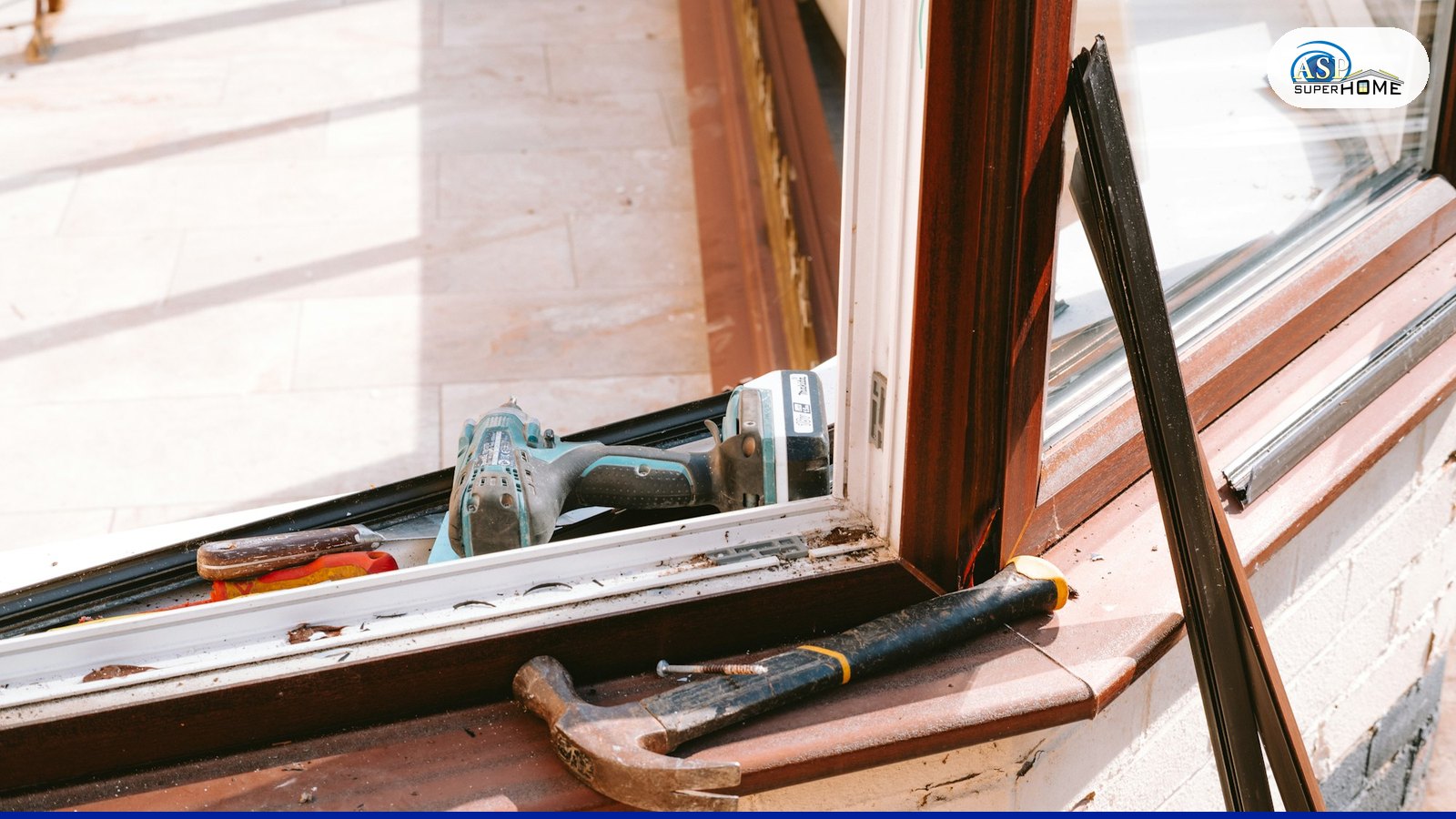
How Weather Affects Window Installation Schedule

How weather affects window installation comes down to 3 factors: moisture, wind and temperature. Light rain may not stop a job, while heavy rain, strong wind and approaching storms will. Crews protect each opening and wait for dry surfaces so sealants bond. Florida hurricane season runs from June 1 to November 30, which makes early planning worth the effort.
Key Takeaways
- Moisture, wind and temperature are the 3 weather factors that change a window installation day.
- Crews can work through light rain with care, but heavy rain pauses a job to protect the wall.
- Sealants and foam need dry surfaces and the right temperature range from the product maker.
- Windows can be installed during hurricane season, but a storm watch moves the schedule.
- A flexible schedule with a few spare days handles weather delays without stress.
How Weather Affects Window Installation
Weather affects window installation by changing how safely crews can work and how well sealants bond to the wall. Water, wind and temperature each act on a different part of the job. A pause in any one of them can move the whole schedule by a day or more.
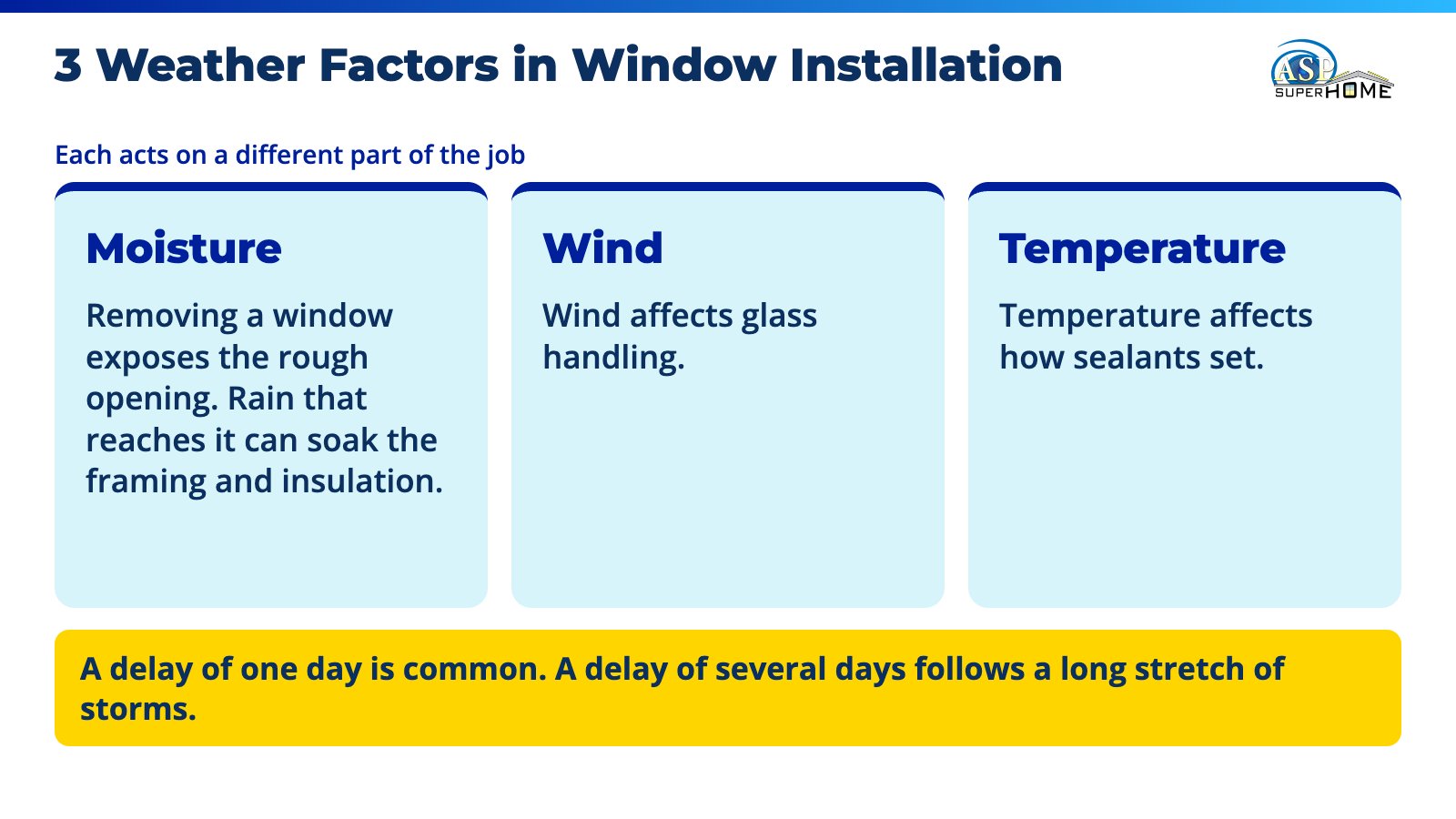
Water is the biggest concern. Removing a window exposes the rough opening, which is the framed hole in the wall. Rain that reaches that opening can soak the framing and insulation. Choosing storm-ready windows does not change this rule, because every new unit goes into an opened wall.
Wind affects glass handling, and temperature affects how sealants set. A delay of one day is common, and a delay of several days follows a long stretch of storms. Rain is the weather question homeowners ask first, so it comes next.
Can Windows Be Installed in the Rain
Windows can be installed in the rain only when the rain is light and the opening stays dry. Heavy rain, standing water and wet sealing surfaces are reasons to stop. The decision rests with the crew leader on site.
Crews do work in light drizzle when the work area sits under an overhang. They also replace one window at a time. That limits how long each opening stays exposed. Installers also cover a finished opening before they start the next one.
Installers stop for heavy rain, lightning and wet surfaces. Lightning is a safety issue for anyone on a ladder or near metal frames. Sealants and foam do not bond well to saturated wood, masonry or aluminum. A joint sealed on a wet surface can fail months later. Understanding that failure explains how crews seal windows against rain.
How to Seal Windows From Rain During Installation
To seal windows from rain during installation, keep the opening dry, install the flashing in the right order and seal every joint. Crews follow the installation instructions listed in each Florida Product Approval or Miami-Dade Notice of Acceptance (NOA). Those documents show how the product passed testing.
- Dry the opening and wipe the sealing surfaces before any sealant touches them.
- Set the window in the rough opening and check that it sits level and square.
- Fasten the window with the anchors and spacing listed in its product approval.
- Apply flashing and sealant so water drains away from the wall, not behind it.
- Seal the interior and exterior joints, then let the sealant set before heavy rain returns.
Sealant setting is the step that weather affects directly, which brings up the next question about ideal conditions.
What Is the Ideal Weather for Window Installation
The ideal weather for window installation is dry, calm and mild. Dry air keeps the opening clean. Calm air makes large panes safer to carry. Mild temperatures let sealants set the way the maker intended.
Each sealant and foam product lists its own working temperature range and set time on the product data sheet. Crews read those sheets before choosing a product. Outside the listed range, sealant can set slowly, skin over or lose adhesion.
Wind above a moderate breeze makes handling glass unsafe. Laminated impact glass is heavier than standard glass, so crews pause for gusts. A morning start also helps, because afternoon storms are a regular pattern in Florida summers. Heat and humidity add their own effects, covered next.
How Do Heat and Humidity Change a Florida Installation Day
Heat and humidity change a Florida installation day by speeding up sealant skinning and slowing the drying of damp surfaces. Hot frames can also expand slightly while the crew fits them. Crews respond with early starts and careful timing. Shaded work areas and cooler morning hours give sealants a steadier set.
High humidity keeps wood framing and masonry damp longer after a rain shower. Damp surfaces hurt adhesion even when the sky looks clear. Installers check the surface before sealing, not the forecast alone.
Sun and heat also affect the crew. Water breaks, shade and early hours keep the work accurate and safe. Our installation step-by-step guide shows where each stage fits into a normal day. Hurricane season adds a larger scheduling issue than daily heat.
Can Windows Be Installed During Hurricane Season
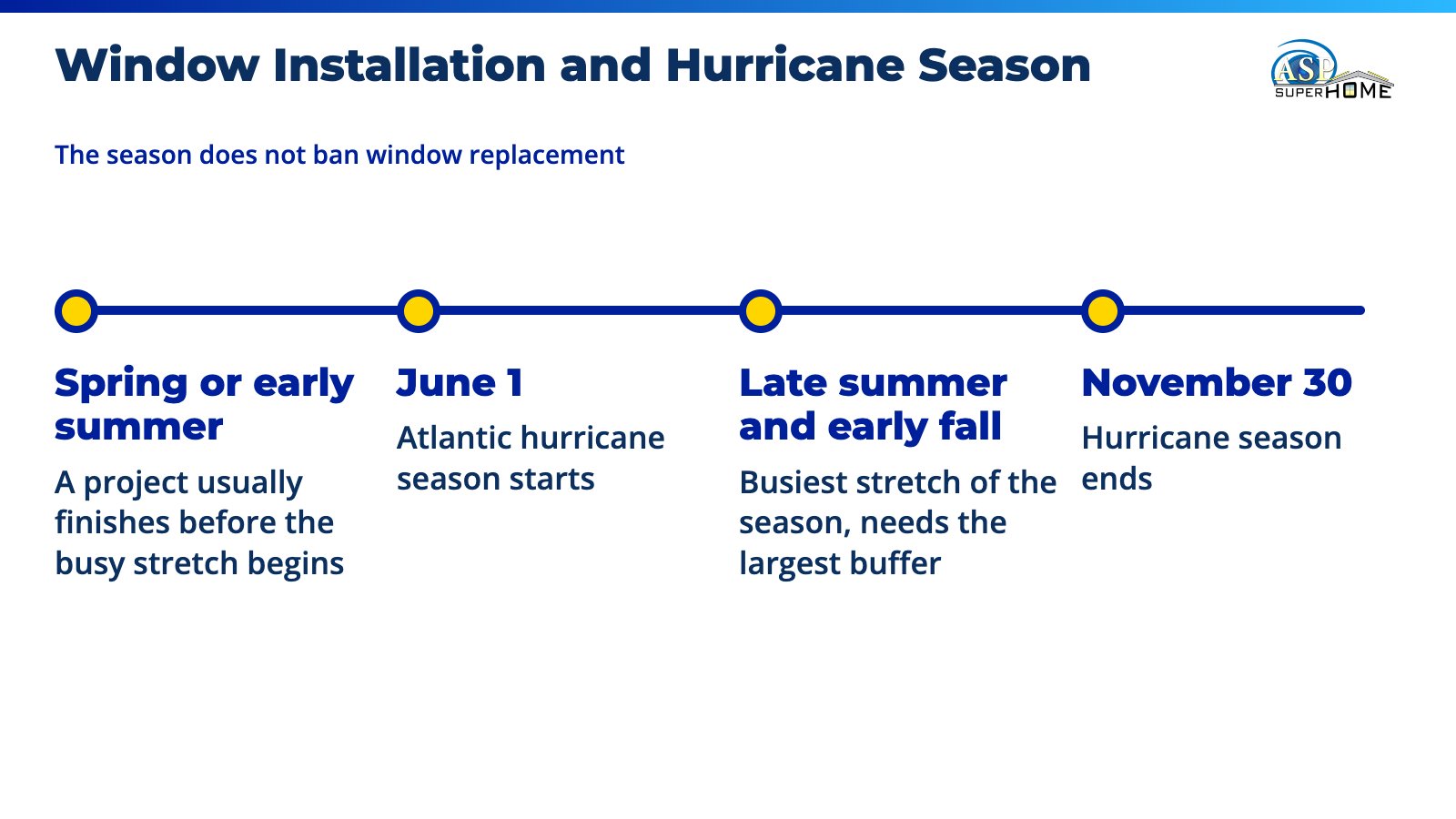
Windows can be installed during hurricane season, because the season does not ban or stop window replacement. Hurricane season in the Atlantic starts June 1 and ends November 30. A project can go ahead whenever no tropical system threatens the area.
Waiting for a storm warning is too late to start. Custom impact products are made to the size of each opening, so orders take time to build. Permits also take time. Homeowners who order residential windows in the off-season usually avoid the rush.
Demand for installers can rise as storms approach, which tightens schedules. Early planning leaves room for weather days. Late summer and early fall bring the busiest stretch of the season, so those months need the largest buffer.
A project that starts in spring or early summer usually finishes before that stretch begins. A tropical system near the coast raises the next question.
What Happens If a Tropical Storm Approaches During Installation
When a tropical storm approaches during installation, the crew secures every open window and pauses work until the weather clears. Safety comes before schedule. Finished windows get closed and locked, and open frames get protective covering.
The National Hurricane Center issues a tropical storm watch when storm-force winds are possible within 48 hours. That notice is the signal for crews to wrap up exposed work. Homeowners can then move outdoor items and prepare the home.
A completed impact window starts protecting the opening once it is installed, and a project that is only half done offers less. That is why crews finish one opening fully before starting the next. Weather also shapes the paperwork side of a project.
How Does Weather Change the Permit and Inspection Schedule
Weather changes the permit and inspection schedule by delaying inspection visits and installation days that depend on them. A building permit is required for window replacement under the Florida Building Code. Inspections follow the install, so a storm that stops work also moves the inspection date.
Miami-Dade and Broward counties are in the High-Velocity Hurricane Zone (HVHZ) of the code. Products there must meet stricter testing and approval rules. Our installation duration article covers how each step adds time.
A permit team that files early gives the crew more open dates. Approved product paperwork also needs to be ready before the first window comes out. Missing documents can stall an inspection even on a clear day.
Homeowners can help by confirming access to each opening and by keeping pets and vehicles clear on the scheduled day. That groundwork supports a flexible plan, which the next section lays out.
How Do You Plan a Window Installation Schedule Around Weather
You plan a window installation schedule around weather by building spare days into the timeline. Choose a start well before storm peaks. A plan with room to move handles delays calmly, and it keeps how weather affects window installation from becoming a surprise. These steps keep a project on track.
- Request an estimate early so measuring, permitting and product ordering finish before the busy weeks.
- Ask the project manager how the crew handles rain days and rescheduling.
- Choose a start date with a few open days behind it in the calendar.
- Check the forecast 2 or 3 days ahead and confirm the plan with the crew.
- Clear furniture and wall hangings near each window before the crew arrives.
Homeowners can also review our guide to replacement timing to compare seasons. The short answers below cover the remaining weather questions.
What Else Should You Know About Weather and Window Installation
Weather and window installation also raise questions about cost, season, leaks, insurance, resealing and mess. Each short answer below covers one of them.
What Is the Cheapest Time of Year to Replace Windows
The cheapest time of year to replace windows varies, because price depends on the product, size, labor and the number of openings. Slower months can make scheduling easier. No season guarantees lower pricing, so compare written quotes. Our window cost factors guide explains what shapes a quote.
Is It Possible to Install New Windows During Winter
Installing new windows during winter is possible in Florida, because mild winter weather rarely pauses work. Cold snaps are short and dry days are common. Crews still check sealant temperature limits, and dry winter weather makes scheduling simple.
What Temperature Is Too Cold to Install Windows
The temperature that is too cold to install windows depends on the sealant and foam, because each product lists its own minimum. Cold slows setting and can weaken the bond. Florida homes seldom face that limit for long, but crews still follow the product sheet.
Why Do Windows Leak From the Top When It Rains
Windows leak from the top when the sealant at the head cracks, the flashing is missing or water runs behind the trim. Wind-driven rain pushes water into small gaps. Our list of common installation mistakes shows how those gaps form.
Can You Reseal Windows Instead of Replacing Them
You can reseal windows instead of replacing them when the frame and glass are sound and only the exterior sealant has failed. A cracked frame, fogged glass or rot around the opening points to replacement. A site visit shows which case applies.
Does Homeowners Insurance Cover Water Damage Around Windows
Homeowners insurance coverage for water damage around windows depends on your policy and the cause of the leak. Storm damage and long-term seepage can be treated differently. Your insurance agent can confirm the terms. Some policies also reward opening protection, as our post on premium reductions explains.
How Messy Is New Window Installation
New window installation is moderately messy, because removing old frames creates dust, debris and noise for a few hours. Crews lay protective covers, remove debris and clean up each day. Wet weather can add mud at entry points, so a covered path helps.
How ASP Super Home Helps You Plan Around Weather
ASP Super Home helps you plan around weather by scheduling window installation with in-house crews and a permitting team that handles approvals. A project manager visits your home, measures each opening and explains the steps. That clear plan makes weather delays easier to absorb.
Our team installs laminated weather-ready windows built for South Florida storms. Each project covers permits, inspections and a final walkthrough.
Our workmanship protection page lists the coverage that backs the work.
Homeowners who want to spread out costs can review financing choices before choosing a start date.
Knowing how weather affects window installation makes the whole schedule easier to plan. To plan your project, request a free in-home consultation or call 786-933-9815.
Homeowners across the region have relied on ASP Super Home since 2006.
Meet With a Project Manager
Your first conversation is with a Project Manager who takes the time to understand your goals, walk you through your options, and stays connected throughout your project — from the initial consultation through the final walkthrough.


Insights & Resources
Stay informed with expert tips on roofing materials, hurricane codes, repairs, and South Florida construction standards.