


How Much Solar Panel Costs and What to Expect
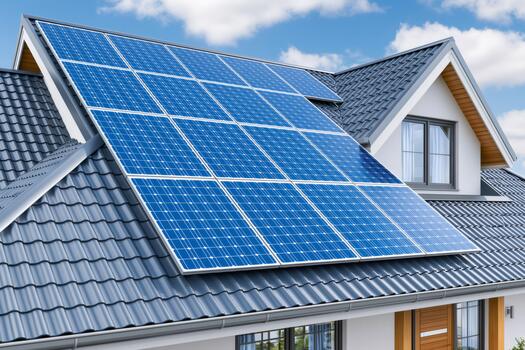

Solar panels cost between $2.20 and $3.50 per watt installed in 2026, putting a typical residential system between $18,000 and $28,000 before state incentives. The final number depends on your system size, the type of panels you choose, roof complexity, and where you live. According to EnergySage marketplace data from July 2026, the national average for a 12 kW system sits at $31,135 before incentives, while Florida homeowners typically pay less per watt than the national average because of strong installer competition and year-round sunlight. This guide covers everything you need to know about solar panel cost in 2026, from per-watt pricing and system sizing to battery storage, financing, and what the installation process actually looks like.
Key Takeaways
- The national average solar panel cost is $2.50 to $3.50 per watt installed in 2026, with Florida averaging $2.15 to $2.71 per watt, according to EnergySage and SolarReviews data.
- A typical 8 kW residential system costs $18,000 to $28,000 before incentives; larger homes needing 10 to 12 kW systems pay more.
- The federal Section 25D residential solar tax credit expired December 31, 2025; Florida state incentives (sales tax exemption, property tax exemption, full retail net metering) remain active.
- Solar panels last 25 to 30+ years and degrade at just 0.5% per year on average, according to NREL, retaining roughly 88% output at year 25.
- Homes with solar sell for 6.9% more than comparable homes without solar, according to a 2025 SolarReviews study using Zillow sales data.
- Solar battery backup systems add $9,000 to $18,000 installed and provide power during outages, a critical feature in hurricane-prone regions.
- Most homeowners recover their solar investment within 6 to 12 years through electricity bill savings and net metering credits.
How Much Do Solar Panels Cost in 2026?
Solar panels cost $2.50 to $3.50 per watt installed nationally in 2026, and Florida homeowners typically pay $2.15 to $2.71 per watt. These figures include the panels, inverter, mounting hardware, wiring, permitting, and labor. The U.S. Department of Energy places the all-in residential cost between $2.74 and $3.30 per watt, while SolarReviews reports a national average of $3.03 per watt for a 7.2 kW system ($21,816 total). Solar panel cost has dropped more than 50% since 2010, according to data tracked by the National Renewable Energy Laboratory (NREL) and Lawrence Berkeley National Laboratory.
Solar panel cost in Florida runs lower than the national average for two reasons. First, Florida's strong installer competition drives per-watt pricing down. Second, the state's high electricity consumption from air conditioning means homeowners install larger systems, and larger systems lower the cost per watt because fixed expenses like permitting and site visits spread across more panels. A 10 kW system rarely costs twice as much as a 5 kW system; the ratio is closer to 1.7 times, according to Solar.com's marketplace analysis.
Hardware, which includes the panels, inverter, and mounting equipment, accounts for approximately 43% of total installation costs, according to U.S. Department of Energy benchmarks. Installation labor makes up about 7%, and soft costs like design, engineering, permitting, and project management account for 28%. The remaining share covers dealer margins, sales overhead, and administrative processing. Business owners looking at larger installations for offices, warehouses, or retail spaces can explore commercial solar options, which follow similar cost-per-watt structures but benefit from greater economies of scale.
What Factors Affect Solar Panel Installation Cost?
The factors that affect solar panel installation cost are system size, panel type, roof complexity, geographic location, inverter choice, and whether you add battery storage. System size is the single biggest driver of total cost, because more kilowatts mean more panels, more mounting hardware, and more labor hours.
Your electricity usage determines the system size you need. The average U.S. household consumes about 10,000 kilowatt-hours (kWh) per year, according to the U.S. Energy Information Administration (EIA). A home using that much electricity would typically need a 7 to 8 kW system to offset most or all of its annual electric bill. Florida homes, however, average 13,000 to 14,000 kWh per year because of heavy air conditioning use, pushing the typical system size to 8 to 12 kW.
Roof complexity also influences the cost of residential solar panels. Steep pitches, multiple roof planes, tile surfaces, and limited south-facing space all increase installation time and require specialized mounting equipment. In South Florida, many homes have tile roofs that require tile hooks and careful flashing work, adding to the labor component. Flat roofs need tilt racks to angle panels toward the sun, which adds both material and engineering cost.
The type of inverter you choose affects cost as well. String inverters cost less but reduce the entire system's output when one panel is shaded. Microinverters cost more per unit but optimize each panel independently, which improves production on complex roofs with partial shading.
How Much Does a Solar System Cost for a 2000 Sq Ft House?
A solar system for a 2,000 square foot house costs $15,500 to $25,600 before incentives in 2026, depending on electricity usage, system size, and equipment quality. Square footage alone is not the best indicator of cost, because two homes of the same size can use vastly different amounts of electricity. A household running electric HVAC, an electric vehicle charger, and a pool pump may need a 10 to 12 kW system, while an energy-efficient home with gas appliances might only need 6 kW.
The table below shows typical installed costs for different residential system sizes in 2026. These figures reflect national averages before incentives and include all hardware, labor, permitting, and interconnection fees.
System Size
Estimated Total Cost (Before Incentives)
Cost Per Watt
Typical Home Size
5 kW
$14,000 - $17,500
$2.80 - $3.50
Small home / low usage
6 kW
$16,200 - $21,000
$2.70 - $3.50
1,200 - 1,500 sq ft
8 kW
$20,000 - $28,000
$2.50 - $3.50
1,500 - 2,500 sq ft
10 kW
$25,000 - $33,000
$2.50 - $3.30
2,000 - 3,000 sq ft
12 kW
$29,000 - $40,000
$2.41 - $3.34
3,000+ sq ft / high usage
Sources: EnergySage Marketplace Data (July 2026), SolarReviews (July 2026), LBNL Tracking the Sun 2024, U.S. Department of Energy Solar PV Benchmarks.
Florida-specific pricing falls toward the lower end of these ranges. EnergySage reports an average of $2.15 per watt in Florida as of July 2026, while SolarReviews places the Florida average at $2.71 per watt. The difference reflects variations in dataset methodology, system sizes included, and whether dealer fees are counted.
What Is the Difference Between Monocrystalline and Polycrystalline Solar Panels?
The difference between monocrystalline and polycrystalline solar panels is efficiency, lifespan, cost, and heat tolerance. Monocrystalline panels achieve 20% to 23% efficiency ratings, last 25 to 30+ years, and perform better in high temperatures, making them the dominant choice for residential installations. Polycrystalline panels reach 15% to 17% efficiency, cost less per panel, but require more roof space to produce the same output.
Most installers in 2026 recommend monocrystalline panels for residential use because fewer panels cover the same energy demand. Fewer panels mean less mounting hardware, less labor, and a cleaner roofline. Premium monocrystalline panels from manufacturers like LONGi, REC, and Maxeon carry 30-year performance warranties and degrade at just 0.3% to 0.4% per year, according to a 2024 update of NREL's degradation rate meta-analysis. Budget-tier polycrystalline panels degrade at 0.8% to 1.0% per year, producing only 78% to 80% of original output by year 25.
How Long Do Solar Panels Last?
Solar panels last 25 to 30 years under warranty and often produce usable electricity for 35 to 40 years. The 25-year mark is a conservative warranty period set by manufacturers, not a physical lifespan limit. A study by the National Renewable Energy Laboratory (NREL) examined more than 2,000 solar installations worldwide and found a median degradation rate of 0.5% per year for crystalline silicon panels. At that rate, a panel still produces approximately 88% of its original rated output after 25 years.
Panels installed in the 1980s and 1990s have been tested and many still operate above 80% of their original output after 35 to 40 years, according to NREL field data. Panel efficiency has also improved significantly over the past two decades. Panels sold in the early 2000s typically operated at 12% to 14% efficiency. Today's mainstream monocrystalline panels reach 20% to 23% efficiency, producing far more electricity per square foot of roof space.
Degradation happens gradually, not suddenly. Light-induced degradation (LID) causes a 1% to 3% drop in the first year of exposure, according to PV Evolution Labs' 2025 Module Reliability Scorecard. After that initial dip, annual losses slow to 0.3% to 0.5% for quality panels. A well-maintained solar energy system in a sunny climate like Florida can generate reliable power for three decades or longer.
What Does a Solar Panel Installation Include?
A solar panel installation includes the panels, an inverter (or microinverters), mounting hardware, electrical wiring, a monitoring system, permitting, inspections, and utility interconnection. Each component serves a specific function in converting sunlight into usable household electricity.
The installation process follows a specific sequence from start to finish:
- Site assessment and roof evaluation to determine structural suitability, shading patterns, and optimal panel placement.
- System design and engineering, including electrical schematics and structural calculations for your specific roof type.
- Permitting through your local building department and utility company, which in Florida includes both building and electrical permits.
- Physical installation of mounting rails, panels, inverter, wiring, and monitoring hardware, which typically takes 1 to 2 days for residential systems.
- Municipal inspection and utility interconnection approval, after which your system connects to the grid and begins generating electricity.
In hurricane-prone areas, mounting hardware must meet wind load requirements set by local building codes. Miami-Dade County enforces some of the strictest wind resistance standards in the country, requiring racking systems rated for sustained winds of 170+ miles per hour. This adds a small premium to the mounting hardware cost but protects the system during severe weather. Pairing solar panels with a durable metal roofing system provides a strong structural foundation that simplifies panel mounting and extends the roof's useful life well beyond the panels' warranty period.
Do Solar Panels Increase Home Value?
Yes, solar panels increase home value by an average of 6.9% compared to comparable homes without solar, according to a 2025 study by SolarReviews using Zillow sales data. That 6.9% premium represents a significant increase from the 4.1% figure Zillow found in its earlier 2019 study. Based on the current U.S. median home value of approximately $416,900, a solar installation could add nearly $29,000 in property value.
Homes with solar panels also sell 20% faster than homes without them, according to Zillow's research. A separate study published by the National Renewable Energy Laboratory found that every dollar saved on annual electricity bills through solar correlates with a $20 increase in home value. The combination of lower utility costs, environmental appeal, and energy independence makes solar-equipped homes more attractive to today's buyers.
Florida offers an additional financial benefit for solar homeowners. The state exempts any solar-related increase in property value from property tax assessments. A homeowner who adds $25,000 in value through solar battery backup and panel installation pays zero additional property tax on that increased value, according to the Solar Energy Industries Association (SEIA).
Is Solar Worth It Without the Federal Tax Credit?
Yes, solar is still worth it without the federal tax credit because the cost of solar electricity over 25 years is roughly $0.06 to $0.08 per kWh, while average utility rates range from $0.14 to $0.30 per kWh. The Section 25D Residential Clean Energy Credit, which provided a 30% tax credit on solar installations, expired December 31, 2025 under the One Big Beautiful Bill Act (OBBBA). Homeowners who install solar in 2026 cannot claim this federal credit.
Despite the tax credit expiration, solar panel prices have dropped enough over the past decade that the investment still pays for itself within 6 to 12 years for most homeowners, according to NREL and EnergySage data. The payback period depends on your local electricity rate, system size, available state incentives, and how you finance the purchase.
Florida homeowners still benefit from two active state-level incentives that reduce the effective cost of going solar:
- Sales tax exemption: Florida exempts all solar energy equipment from the state's 6% sales tax, saving approximately 6% on equipment costs at the point of purchase.
- Property tax exemption: Florida excludes any increase in home value attributable to a solar installation from property tax assessment, so your tax bill does not rise after installation.
- Net metering: Florida's full retail net metering program credits homeowners at the same per-kWh rate they pay for electricity, effectively turning the grid into a free storage system for excess solar production.
These three incentives, combined with Florida's strong sunlight and high electricity consumption, keep the return on investment attractive for homeowners throughout South Florida even without the federal credit. A 7.2 kW system in Florida saves an average of $130 per month, or over $50,000 in total energy bill savings over a 25-year panel lifespan, according to SolarReviews.
How Does Net Metering Work With Solar Panels?
Net metering works by crediting homeowners at the full retail electricity rate for every kilowatt-hour of excess solar energy they send back to the grid. When your panels produce more electricity than your home uses during the day, the surplus flows onto the utility grid. Your electric meter tracks this export, and your utility applies a credit to your bill at the same rate you would pay to buy that electricity.
Florida's net metering policy, governed by Florida Public Service Commission Rule 25-6.065, requires the state's largest utilities to offer full retail rate credits for systems up to 2 megawatts. Full retail net metering is one of the most favorable policies available to residential solar owners because it values your exported electricity at the same price as grid electricity, not at a reduced wholesale rate.
Net metering effectively turns the electric grid into a zero-cost battery. During peak daytime production, your excess energy earns credits. During evening hours when your panels stop producing, you draw from the grid and your accumulated credits offset the cost. At the end of each billing cycle, you pay only for the net difference between what you consumed and what you produced. Many solar homeowners in Florida see monthly electric bills drop from $200 to $400 down to $10 to $50, depending on system size and usage patterns.
How Much Does a Solar Battery Cost?
A solar battery costs $9,000 to $18,000 installed for a typical residential system in 2026, depending on capacity, brand, and installation complexity. Battery cost is measured in dollars per usable kilowatt-hour (kWh), and the current installed range is $800 to $1,200 per kWh, according to data from PowMr Academy and Solar.com's 2026 pricing network. A standard 10 to 13.5 kWh lithium-ion battery provides enough stored energy to power essential loads (refrigerator, lights, Wi-Fi, medical equipment) for 8 to 12 hours during an outage.
Whole-home battery backup, which keeps every circuit in your house powered during grid failures, requires larger capacity and costs $20,000 to $32,000 installed, according to HomeGuide. Most homeowners in hurricane-prone areas opt for partial-home backup to cover critical loads at a lower cost. Lithium iron phosphate (LFP) batteries have become the dominant residential chemistry in 2026 due to their longer cycle life, superior safety profile, and competitive pricing compared to nickel manganese cobalt (NMC) alternatives.
Adding a battery to a solar system is not required to benefit from solar. In Florida, where maximizing savings through net metering already offsets nighttime electricity use, batteries serve primarily as outage protection rather than as a financial necessity. However, for homeowners who experience frequent power outages during storm season, a battery provides peace of mind that a grid-tied system alone cannot offer.
Do Solar Panels Work on Cloudy Days?
Yes, solar panels work on cloudy days, but they produce less electricity than on sunny days. Cloud cover reduces the amount of direct sunlight reaching the panel surface, which lowers energy output. On a heavily overcast day, panels typically generate 10% to 25% of their rated capacity. On lightly cloudy or hazy days, production drops to about 50% to 70% of full capacity. Solar panels respond to all visible light, not just direct sunshine, so they continue generating electricity even when the sky is gray.
Annual production estimates already account for cloudy days, seasonal variation, and weather patterns. When a solar installer sizes your system, they use historical irradiance data from NREL's PVWatts calculator to project how much energy your panels will produce over a full year in your specific location. Florida averages approximately 5.5 to 5.7 peak sun hours per day, which is among the highest in the country and well above the national average.
What Happens at Night With Solar Panels?
Solar panels do not produce electricity at night because they require sunlight to generate power. After sunset, your home draws electricity from the grid, and any net metering credits you accumulated during the day offset the cost of that nighttime electricity. If you have a solar battery backup system, your stored energy powers the home during evening hours, reducing or eliminating grid dependence after dark.
Without a battery, a grid-tied solar system also shuts down during power outages for safety reasons. This is a code requirement called anti-islanding protection, which prevents your panels from sending electricity onto utility lines while crews are working to restore power. Adding battery storage solves this limitation by allowing your system to disconnect from the grid and power your home independently during outages.
Why Is My Electric Bill Still High With Solar Panels?
An electric bill that stays high after solar panel installation usually means the system is undersized for your actual electricity usage, shading is reducing output, or your consumption has increased since the system was designed. A system sized for 80% of your annual usage will still leave 20% of your bill unpaid by solar. Adding an electric vehicle, a pool heater, or a home office with heavy electronics after installation increases demand beyond what your original system was designed to cover.
Shading from new tree growth, neighboring construction, or debris on the panels also reduces production over time. Regular monitoring through your system's app or online portal reveals whether your panels are producing at expected levels. A solar panel repair inspection can identify and correct performance issues like micro-cracks, faulty wiring, or inverter malfunctions before they compound into significant production losses.
Net metering timing can also create confusion. Solar credits accumulate monthly, and some utilities apply credits differently across billing cycles. Reviewing your utility statements over a full 12-month period gives a clearer picture of actual savings than comparing any single month before and after installation.
Will Solar Prices Go Down in 2026?
Solar prices are not expected to drop significantly through 2026 because panel costs have already stabilized after a decade of steep decline, and soft costs (labor, permitting, overhead) are not falling. According to SEIA's Q2 2026 Solar Market Insight report, the residential solar market grew 6% year-over-year in Q1 2026, and installer pricing reflects steady demand rather than surplus.
Panel manufacturing costs reached near-floor levels in 2024 and 2025 as global production scaled to record volumes. The U.S. solar industry installed 43 gigawatts of new capacity in 2025 alone, marking the fifth consecutive year as the top source of new electricity generation, according to SEIA. With solar roof systems already at scale, further price drops depend on soft cost reduction, which has historically moved more slowly than hardware cost declines.
Waiting for lower prices also means missing out on current electricity savings. Every month without solar is a month of paying full retail electricity rates that continue rising. The EIA reports that average U.S. residential electricity rates have increased roughly 3% to 5% annually over the past decade. Locking in solar production now protects against future rate increases for the 25 to 30 year life of the system.
How Do You Pay for Solar Panels?
You pay for solar panels through cash purchase, solar loan, solar lease, power purchase agreement (PPA), or PACE financing, and each option affects your total cost and savings differently. Cash purchases eliminate interest charges and deliver the highest lifetime return, but require the largest upfront outlay. Solar loans spread payments over 10 to 25 years and let you own the system, but dealer fees on solar-specific loans add an average of 19.99% to the loan principal, according to SolarReviews data.
Solar leases and PPAs require zero upfront payment. Under a lease, you pay a fixed monthly fee for use of the system. Under a PPA, you pay a set rate per kWh for the electricity the panels produce. Both options transfer system ownership to a third party, which means the homeowner does not own the panels and does not benefit from the property value increase that owned systems provide.
PACE (Property Assessed Clean Energy) financing options are available through programs like Ygrene, Renew Financial, and Fortifi. PACE financing attaches to the property rather than the borrower, requires no down payment, and is repaid through your property tax bill over 5 to 25 years. This option works especially well for homeowners who want to bundle solar with other energy efficiency upgrades, because all qualifying improvements can be financed together under one PACE assessment.
Bundling solar panels with impact windows or a new roof under PACE financing lowers the effective monthly cost of each upgrade because the total is spread across a single long-term repayment schedule. Homeowners who combine solar with hurricane-rated home improvements often see both energy savings and insurance premium reductions that offset the financing payments.
Frequently Asked Questions
What Is the 20% Rule for Solar Panels?
The 20% rule for solar panels is a general guideline suggesting that a solar system should be sized to produce at least 20% more energy than your home currently uses. The extra capacity accounts for future electricity consumption increases, panel degradation over time, and seasonal production variation. A system designed with this buffer gives homeowners a larger margin of savings and reduces the likelihood of undersizing.
Can Solar Panels Be in the Rain?
Yes, solar panels can be in the rain without damage. Solar panels are built with tempered glass fronts and sealed aluminum frames designed to withstand rain, hail, wind, and moisture exposure. Rain actually benefits solar production over time because it rinses off dust, pollen, and debris that reduce output. Panels tested to IEC 61215 standards must pass humidity, water immersion, and mechanical load testing before certification.
Which Solar System Is Best for a Home?
The best solar system for a home is a grid-tied system using monocrystalline panels with a string inverter or microinverters, sized to offset 100% of your annual electricity usage. Monocrystalline panels deliver the highest efficiency (20% to 23%) and longest warranties (25 to 30 years). Homeowners in storm-prone areas benefit from adding battery backup to maintain power during grid outages.
Do Homes Sell Faster With Solar?
Yes, homes sell faster with solar. Zillow research shows that homes equipped with solar panels sell approximately 20% faster than comparable homes without solar. The 2024 National Association of Realtors Sustainability Report found that 44% of homebuyers consider utility costs an important factor when purchasing a home, and 57% of real estate agents view promoting energy-efficient features as valuable in listings.
How Many Solar Panels Do I Need for My House?
The number of solar panels you need for your house depends on your annual electricity consumption, the wattage of the panels, and your local sun exposure. A home using 10,000 kWh per year in a location with good sunlight typically needs 18 to 22 panels rated at 400 to 440 watts each, producing a system between 7 and 10 kW. Florida homes, which average 13,000 to 14,000 kWh annually, often need 24 to 30 panels for full offset.
What Are the Disadvantages of Solar Panels?
The disadvantages of solar panels include the upfront cost, weather-dependent production, roof suitability requirements, and the fact that grid-tied systems without batteries shut down during power outages. Solar also requires adequate south-facing roof space with minimal shading. Homes with heavy tree cover, north-facing roofs, or roofs nearing end of life may need to address those conditions before installation. However, for homes that meet the basic requirements, the long-term savings and property value increase typically outweigh the upfront investment.
Putting It All Together
Solar panel cost in 2026 ranges from $2.20 to $3.50 per watt installed, with most residential homeowners paying $18,000 to $28,000 before state incentives for a system that offsets their full electricity usage. Florida residents benefit from below-average per-watt pricing, year-round sunshine, full retail net metering, and state tax exemptions that keep the payback period within 6 to 12 years even without the expired federal tax credit. Investing in a solar panel installation that lasts 25 to 30+ years, degrades slowly, increases home value, and protects against rising utility rates is one of the most effective long-term financial decisions a homeowner can make.
Whether you choose cash, a loan, or PACE financing, the numbers consistently show that solar pays for itself and then continues generating free electricity for the remainder of its long lifespan. Homeowners across South Florida are taking advantage of the state's strong sunlight, competitive installer pricing, and active incentive programs to lower their energy costs for decades. If you are ready to explore solar for your home, ASP Super Home can walk you through system sizing, financing, and what to expect from start to finish. Call 786-933-9815 or request a free estimate to get started.
Meet With a Project Manager
Your first conversation is with a Project Manager who takes the time to understand your goals, walk you through your options, and stays connected throughout your project — from the initial consultation through the final walkthrough.
.avif)
.avif)
.avif)
%201.avif)
Insights & Resources
Stay informed with expert tips on roofing materials, hurricane codes, repairs, and South Florida construction standards.


%201.avif)
%201%20(1).avif)

%201.svg)
%201%20(1)%20(1).png)
.png.png)
.png%20(1).png)
.png%20(2).png)
.avif)
.avif)


.png)
.svg)
.png)