


Impact Windows & Solar Panels: How to Maximize Savings
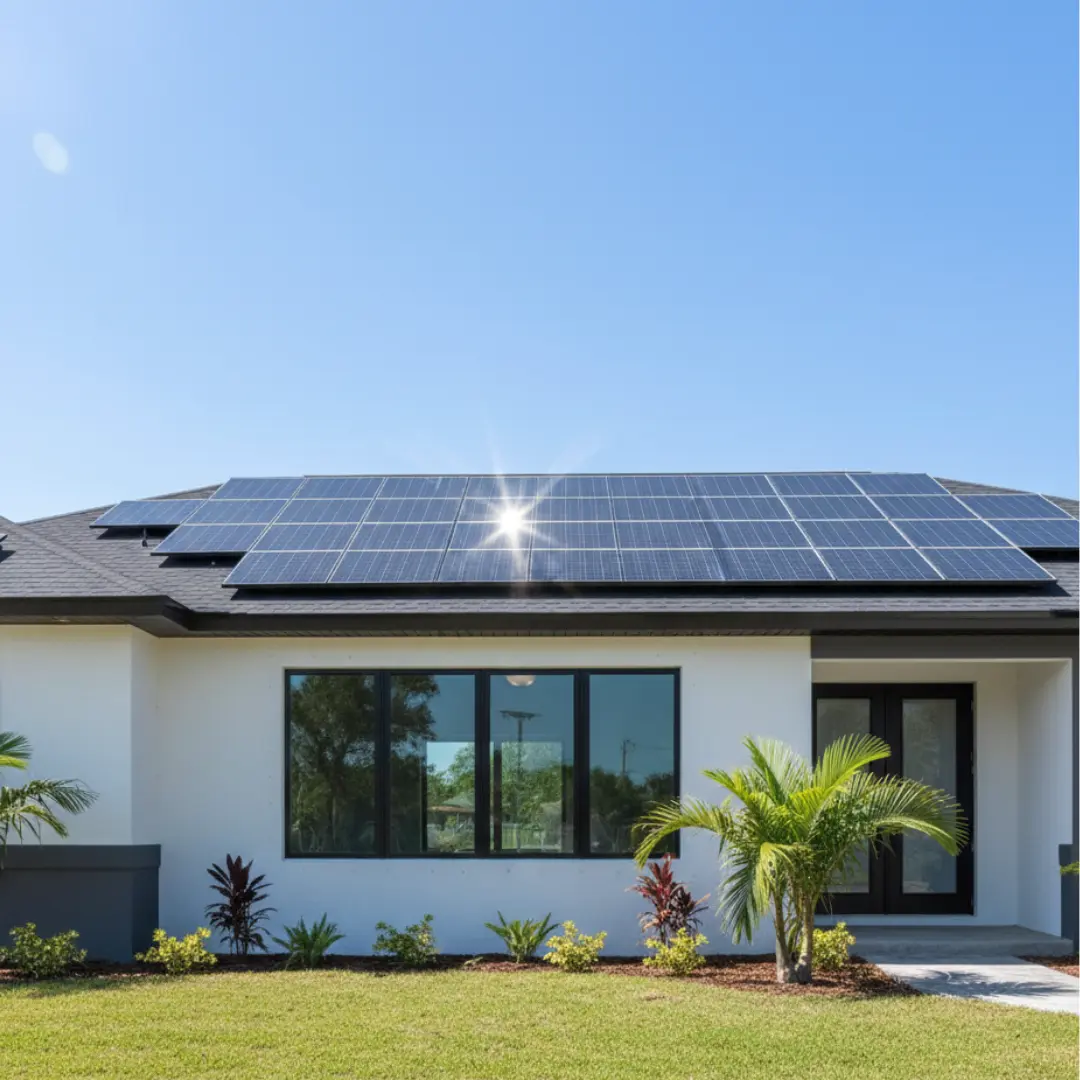
Impact windows and solar panels maximize savings by reducing cooling costs 30-50% through decreased heat gain while solar systems offset remaining electricity consumption, creating combined energy bill reductions of 60-85% annually according to Department of Energy studies.

Impact windows and solar panels maximize savings by reducing cooling costs 30-50% through decreased heat gain while solar systems offset remaining electricity consumption, creating combined energy bill reductions of 60-85% annually according to Department of Energy studies. Installing impact windows first decreases HVAC loads by 2-4 tons, allowing properly sized solar panel systems to cover 90-100% of reduced energy needs instead of only 60-70% coverage without window upgrades. South Florida homeowners in Miami, Fort Lauderdale, and Naples combining both upgrades achieve 6-8 year payback periods versus 10-15 years for solar-only installations, while receiving insurance premium discounts of 10-45% and property value increases of 4-6%.
Florida's combination of intense solar radiation averaging 5.5-6.0 peak sun hours daily and extreme cooling demands consuming 40-60% of residential electricity creates unique opportunities for integrated energy efficiency strategies. Impact resistant windows reduce thermal loads entering homes while photovoltaic systems generate clean electricity offsetting consumption. Understanding optimal installation sequencing, proper system sizing calculations, available financial incentives totaling $15,000-25,000, and maintenance requirements helps homeowners maximize return on investment. This comprehensive guide explains how residential solar panels in Miami paired with impact windows deliver superior performance compared to either upgrade individually.
How Do Impact Windows Reduce Energy Costs Before Solar Installation?
Impact windows reduce energy costs by blocking 70-99% of UV radiation, reflecting 40-60% of infrared heat, and eliminating air infiltration that accounts for 25-40% of cooling loads in standard homes. According to Energy Star certification standards, impact windows with Low-E coatings and U-Factor ratings below 0.30 decrease air conditioning energy consumption by 15-35% compared to single-pane windows. A typical 2,000 square foot home in Doral consuming 18,000 kWh annually reduces usage to 12,000-14,000 kWh after impact window installation, saving $600-900 yearly at $0.12-0.14 per kWh electricity rates before solar panels generate any power.
Solar Heat Gain Coefficient Impact on Cooling Loads
Solar Heat Gain Coefficient measures the fraction of solar radiation transmitted through windows as heat. Standard clear glass windows have SHGC values of 0.70-0.80, meaning 70-80% of solar energy enters homes as heat. Impact windows with Low-E coatings achieve SHGC values of 0.20-0.30, blocking 70-80% of solar heat gain while maintaining visible light transmission of 50-70%.
This dramatic heat reduction decreases HVAC runtime by 30-50% during peak cooling hours from 1-5 PM when solar radiation peaks at 900-1,100 watts per square meter. A home with 300 square feet of west-facing windows blocks 21,000-28,000 BTUs of heat daily using Low-E impact glass versus standard windows. This heat rejection eliminates the equivalent of 6,000-8,000 watts of air conditioning capacity, reducing electricity consumption by 45-60 kWh daily during summer months.
Air Infiltration Reduction and HVAC Efficiency
Traditional windows allow 0.3-0.6 cubic feet per minute of air leakage per linear foot of frame perimeter according to ASTM E283 testing standards. A typical home with 15 windows totaling 180 linear feet of perimeter leaks 54-108 CFM of unconditioned air infiltration. This air exchange forces HVAC systems to continuously cool incoming hot, humid air consuming 25-40% of total cooling energy.
Impact windows achieve air infiltration rates of 0.01-0.03 CFM per linear foot, reducing leakage by 90-95%. This dramatic improvement maintains stable indoor temperatures preventing constant HVAC cycling. The Insurance Institute for Business & Home Safety reports that air sealing through impact window installation reduces annual cooling costs by $400-800 in South Florida climates before considering solar panel contributions.
Humidity Control and Latent Cooling Load Reduction
Florida's 70-90% humidity levels create significant latent cooling loads as HVAC systems remove moisture from air in addition to temperature reduction. Air infiltration through leaky windows introduces humid outdoor air requiring 20-30% of cooling capacity for dehumidification. Impact windows with proper weatherstripping eliminate this moisture infiltration, allowing air conditioners to focus on temperature control rather than moisture removal.
Reduced humidity loads extend HVAC equipment lifespan by 3-5 years by preventing overwork and moisture-related corrosion. Homeowners installing impact windows in Fort Lauderdale before solar panels ensure HVAC systems operate at peak efficiency, minimizing the solar array size needed to achieve net-zero energy goals.
What Size Solar System Do You Need After Impact Window Installation?
After impact window installation, homeowners need 20-35% smaller solar systems because reduced cooling loads decrease annual electricity consumption from typical 18,000-24,000 kWh to 12,000-16,000 kWh for 2,000 square foot homes. A home requiring an 8-10 kW solar array before window upgrades needs only 5.5-7 kW after impact window installation, saving $4,000-8,000 in solar equipment costs at $2.50-3.50 per watt installed pricing. Proper system sizing requires 12 months of post-window electricity bills calculating actual consumption patterns rather than estimating based on pre-upgrade usage data.
Calculating Reduced Energy Consumption Post-Windows
Professional solar sizing begins with comprehensive energy audits measuring actual post-window electricity consumption. Homeowners should track usage for 3-6 months after impact window installation establishing accurate baseline data. Summer months June through September consume 40-50% of annual electricity in South Florida, making these measurements critical for proper solar array sizing.
A 2,000 square foot home originally consuming 2,000 kWh monthly during peak summer typically reduces to 1,300-1,500 kWh after impact window installation. This 25-35% reduction translates to 6,000-8,400 kWh annual savings requiring 1.5-2.1 kW less solar capacity. At $2.75 per watt average installed costs, this represents $4,125-5,775 in solar equipment savings directly attributable to impact window efficiency improvements.
Right-Sizing Solar Arrays for Maximum ROI
Oversized solar systems generate excess electricity that utilities purchase at wholesale rates 50-70% below retail electricity costs, reducing investment returns significantly. Florida's net metering policies credit excess generation at retail rates only up to annual consumption totals. Surplus generation beyond annual usage provides minimal financial benefit, making accurate system sizing critical for optimal payback periods.
Professional solar installers use PVWatts calculators incorporating roof orientation, shading analysis, local weather data, and post-window energy consumption projecting monthly generation profiles. Systems should generate 95-105% of annual consumption accounting for solar panel degradation of 0.5-0.8% annually over 25-year lifespans. Homeowners combining residential solar panels in Naples with impact windows achieve 6-8 year payback periods versus 10-12 years for oversized systems generating excess unmarketable electricity.
Battery Storage Sizing Considerations
Battery backup systems like Tesla Powerwall, Enphase Ensemble, or LG Chem provide emergency power during grid outages while optimizing solar value through time-of-use rate management. Impact windows reduce battery capacity requirements by 25-35% because lower cooling loads extend available stored energy during outages. A home requiring 20 kWh battery capacity before window upgrades needs only 13-15 kWh afterward, saving $3,500-6,000 in battery equipment costs.
Battery systems should cover essential loads including refrigeration, lighting, internet connectivity, and minimal air conditioning for 24-48 hours during typical outage durations. Impact windows maintain comfortable indoor temperatures longer without air conditioning during outages, reducing critical load requirements and allowing smaller, more affordable battery installations. Solar plus storage systems provide comprehensive energy independence and hurricane resilience for South Florida homeowners.
What Financial Incentives Apply to Combined Impact Window and Solar Installations?
Combined impact window and solar installations qualify for federal tax credits up to $600 for windows plus 30% of solar costs typically $5,000-10,000, Florida sales tax exemptions saving 6-7.5% on both purchases totaling $1,800-3,600, insurance premium reductions of 10-45% worth $400-1,800 annually, and PACE financing providing $0 down payment options for $30,000-60,000 combined projects. Total available incentives and first-year savings range from $15,000-25,000, reducing net investment costs by 35-50% and accelerating payback periods from 10-15 years to 5-8 years for comprehensive energy efficiency upgrades.
Federal Tax Credits for 2026 Projects
The Inflation Reduction Act extended through 2032 provides 30% Investment Tax Credit for residential solar installations with no maximum dollar limit. A typical 7 kW solar system costing $19,250 installed generates $5,775 federal tax credit claimed on following year's tax returns. Combined with Energy Efficient Home Improvement Credit providing $600 maximum for qualifying impact windows, homeowners receive $6,375 total federal tax benefits from coordinated installations.
Tax credits apply only to actual tax liability, requiring sufficient income to utilize full credit amounts. Homeowners with limited tax liability should consider spreading installations across multiple tax years maximizing credit utilization. Solar tax credits carry forward indefinitely until fully utilized, while window credits apply only to tax year of installation. Professional tax advisors help optimize timing strategies for maximum benefit realization.
Florida-Specific Incentive Programs
Florida offers property tax exemptions for renewable energy equipment under Florida Statutes Section 196.175, preventing increased property assessments from solar installations from triggering higher tax bills. While home values increase 4-6% from solar additions worth $20,000-40,000, property tax assessments exclude this value saving $400-1,200 annually depending on local millage rates.
My Safe Florida Home Program reopened in August 2025 with $280 million appropriated funding providing grants up to $10,000 for hurricane mitigation improvements including impact windows. Eligible homeowners with pre-2008 construction and property values under $700,000 combine MSFH grants with solar incentives reducing total out-of-pocket costs by $16,000-20,000 on comprehensive $40,000-50,000 upgrade projects. Grant funding operates first-come, first-served making early 2026 applications critical for participation.
Insurance Premium Reduction Calculations
The Insurance Information Institute confirms that impact windows reduce windstorm insurance premiums by 10-45% while solar plus battery backup systems may provide additional 5-10% discounts for homes maintaining power during outages preventing food spoilage and frozen pipe damage claims. A home with $5,000 annual insurance premiums saves $750-2,250 yearly after combined upgrades.
Insurance savings accumulate over system lifespans totaling $15,000-45,000 over 20 years, substantially offsetting installation investments. Homeowners must submit wind mitigation inspection reports documenting impact window installations and Certificate of Completion forms from solar contractors to receive premium reductions. Installing metal roofing in West Palm Beach alongside windows and solar provides additional 5-15% insurance discounts for comprehensive hurricane protection systems.
PACE Financing Structure and Benefits
Property Assessed Clean Energy financing programs including Ygrene, Renew Financial, and Fortifi offer $0 down payment home improvement loans repaid through property tax assessments over 20-25 year terms. Interest rates range from 6.5-9.5% with loan amounts from $10,000-100,000 covering complete impact window and solar installations without upfront capital requirements.
PACE financing doesn't impact debt-to-income ratios or require credit qualification beyond property equity verification, making it accessible for retirees and self-employed individuals. Loan repayments transfer to new owners at property sale, making homes more marketable with lower utility costs and hurricane protection. Combined monthly PACE payments of $250-400 typically equal or fall below pre-upgrade electricity and insurance costs, creating immediate positive cash flow while building home equity.
What Is the Optimal Installation Sequence for Maximum Savings?
The optimal installation sequence for maximum savings starts with impact windows in January-March achieving 25-35% energy reduction, followed by 3-6 month monitoring period establishing accurate post-window consumption baselines, then solar panel installation in April-June allowing system commissioning before peak summer generation months. This staged approach ensures properly sized solar arrays avoiding 20-35% oversizing common when installing solar first, prevents double-handling solar equipment during window installations, and maximizes first-year solar generation by completing installations before June-September peak production periods worth 40-50% of annual generation.
Why Impact Windows Should Install First
Impact window installation first provides immediate energy savings reducing monthly electricity bills 3-6 months before solar panels begin generating power. This consumption reduction allows accurate solar system sizing based on actual post-window usage rather than inflated pre-window consumption estimates. Solar installers frequently oversize arrays by 2-3 kW when designing systems before window upgrades, wasting $5,500-8,250 in unnecessary equipment costs.
Window installations create significant interior disruption requiring furniture moving, floor protection, and debris management. Completing windows before solar panels avoids potential solar equipment damage from window installation activities and prevents solar generation interruptions during window work. Professional contractors recommend 30-90 day gaps between window completion and solar installation allowing homeowners to verify window performance and establish consumption baselines.
Monitoring Period for Accurate Solar Sizing
Post-window monitoring periods capture seasonal consumption variations critical for solar system design. Florida homes consume 40-50% of annual electricity during June-September peak cooling months and only 15-20% during December-February mild months. Solar generation follows similar patterns with summer months producing 45-50% of annual output and winter months generating 15-20% of yearly totals.
Twelve-month monitoring provides most accurate data but delays solar installation unnecessarily. Three-month monitoring including at least one summer month captures peak consumption patterns allowing reasonable annual projections. Professional solar designers apply 1.15-1.25 multipliers to summer monthly consumption estimating annual usage for sizing calculations. Homeowners installing impact windows in Doral during January-February complete monitoring by April allowing solar installations in May-June optimizing first-year generation.
Solar Installation Timing for Peak Performance
Solar panel installations complete in April-June maximize first-year electricity generation by commissioning systems before peak summer production months. June-September generates 45-55% of annual solar output in South Florida with average daily production of 25-30 kWh from typical 7 kW systems. Delaying installations until July-August sacrifices 2,000-3,000 kWh first-year generation worth $240-360 in lost electricity offset.
Spring installations also avoid summer thunderstorm season when afternoon storms delay roofing work and October-November hurricane season when permitting authorities slow approvals focusing on emergency repairs. Solar equipment lead times of 4-8 weeks require February-April ordering for June completion, emphasizing importance of early planning after January-March window installations finish.
Combined Project Coordination Strategies
Some homeowners prefer simultaneous installations coordinating window and solar contractors working consecutively during single project periods. This approach requires careful scheduling ensuring window installations complete before solar roof work begins preventing double-handling materials and equipment. Combined projects take 5-10 days versus 2-4 weeks for separate installations spaced months apart.
Simultaneous installations work best when homeowners have accurate pre-window energy data allowing solar sizing without post-window monitoring periods. Homes with recent smart meter data, detailed utility bills showing hourly consumption, or existing solar quotes can proceed with combined installations confidently. Professional project managers coordinate trades ensuring efficient workflows and avoiding scheduling conflicts common in simultaneous multi-trade projects.
How Do You Calculate Combined Payback Periods and ROI?
You calculate combined payback periods by dividing total net investment costs after incentives by annual savings from reduced electricity bills, insurance premiums, and avoided maintenance expenses, typically yielding 5-8 year paybacks for properly sized systems. A $45,000 combined project receiving $12,000 in tax credits and grants with $5,500 annual savings achieves 6.0 year simple payback or 8-10 year discounted payback accounting for opportunity costs. Return on investment over 25-year system lifespans ranges from 300-500% including energy savings, insurance reductions, avoided utility rate increases averaging 3-4% annually, and property value appreciation of 4-6% from permanent improvements.
Total Investment Cost Calculations
Combined impact window and solar installations require comprehensive cost accounting including equipment, installation labor, permitting fees, and financing costs. Typical 2,000 square foot home investments include 12-15 impact windows costing $15,000-25,000 installed, 6-8 kW solar array costing $16,500-28,000 installed, electrical upgrades and main panel replacement costing $1,500-3,000, building permits totaling $500-1,200, and contingency allowances of 10-15% covering unforeseen conditions discovered during installations.
Total gross investments range from $35,000-60,000 depending on home size, product selections, and existing conditions. Net costs after federal tax credits, state incentives, and utility rebates reduce to $23,000-40,000 representing actual out-of-pocket expenses for payback calculations. PACE financing spreads these costs over 20-25 years with monthly payments of $200-450 creating immediate positive cash flow when combined savings exceed loan payments.
Annual Savings Quantification Methods
Annual savings combine multiple benefit categories requiring careful documentation for accurate calculations. Electricity savings measure pre-upgrade utility costs minus post-upgrade costs plus solar generation value. A home paying $2,400 annually pre-upgrade reduces to $600 post-windows plus generates $1,600 solar electricity offsetting grid purchases creates $3,400 annual electricity benefit.
Insurance premium reductions provide guaranteed annual savings independent of energy usage. Documented wind mitigation and solar installations generate 15-50% total premium decreases worth $600-2,500 yearly on typical Florida homeowners policies. These savings continue throughout ownership periods regardless of future utility rate changes or solar equipment performance variations.
Avoided maintenance costs include HVAC replacement delays of 3-5 years worth $1,000-1,500 annually when depreciated over equipment lifespans, plus reduced service calls from decreased runtime saving $150-300 yearly. Combined annual savings total $5,000-7,500 for comprehensive installations creating 5-8 year simple payback periods.
Property Value Enhancement Calculations
The National Renewable Energy Laboratory confirms that solar installations increase home values approximately $4 per installed watt or $24,000-32,000 for typical 6-8 kW systems. Impact windows add 1-3% property value or $4,000-12,000 on $400,000 homes. Combined improvements increase home values $28,000-44,000 offsetting 60-80% of installation investments immediately upon completion.
Resale value increases prove especially important for homeowners planning relocations within 10-15 years. Even without recovering full investments through energy savings, property value appreciation ensures minimal financial losses and potentially substantial gains in appreciating real estate markets. Homes with solar systems and impact windows sell 15-25% faster than comparable properties according to Zillow research, providing additional liquidity benefits beyond financial returns.
Long-Term ROI Including Utility Rate Escalation
Florida electricity rates increased 3.2% annually average over past 20 years according to Energy Information Administration data. Projecting similar future escalation shows that fixed solar generation offsets increasingly expensive grid electricity creating accelerating savings over time. Year one savings of $1,800 from solar generation grows to $2,450 by year 10 and $3,350 by year 20 assuming continued 3.2% annual rate increases.
This escalation effect improves internal rates of return to 8-12% for properly sized systems, exceeding typical stock market returns with lower volatility and zero market risk. Combined with impact window savings maintaining stable values over decades, comprehensive energy upgrades deliver superior risk-adjusted returns compared to traditional investment alternatives while providing tangible comfort, security, and environmental benefits.
What Maintenance Do Combined Systems Require?
Combined systems require annual impact window inspections checking sealants and hardware costing $150-300, biannual solar panel cleaning removing pollen and debris maintaining 95-100% generation efficiency costing $100-200, quarterly inverter monitoring verifying optimal performance, and five-year comprehensive system evaluations including roof inspections and electrical testing costing $400-600. Total annual maintenance expenses average $400-700 or 1-2% of system values, substantially lower than ongoing costs for traditional HVAC equipment, window repairs, and grid electricity consumption. Properly maintained combined systems provide 25-30 year service lives delivering decades of savings with minimal ongoing investments.
Impact Window Maintenance Requirements
Impact windows require minimal maintenance compared to traditional windows but benefit from annual attention ensuring long-term performance. Glass and frame cleaning quarterly using ammonia-free cleaners maintains visibility and prevents dirt accumulation in weatherstripping channels. Sealant inspections annually identify deterioration requiring repair before water infiltration occurs during storms.
Hardware lubrication biannually using silicone spray lubricants maintains smooth operation and prevents corrosion in coastal salt air environments. Testing all locking points monthly ensures continued functionality and maintains insurance coverage requirements. Professional maintenance visits cost $150-300 annually providing comprehensive inspections, minor adjustments, and documentation supporting warranty claims if issues develop. Homeowners installing impact windows in Naples near coastal areas benefit most from professional maintenance programs preventing salt air corrosion.
Solar Panel Cleaning and Performance Monitoring
Florida's frequent pollen seasons, summer thunderstorm dust, and coastal salt spray reduce solar panel efficiency by 5-15% when allowed to accumulate over 3-6 month periods. Professional cleaning twice annually maintains 95-100% generation efficiency maximizing electricity production and investment returns. Cleaning costs $100-200 per service depending on array size and roof accessibility.
Some homeowners perform DIY cleaning using garden hoses and soft brushes, but professional services provide safer access to roof-mounted arrays and use deionized water preventing mineral deposits that household water creates. Performance monitoring through manufacturer apps or third-party systems tracks daily generation identifying underperforming panels or inverter issues requiring professional attention. Most problems detected early through monitoring require simple repairs costing $200-500 versus $2,000-5,000 for major component replacements when issues go unnoticed.
Inverter and Electrical System Inspections
String inverters typically last 10-15 years before requiring replacement at costs of $1,500-3,000. Microinverter systems last 20-25 years with individual unit replacements costing $150-300 as needed. Annual electrical inspections verify proper grounding, connection integrity, and safety disconnect functionality ensuring continued safe operation and electrical code compliance.
Five-year comprehensive evaluations include roof inspections verifying mounting hardware integrity, shingle condition around array perimeters, and proper flashing preventing water infiltration. Infrared thermography identifies hot spots indicating electrical connection problems or failing components before catastrophic failures occur. These thorough inspections cost $400-600 but prevent costly emergency repairs and extend system operational lifespans to full 25-30 year expectations.
Conclusion
Impact windows and solar panels maximize savings through synergistic performance reducing cooling loads 30-50% while offsetting remaining electricity consumption, creating combined annual savings of $5,000-7,500 for typical South Florida homes. Optimal installation sequences start with impact windows during January-March followed by properly sized solar arrays in April-June achieving 5-8 year payback periods with 300-500% returns over 25-year system lifespans. Federal tax credits totaling $6,000-11,000, insurance premium reductions of $600-2,500 annually, and property value increases of $28,000-44,000 provide substantial financial benefits beyond energy savings.
Contact ASP SuperHome at (786) 933-9815 to schedule your comprehensive energy efficiency consultation today. Our certified installers serve Miami, Fort Lauderdale, Naples, West Palm Beach, Doral, and Fort Myers with integrated impact window and solar panel solutions maximizing savings through coordinated installations. We provide complete project management, $0 down PACE financing options, manufacturer warranties spanning 10-25 years, and over 19 years of South Florida installation experience protecting and powering 10,000+ homes. Visit our Doral showroom at 3400 NW 114th Ave to see impact window and solar panel displays while discussing customized solutions for your home's specific energy efficiency and hurricane protection needs.
Meet With a Project Manager
Your first conversation is with a Project Manager who takes the time to understand your goals, walk you through your options, and stays connected throughout your project — from the initial consultation through the final walkthrough.
.avif)
.avif)
.avif)
%201.avif)
Insights & Resources
Stay informed with expert tips on roofing materials, hurricane codes, repairs, and South Florida construction standards.


%201.avif)
%201%20(1).avif)
%201.svg)
%201%20(1)%20(1).png)
.png.png)
.png%20(1).png)
.png%20(2).png)
.avif)
.avif)


.png)
.svg)
.png)