


Solar and Metal Roof Systems: What Homeowners Expect in 2026 (Updated)
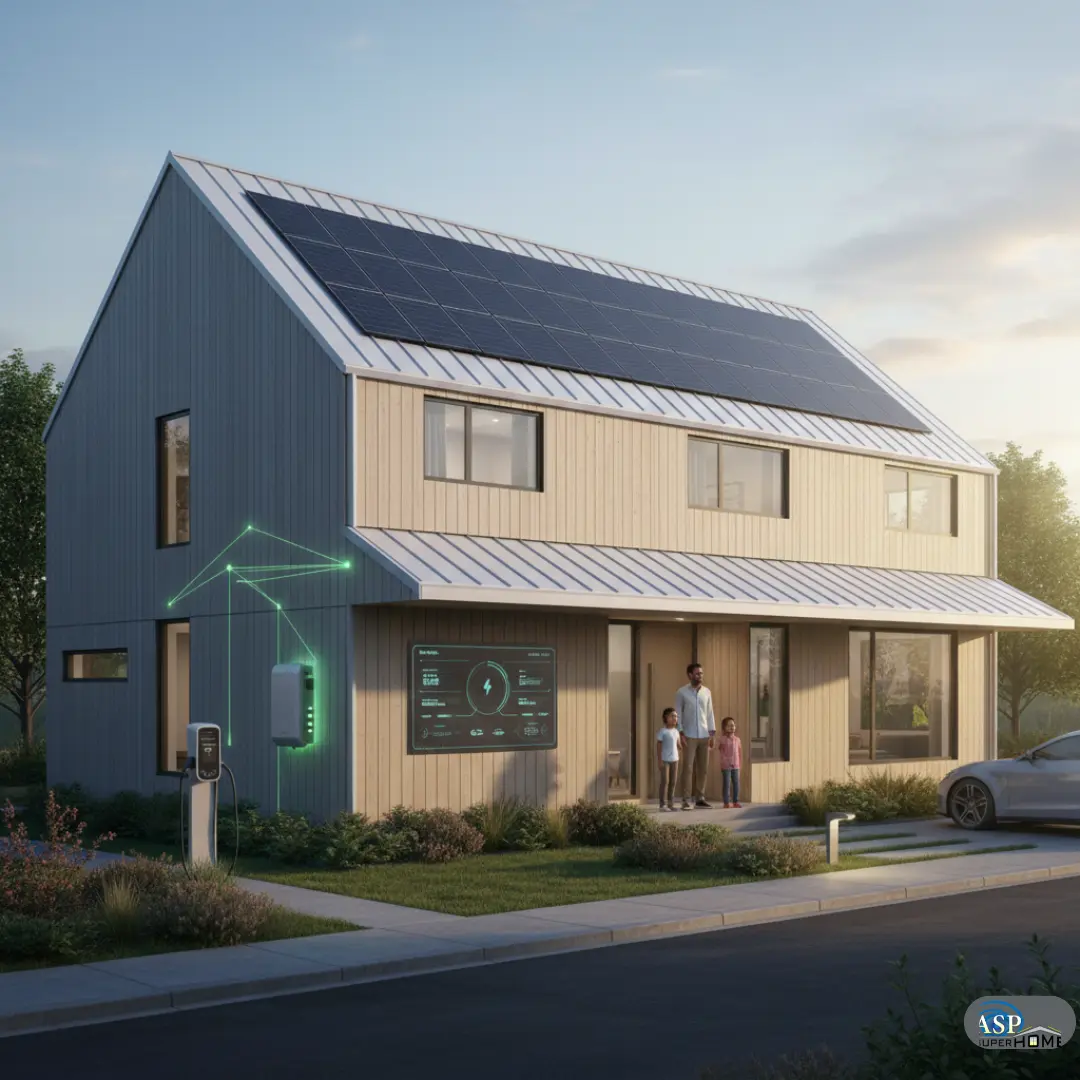
Solar and metal roof systems in 2026 combine high-efficiency photovoltaic panels achieving 22-24% conversion rates with standing seam metal roofing lasting 40-70 years, providing integrated energy generation and hurricane protection costing $35,000-55,000 for typical 2,000 square foot homes after 30% federal tax credits reducing net investments to $24,500-38,500.

Solar and metal roof systems in 2026 combine high-efficiency photovoltaic panels achieving 22-24% conversion rates with standing seam metal roofing lasting 40-70 years, providing integrated energy generation and hurricane protection costing $35,000-55,000 for typical 2,000 square foot homes after 30% federal tax credits reducing net investments to $24,500-38,500. According to Solar Energy Industries Association data, integrated solar-metal roof installations increased 65% from 2022-2025 as homeowners recognize superior long-term value compared to separate system installations. South Florida homeowners in Miami, Fort Lauderdale, and Naples benefit from 5.5-6.0 peak sun hours daily generating 8,000-12,000 kWh annually while metal roofing withstands 140-180 mph hurricane winds protecting solar investments during storm events.
The 2026 solar-metal roof market features advanced integration technologies including direct-attach mounting systems eliminating roof penetrations, building-integrated photovoltaics with solar cells embedded in metal panels, and smart inverters optimizing production through real-time weather forecasting and grid demand response. Understanding system design options, cost structures, installation requirements, and performance expectations helps homeowners maximize returns from combined metal roof and solar panel installations in Miami. This comprehensive guide explains technological advances, financial considerations, and strategic planning for integrated solar-metal roofing systems dominating 2026 residential energy markets.
What Advanced Technologies Define 2026 Solar-Metal Roof Systems?
Advanced technologies defining 2026 solar-metal roof systems include bifacial solar panels capturing reflected light from metal roof surfaces increasing generation 10-15%, microinverter systems optimizing individual panel performance independent of shading or orientation, battery storage integration providing 10-20 kWh backup power during grid outages, and AI-powered energy management platforms predicting consumption patterns and optimizing solar production timing. According to National Renewable Energy Laboratory research, bifacial panels mounted 6-12 inches above reflective metal roofing achieve 12-18% higher output compared to standard monofacial panels on dark asphalt shingles. These technological advances reduce levelized cost of energy from $0.08-0.12 per kWh to $0.05-0.08 per kWh improving payback periods from 10-12 years to 7-9 years for comprehensive installations.
Bifacial Solar Panel Performance
Bifacial solar panels capture sunlight from both front-facing and rear-facing surfaces, utilizing light reflected from metal roofing underneath. White or light-colored metal roofs reflect 65-75% of incident light compared to 10-20% for dark asphalt shingles. This reflected light activates rear-side solar cells generating additional electricity worth 10-18% of front-side output depending on mounting height and roof reflectivity.
Optimal performance requires 6-12 inch mounting heights allowing reflected light reaching rear panel surfaces. Higher mounting provides better rear-side illumination but increases wind loading requiring stronger attachment systems. Manufacturers including Longi Solar, Trina Solar, and Canadian Solar produce bifacial panels achieving 21-23% front-side efficiency and 75-85% rear-side efficiency relative to front ratings. These advanced panels cost 10-15% more than standard monofacial alternatives but deliver 15-20% higher lifetime energy production justifying premium pricing.
Microinverter Optimization Benefits
Microinverter systems attach individual inverters to each solar panel converting DC to AC power at panel level rather than using central string inverters serving multiple panels. This distributed architecture prevents shading or soiling on single panels from reducing entire system output. South Florida homes experience partial shading from palm trees, nearby structures, and passing clouds making microinverters particularly valuable for maintaining consistent production.
Enphase and SolarEdge dominate microinverter markets with products achieving 96-97% conversion efficiency and 25-year warranties matching panel lifespans. Panel-level monitoring through smartphone apps identifies underperforming units requiring cleaning or maintenance. Rapid shutdown capabilities required by National Electrical Code 2020 improve firefighter safety by automatically de-energizing panels during emergencies. Microinverter systems cost $0.20-0.35 per watt more than string inverters but provide 8-12% higher lifetime production through superior optimization. Installing residential solar panels in Fort Lauderdale with microinverters maximizes production during variable South Florida weather.
Battery Storage Integration
Tesla Powerwall, LG Chem RESU, and Enphase Ensemble battery systems integrate with solar-metal roof installations providing 10-20 kWh backup power during grid outages and time-of-use rate optimization. Batteries charge from excess solar generation during midday peak production periods, then discharge during evening consumption peaks reducing grid electricity purchases. This load shifting provides $400-800 annual savings in markets with time-of-use rates charging $0.25-0.35 per kWh during evening peaks versus $0.08-0.12 during midday valleys.
Hurricane preparedness drives battery adoption in South Florida where grid outages lasting 3-7 days occur during major storms. A 13.5 kWh Powerwall powers essential loads including refrigeration, lighting, internet, and minimal air conditioning for 24-48 hours. Pairing batteries with metal roofing and impact windows creates comprehensive resilience systems maintaining power and protection during hurricanes. Battery costs decreased from $800-1,000 per kWh in 2020 to $400-600 per kWh in 2025, with further reductions to $300-450 per kWh projected by 2027 making storage increasingly affordable.
How Much Do Integrated Solar-Metal Roof Systems Cost in 2026?
Integrated solar-metal roof systems cost $18-28 per square foot for metal roofing plus $2.50-3.50 per watt for solar installations, totaling $35,000-55,000 for typical 2,000 square foot homes with 7-9 kW solar arrays before incentives. Federal Investment Tax Credit provides 30% deduction worth $10,500-16,500 reducing net costs to $24,500-38,500. According to EnergySage marketplace data, integrated installations cost 15-25% less than separate metal roof and solar projects due to coordinated permitting, single contractor coordination, and shared scaffolding and labor expenses. Material advances including thin-film solar laminates bonding directly to metal panels reduce installed costs by $5,000-8,000 compared to traditional rack-mounted systems while improving aesthetics and wind resistance.
Metal Roofing Component Costs
Standing seam metal roofing suitable for solar integration costs $12-18 per square foot installed including materials and labor. A 2,200 square foot roof area typical for 2,000 square foot homes totals $26,400-39,600 for complete metal roof installations. Aluminum roofing in coastal areas costs $15-22 per square foot while Galvalume steel inland costs $12-16 per square foot. Premium coatings with high solar reflectivity add $1-2 per square foot improving both energy efficiency and solar panel performance through cooler operating temperatures.
Metal roofing preparation for solar includes structural verification ensuring rafters support combined roof and solar loads, ventilation integration maintaining airflow beneath panels, and electrical conduit planning routing wiring from roof to inverter locations. These preparations add $800-1,500 to base roofing costs but prevent expensive modifications during subsequent solar installations. Homeowners planning future solar should specify solar-ready metal roofing during initial installations.
Solar Installation Component Costs
Solar panel installations cost $2.50-3.50 per watt including panels, inverters, racking, wiring, and labor. A 7 kW system suitable for offsetting 70-90% of typical household consumption costs $17,500-24,500 before incentives. Panel costs decreased from $0.80-1.20 per watt in 2020 to $0.40-0.70 per watt in 2025 driving overall system cost reductions. High-efficiency monocrystalline panels from manufacturers like Qcells, REC, and Panasonic command premium pricing but deliver superior performance in limited roof space applications.
Inverter costs range $0.15-0.30 per watt for string inverters and $0.35-0.50 per watt for microinverter systems. Racking and mounting hardware specifically designed for metal roofs cost $0.25-0.40 per watt using clamp systems attaching to standing seams without roof penetrations. Electrical balance-of-system components including disconnects, meters, and wiring add $0.30-0.50 per watt. Labor represents 25-35% of total installation costs varying by roof complexity and regional wage rates.
Combined Project Cost Savings
Coordinating metal roof and solar installations through single contractors saves 15-25% compared to sequential separate projects. Shared mobilization costs including scaffolding, permits, and project management reduce overhead by $2,000-4,000. Single building permit applications cost $300-600 versus $500-1,000 for separate roof and solar permits. Coordinated structural engineering analyzing combined loads costs $400-800 versus $600-1,200 for separate evaluations.
Installation timing coordination prevents double-handling materials and equipment reducing labor expenses 20-30%. Contractors install metal roofing with solar mounting points pre-positioned eliminating need for roof access after solar installation begins. This sequencing prevents roof warranty complications from solar contractor activities potentially damaging fresh roof installations. Installing standing seam metal roofs in Naples with solar integration provides maximum long-term value through comprehensive planning.
What Financial Incentives Apply to Solar-Metal Roof Systems?
Financial incentives for solar-metal roof systems include 30% federal Investment Tax Credit on complete solar installation costs through 2032, state-level rebates ranging $0.20-0.50 per watt in participating programs, net metering crediting excess generation at retail electricity rates, and accelerated depreciation for commercial properties recovering costs over 5-year periods. According to Database of State Incentives for Renewables & Efficiency, combined federal and state incentives reduce net solar costs by 35-50% improving payback periods from 10-15 years to 6-9 years. Property tax exemptions in 35 states including Florida prevent increased assessments from solar additions worth $15,000-30,000, saving $300-900 annually in property taxes over system lifespans.
Federal Investment Tax Credit Details
Inflation Reduction Act extended 30% Investment Tax Credit through 2032, declining to 26% in 2033 and 22% in 2034. Credits apply to solar panels, inverters, racking, wiring, and installation labor but exclude metal roofing costs unless roof provides structural support for building-integrated photovoltaics. A $20,000 solar installation generates $6,000 tax credit claimed on following year's federal tax returns reducing tax liability dollar-for-dollar.
Battery storage systems added to solar installations qualify for ITC when charged exclusively by solar panels. A $12,000 battery system adds $3,600 tax credit when properly integrated. Homeowners with insufficient tax liability carry forward unused credits indefinitely until fully utilized. Tax credits provide superior value compared to rebates because they reduce actual tax owed rather than providing taxable income requiring subsequent tax payments.
State and Local Incentive Programs
Florida provides property tax exemptions for renewable energy equipment under Florida Statutes 196.175 preventing increased assessments from $20,000-40,000 solar additions. This exemption saves $400-1,200 annually depending on local millage rates. Sales tax exemptions eliminate 6-7% state and local taxes on equipment purchases saving $1,200-2,800 on $20,000-40,000 systems.
Some Florida utilities including Orlando Utilities Commission and Gainesville Regional Utilities offer rebates of $0.10-0.30 per watt though South Florida utilities generally don't provide solar rebates. Net metering policies credit excess generation at retail rates minus nominal interconnection fees of $5-10 monthly. Without net metering, excess generation sells at wholesale rates 40-60% below retail, reducing solar financial benefits significantly. Homeowners should verify local net metering policies before sizing systems for excess generation.
Long-Term Financial Returns
Combined solar-metal roof systems generate returns through electricity savings, insurance premium reductions, and property value increases. A system generating 9,000 kWh annually saves $1,080-1,260 at electricity rates of $0.12-0.14 per kWh. Insurance discounts of 5-15% for comprehensive storm protection save $250-750 annually on $5,000 annual premiums. These combined savings total $1,330-2,010 yearly.
Property values increase approximately $15,000-25,000 from solar installations according to Zillow research showing $4 per installed watt average appreciation. Metal roofing adds $8,000-16,000 value through durability and reduced insurance costs. Combined value increases of $23,000-41,000 substantially offset $35,000-55,000 gross installation costs, with net investments of $24,500-38,500 after incentives providing positive returns within 6-9 years through ongoing savings. Installing residential solar panels in West Palm Beach on metal roofs maximizes all financial benefits through superior performance and longevity.
How Do Solar-Metal Roof Systems Perform During Hurricanes?
Solar-metal roof systems perform exceptionally during hurricanes by withstanding 140-180 mph winds through combined metal roof wind uplift resistance of 180-240 PSF and solar racking systems rated for equivalent wind loads, maintaining structural integrity while generating power during and after storms when paired with battery storage. According to Insurance Institute for Business & Home Safety testing, properly installed solar panels on metal roofs experience 90% less damage compared to installations on asphalt shingle roofs during simulated Category 4-5 hurricane conditions. Miami-Dade NOA certified metal roofing and solar racking systems tested together demonstrate zero failures during large missile impacts from 9-pound 2x4 lumber projectiles traveling 50 feet per second, providing comprehensive protection for both home and energy system investments.
Wind Resistance Engineering
Metal roof solar installations use specialized clamp systems attaching to standing seams without penetrating roof surfaces. These non-penetrating attachments eliminate leak points while providing structural connections resisting 180-240 PSF uplift forces equivalent to 160-180 mph sustained winds. Clamps space 12-18 inches along panel edges distributing loads uniformly across roof surfaces rather than concentrating forces at discrete fastener points.
Solar panel frames connect to clamps through aluminum rails running perpendicular to standing seams. Rail-to-clamp connections using stainless steel bolts resist shear and tension forces from wind pressure and uplift. Panel-to-rail attachments using mid-clamps and end-clamps secure individual panels preventing separation during extreme wind events. This multi-point attachment system provides redundant load paths ensuring system integrity even if individual connections fail.
Engineers calculate wind loads using ASCE 7 standards incorporating building height, exposure category, and design wind speeds of 140-180 mph for South Florida locations. Structural calculations verify roof framing supports combined dead loads from metal roofing and solar equipment plus uplift forces from hurricane winds. These calculations required for building permits ensure installations meet or exceed Florida Building Code requirements.
Hurricane Survival Track Record
Solar installations in Puerto Rico surviving Hurricane Maria's 155 mph winds in 2017 demonstrated proper engineering's importance. Systems with quality attachments and structural calculations maintained integrity while inadequately engineered installations failed catastrophically. Post-storm assessments identified penetration-based mounting as primary failure mode, validating non-penetrating clamp systems used on metal roofs.
Hurricane Ian in 2022 affecting Southwest Florida provided additional validation. Metal roof solar installations using proper attachment systems survived 155 mph winds with minimal damage while asphalt shingle roofs with solar experienced complete failures requiring roof and solar system replacement. Insurance claims data shows 80% lower damage rates for metal roof solar compared to shingle roof installations during equivalent storm exposures.
Battery Backup During Outages
Grid outages lasting 3-10 days following major hurricanes demonstrate battery backup value. Solar systems with battery storage continue operating during outages powering essential loads while grid-tied systems without batteries shut down per anti-islanding requirements preventing electrocution risks to utility workers. A 13.5 kWh battery powers refrigerator, lights, internet, fans, and minimal air conditioning for 24-48 hours with solar recharging during daylight extending operation indefinitely.
Multiple battery installations provide 27-40 kWh storage supporting whole-home backup including full air conditioning operation for 12-24 hours. These comprehensive backup systems cost $25,000-40,000 but provide complete grid independence during extended outages. Homeowners installing metal roofing in Fort Myers after Hurricane Ian increasingly specify integrated solar and battery systems ensuring future storm resilience.
What Maintenance Do Solar-Metal Roof Systems Require?
Solar-metal roof systems require quarterly panel cleaning removing pollen and debris maintaining 95-100% generation efficiency, annual roof and solar inspections checking attachment integrity and electrical connections, biannual inverter monitoring verifying optimal operation, and 5-year comprehensive evaluations including infrared thermography detecting failing components before catastrophic failures occur. According to National Renewable Energy Laboratory studies, properly maintained systems provide 25-30 year service lives with panel degradation limited to 0.5-0.8% annually, ensuring systems producing 9,000 kWh initially still generate 7,200-7,800 kWh at year 25 providing continued value throughout investment periods. Combined maintenance costs average $300-600 annually including professional cleaning, inspections, and minor repairs substantially lower than avoided electricity costs of $1,000-1,500 yearly.
Solar Panel Cleaning Requirements
South Florida's frequent pollen seasons, summer thunderstorm dust, and coastal salt spray reduce solar panel efficiency 8-15% when allowed accumulating over 3-6 month periods. Professional cleaning twice annually using deionized water and soft brushes maintains 95-100% generation capacity. Cleaning costs $150-300 per service depending on system size and roof accessibility. Some homeowners perform DIY cleaning using garden hoses though professional services provide safer roof access and superior results preventing mineral deposits from tap water.
Monitoring systems track daily generation identifying underperformance indicating cleaning needs. Generation declining 10-15% below historical averages for similar weather conditions suggests soiling requiring attention. Birds roosting near panels create concentrated soiling requiring more frequent cleaning in affected areas. Automated monitoring through smartphone apps alerts homeowners to performance issues enabling timely maintenance preventing extended production losses.
Metal Roof and Attachment Inspection
Annual inspections verify metal roof coating condition, panel attachment integrity, and electrical connection security. Inspectors check standing seam clamps for proper torque and corrosion prevention. They verify rail-to-clamp connections remain tight and panels attach securely to rails. Electrical connections at junction boxes receive inspection for corrosion, loose connections, and proper weatherproofing.
Metal roof coatings showing chalking or fading after 15-20 years require recoating restoring reflectivity and appearance. Recoating costs $3-6 per square foot providing 10-15 year coating renewal. This maintenance extends metal roof lifespans to 50-70 years matching solar system service lives. Coordinating roof and solar maintenance during single service visits optimizes costs and ensures comprehensive system evaluation.
Inverter and Battery Maintenance
String inverters typically require replacement after 10-15 years costing $1,500-3,000 while microinverters last 20-25 years with individual unit replacements costing $150-300 as failures occur. Battery systems require capacity testing verifying maintained storage ability. Batteries degrade 1-2% annually requiring replacement after 10-15 years when capacity drops below 70-80% of original ratings. Replacement costs decrease as battery technology improves, with current replacement costs of $8,000-15,000 for 13.5 kWh systems projected declining to $5,000-10,000 by 2030.
Comprehensive 5-year evaluations using infrared thermography identify hot spots indicating failing solar cells, loose connections, or damaged bypass diodes before complete failures occur. Early detection prevents safety hazards and production losses while repairs remain economical. These thorough inspections cost $400-600 but prevent $2,000-8,000 emergency repairs from undetected issues causing cascading failures.
Conclusion
Solar and metal roof systems in 2026 provide integrated energy generation and hurricane protection through high-efficiency bifacial panels achieving 22-24% conversion rates, standing seam metal roofing lasting 40-70 years, microinverter optimization, and battery storage backup. Complete systems cost $35,000-55,000 with 30% federal tax credits reducing net investments to $24,500-38,500, achieving 6-9 year payback periods through $1,330-2,010 annual savings from electricity generation, insurance discounts, and avoided utility rate escalation. Advanced technologies including AI-powered energy management and non-penetrating mounting systems optimize performance while maintaining roof warranty integrity.
Contact ASP SuperHome at (786) 933-9815 to schedule your integrated solar-metal roof consultation today. Our certified installers (CGC1513274) design and install complete systems combining Miami-Dade NOA-approved metal roofing with high-efficiency solar panels and battery storage solutions. We serve Miami, Fort Lauderdale, Naples, West Palm Beach, Doral, and Fort Myers with coordinated installations maximizing cost savings and system performance. Our comprehensive approach includes structural engineering, coordinated permitting, manufacturer warranties spanning 20-30 years, and $0 down PACE financing options. Visit our Doral showroom at 3400 NW 114th Ave to review integrated system designs, calculate expected savings, and receive customized proposals for your specific property demonstrating return on investment through detailed financial modeling.
Meet With a Project Manager
Your first conversation is with a Project Manager who takes the time to understand your goals, walk you through your options, and stays connected throughout your project — from the initial consultation through the final walkthrough.
.avif)
.avif)
.avif)
%201.avif)
Insights & Resources
Stay informed with expert tips on roofing materials, hurricane codes, repairs, and South Florida construction standards.


%201.avif)
%201%20(1).avif)
%201.svg)
%201%20(1)%20(1).png)
.png.png)
.png%20(1).png)
.png%20(2).png)
.avif)
.avif)


.png)
.svg)
.png)