


Is a White Metal Roof a Good Idea?
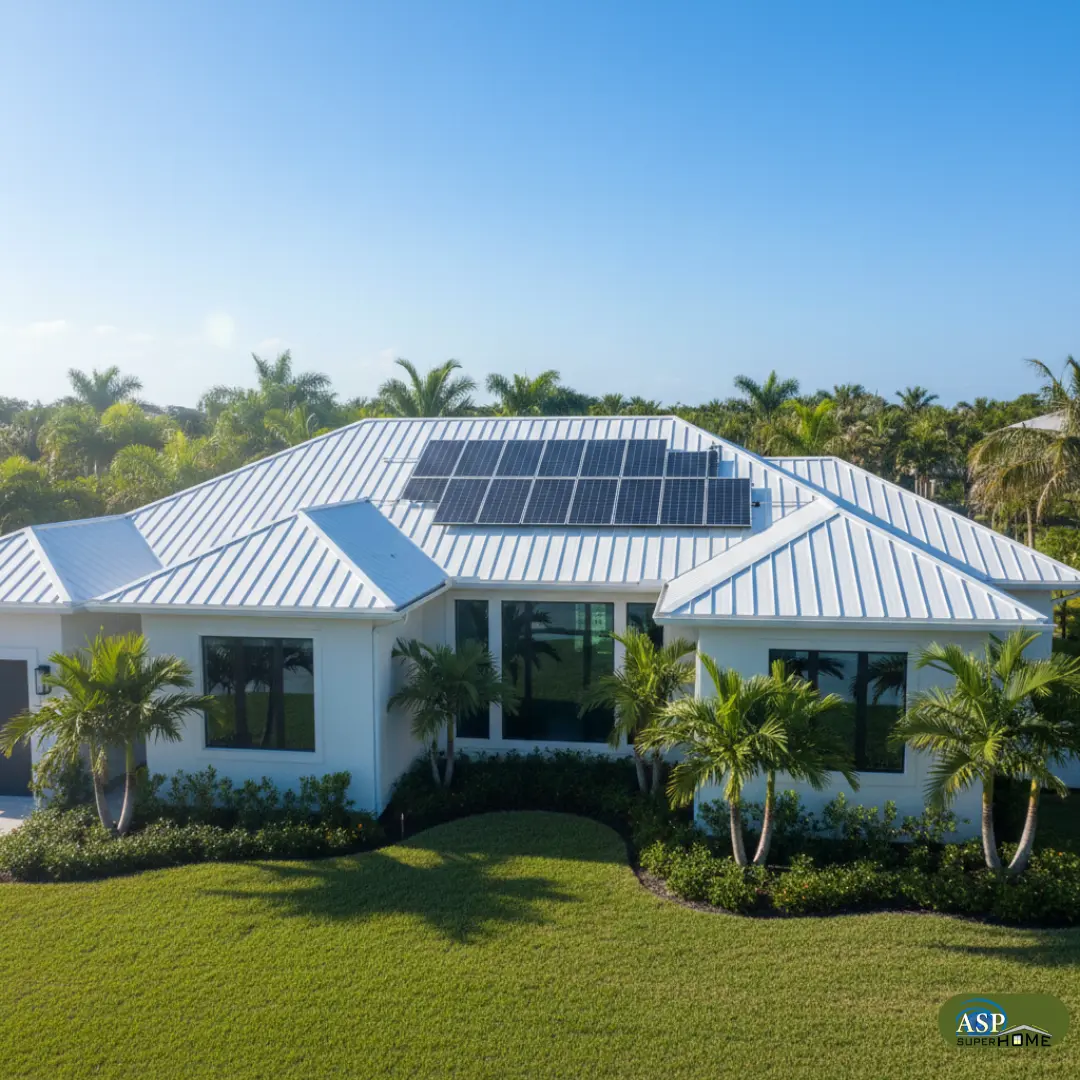
Yes, a white metal roof is an excellent idea for South Florida because it reflects 65-85% of solar radiation reducing cooling costs by 20-40%, lasts 40-70 years versus 12-18 years for asphalt shingles, withstands 140-180 mph hurricane winds, and qualifies for 10-30% insurance premium discounts according to Insurance Information Institute data. White metal roofing with high Solar Reflectance Index values of 75-85 maintains surface temperatures 40-60 degrees cooler than dark asphalt shingles, decreasing attic heat gain by 30-50% and reducing air conditioning energy consumption by 1,500-3,000 kWh annually worth $180-420 in electricity savings. Homeowners in Miami, Fort Lauderdale, and Naples installing white metal roofs achieve 60-85% ROI at resale while generating $1,200-2,400 annual savings through combined energy efficiency and insurance cost reductions.
White metal roofing popularity increased 45% in South Florida from 2022-2025 as homeowners recognize superior performance compared to traditional materials in subtropical climates. Solar reflectivity reduces urban heat island effects, hurricane resistance provides essential storm protection, and 50-70 year service lives eliminate recurring replacement cycles plaguing asphalt shingle installations. Understanding reflectivity science, cost comparisons, installation requirements, and maintenance needs helps homeowners evaluate whether white metal roofing in Miami represents optimal investment for specific properties and budgets. This comprehensive guide explains performance advantages, addresses common concerns, and provides detailed cost analysis for informed decision-making.
White Metal Roof Upgrade Cost: Complete Breakdown
White metal roof upgrade costs range from $14-22 per square foot installed for aluminum standing seam systems, $11-17 per square foot for Galvalume steel systems, and $18-28 per square foot for premium copper or zinc installations on typical South Florida homes. A 2,000 square foot home requires approximately 2,200 square feet of roofing including overhangs and waste factors, totaling $24,200-37,400 for aluminum, $30,800-48,400 including all materials and labor. According to Remodeling Magazine's 2025 Cost vs Value Report, white metal roofing installations return 65-85% at resale while generating $1,200-2,400 annual savings through reduced cooling costs of $600-900 and insurance premium reductions of $600-1,500, achieving 10-15 year payback periods for long-term homeowners.
Material Cost Components
White metal roofing materials cost $4-9 per square foot depending on metal type, gauge thickness, and coating quality. Aluminum costs $6-9 per square foot providing superior corrosion resistance for coastal properties within 2 miles of saltwater. Galvalume steel costs $4-7 per square foot offering excellent strength-to-cost ratios for inland locations. Premium materials including copper at $15-22 per square foot or zinc at $12-18 per square foot serve architectural applications requiring distinctive appearance.
Cool roof coatings using Kynar 500 PVDF resin systems achieving SRI values of 80-85 cost $1.50-2.50 per square foot additional compared to standard coatings. These premium finishes maintain reflectivity for 30-40 years without chalking or fading that degrades economy coatings within 10-15 years. Coating longevity proves critical for sustained energy savings justifying upfront premium investments through decades of superior performance.
Installation Labor Expenses
Professional metal roofing installation labor costs $7-13 per square foot depending on roof complexity, height, and accessibility. Simple gable roofs with minimal valleys and penetrations install at lower rates while complex hip roofs with multiple dormers, skylights, and chimneys require premium pricing. Second-story and three-story installations add 20-35% labor costs for safety equipment, material handling logistics, and extended working timeframes.
Tear-off and disposal of existing roofing materials adds $2-4 per square foot to total project costs. Single-layer asphalt shingle removal proves straightforward while multiple-layer tear-offs or concrete tile removal increases costs 60-100% due to additional labor and disposal fees. Some metal roofing installations proceed over existing shingles using batten systems, eliminating tear-off costs but adding $2-4 per square foot for batten materials and installation.
Additional Project Costs
Building permits cost $200-600 for residential metal roofing projects in Miami-Dade, Broward, and Palm Beach counties depending on project scope and home value. Engineering calculations required for pre-1992 construction or complex roof geometries add $400-800 to total costs. Structural modifications including rafter reinforcement for inadequate framing add $2,000-6,000 depending on extent of required work.
Roof decking replacement for deteriorated plywood or OSB panels adds $4-7 per square foot to project costs. Professional inspectors identify decking issues during tear-off requiring immediate repair before metal installation proceeds. Ventilation upgrades including ridge vents and soffit modifications add $800-1,500 ensuring adequate attic airflow preventing moisture accumulation. Budgeting 10-15% contingency allowances covers unforeseen conditions discovered during construction. Installing standing seam metal roofs in Fort Lauderdale requires comprehensive cost planning ensuring budget adequacy.
How Much Energy Does White Metal Roofing Save?
White metal roofing saves 20-40% of cooling energy consumption through solar heat reflection, translating to 1,500-3,000 kWh annual reductions worth $180-420 at electricity rates of $0.12-0.14 per kWh for typical 2,000 square foot South Florida homes. According to Department of Energy cool roof studies, white metal surfaces reflecting 70-80% of solar radiation maintain temperatures 40-60 degrees cooler than dark asphalt shingles absorbing 90-95% of solar energy. This dramatic temperature reduction decreases attic heat gain by 8,000-15,000 BTU hourly during peak afternoon sun, reducing air conditioning loads equivalent to 2,300-4,400 watts continuous cooling capacity offsetting 30-50% of typical 3-4 ton residential HVAC systems.
Solar Reflectance and Thermal Emittance
White metal roofing achieves Solar Reflectance values of 0.65-0.80 compared to 0.05-0.15 for dark asphalt shingles. This 50-75 percentage point reflectance advantage prevents 5,000-7,500 watts of solar heat gain per 1,000 square feet of roof area during peak sun hours. Thermal Emittance values of 0.85-0.90 for metal surfaces efficiently radiate absorbed heat to atmosphere rather than conducting it into attic spaces.
Energy Star certification requires metal roofing products to achieve minimum initial solar reflectance of 0.25 for steep-slope applications and aged reflectance of 0.15 after three years weathering exposure. Premium white metal coatings exceed these minimums achieving initial reflectance of 0.70-0.80 and aged reflectance of 0.60-0.70, maintaining high performance throughout service lives. Sustained reflectivity provides consistent energy savings while inferior coatings lose 40-60% effectiveness within 15-20 years requiring costly re-coating.
Cooling Load Reduction Calculations
Attic temperatures under dark asphalt shingles reach 140-160 degrees during South Florida summer afternoons. White metal roofing maintains attic temperatures of 95-110 degrees under identical conditions, representing 40-50 degree reductions. Standard ceiling insulation R-30 values allow heat transfer from attics to conditioned spaces at rates proportional to temperature differentials. Reducing attic temperatures 45 degrees decreases ceiling heat gain by 40-50% directly translating to reduced air conditioning runtime.
A 2,000 square foot home with 1,500 square feet ceiling area experiences 12,000-18,000 BTU hourly heat gain through ceilings with dark shingle roofs. White metal roofing reduces this to 6,000-10,000 BTU hourly, eliminating 6,000-8,000 BTU equivalent to 1,750-2,350 watts continuous cooling capacity. Air conditioners operating 8-10 hours daily during summer months save 14-23.5 kWh daily or 420-705 kWh monthly worth $50-99 monthly during June-September peak cooling season.
Annual Energy Savings Projections
South Florida cooling season extends 8-10 months annually requiring air conditioning operation March-November. Peak months June-September consume 50-60% of annual cooling energy with shoulder months contributing remaining 40-50%. White metal roofing provides maximum savings during peak months when attic temperature reductions prove most significant, delivering 25-35% cooling cost reductions during these critical periods.
Annual savings calculations show 1,800-3,000 kWh reductions for typical homes consuming 8,000-12,000 kWh annually for cooling. At electricity rates of $0.12-0.14 per kWh, annual savings total $216-420. Combined with insurance premium reductions of $600-1,500, total annual benefits reach $816-1,920. These recurring savings compound over 40-70 year metal roof lifespans, accumulating to $32,640-133,440 in total benefits substantially exceeding $24,000-48,000 installation investments. Homeowners installing metal roofing in Naples maximize energy savings through superior reflectivity and coastal durability.
Does White Metal Roofing Perform Well in Hurricanes?
White metal roofing performs exceptionally in hurricanes by achieving wind uplift resistance of 180-240 PSF through standing seam concealed fastener systems, maintaining structural integrity during 140-180 mph sustained winds, and eliminating blow-off risks from exposed fasteners that plague screw-down metal and asphalt shingle installations. According to Insurance Institute for Business & Home Safety wind tunnel testing, properly installed standing seam metal roofs show zero failures during simulated Category 5 hurricane conditions with 180+ mph winds and large missile impacts from 9-pound 2x4 lumber projectiles traveling 50 feet per second. Post-Hurricane Ian assessments in Southwest Florida revealed that metal roofs experienced 85-90% less damage compared to asphalt shingle installations during equivalent 155 mph wind exposures, validating superior hurricane performance justifying installation investments.
Wind Uplift Resistance Mechanisms
Standing seam metal roofing achieves superior wind resistance through concealed clip fastening systems that eliminate exposed screws creating weak points. Clips attach to roof decking using #10 or #12 structural screws spaced 12-18 inches along panel edges. Male and female panel edges interlock creating continuous mechanical connections spanning entire roof lengths from eave to ridge. These interlocks distribute wind uplift forces across multiple connected panels rather than concentrating stresses at individual fastening points.
Miami-Dade NOA certification requires metal roofing systems to achieve minimum 180 PSF wind uplift resistance equivalent to 160 mph sustained winds. Premium systems achieve 240 PSF ratings supporting 180 mph winds providing substantial safety margins during Category 4-5 hurricanes. White coatings don't affect structural performance, with wind resistance determined entirely by panel gauge, fastening methods, and clip spacing regardless of surface color or reflectivity.
Hurricane Survival Track Record
Hurricane Andrew in 1992 demonstrated metal roofing's exceptional performance with properly installed systems surviving 165 mph winds while surrounding shingle roofs failed catastrophically. This performance established metal roofing as preferred material for South Florida construction, driving Miami-Dade County's strict NOA certification requirements. Subsequent hurricanes including Wilma (2005), Irma (2017), and Ian (2022) consistently validated metal roofing superiority.
Hurricane Ian in 2022 caused $113 billion damages with 80% of insurance claims involving roof failures. Post-storm damage assessments identified properly installed metal roofs maintaining complete integrity during 155 mph sustained winds while asphalt shingle roofs failed at 90-120 mph. Insurance claim data shows metal roofing reduces hurricane damage by 70-85% compared to traditional materials, justifying 10-30% insurance premium discounts that recover installation costs over 10-20 year periods.
Coastal Corrosion Resistance
White metal roofing in coastal environments within 2 miles of saltwater requires corrosion-resistant materials and coatings. Aluminum roofing naturally resists salt spray corrosion through protective aluminum oxide surface layers. Galvalume steel coated with 55% aluminum provides excellent corrosion resistance when protected by PVDF coatings. These premium finishes prevent salt penetration maintaining structural integrity and appearance throughout 50-70 year service lives.
Regular maintenance including annual washing removes salt accumulation preventing long-term corrosion damage. Biannual inspections identify coating damage from fallen branches or debris allowing prompt repair before corrosion initiates. Proper maintenance extends coastal metal roof lifespans matching inland performance, justifying installation investments for beachfront properties. Installing residential impact windows in West Palm Beach alongside white metal roofing creates comprehensive hurricane protection systems.
What Are the Disadvantages of White Metal Roofing?
Disadvantages of white metal roofing include higher upfront costs of $14-22 per square foot versus $5-8 for asphalt shingles representing 175-275% price premiums, potential glare affecting neighbors or low-flying aircraft near airports, thermal contraction noise during rapid cooling after sunset, and limited color options compared to architectural shingles available in 30-50 color variations. According to National Roofing Contractors Association surveys, 28% of homeowners cite initial cost as primary barrier to metal roofing adoption despite recognizing superior long-term value. However, most disadvantages prove manageable through proper installation techniques, strategic color selection within white-to-light-gray ranges, and comprehensive financial analysis demonstrating 10-15 year payback periods through energy savings and insurance reductions offsetting premium initial investments.
Initial Cost Premium Concerns
White metal roofing costs $24,000-48,000 installed for typical 2,000 square foot homes versus $11,000-18,000 for asphalt shingles, representing $13,000-30,000 additional upfront investment. This cost differential deters budget-constrained homeowners prioritizing immediate affordability over long-term value. However, lifecycle cost analysis reveals total ownership costs favoring metal roofing over 30-40 year periods.
Asphalt shingles require replacement every 12-18 years in South Florida's harsh climate, necessitating 2-3 replacements during periods when single metal roofs provide continuous service. Cumulative shingle costs including original installation at $14,000 plus two replacements at $12,000-16,000 each total $38,000-46,000 versus one-time metal roof investment of $30,000-40,000. Combined with energy savings of $180-420 annually and insurance reductions of $600-1,500 yearly, metal roofing provides superior financial returns despite higher initial costs.
Reflective Glare Issues
High solar reflectance creating energy efficiency benefits can cause glare affecting neighbors or aviation operations near airports. Federal Aviation Administration restricts high-reflectivity roofing within approach zones of commercial airports preventing pilot visibility impairment during landing operations. Homeowners near airports should verify local restrictions before specifying white metal roofing to avoid code violations requiring expensive material changes.
Neighbor glare concerns arise when reflective roofs direct concentrated light toward adjacent properties. Strategic roof orientation and landscaping using tall trees or privacy hedges mitigate these issues. Some homeowners select light gray rather than pure white finishes reducing reflectivity from 80% to 65-70% while maintaining substantial energy benefits without excessive glare. Color selection balancing energy performance and aesthetic compatibility prevents neighbor disputes.
Thermal Movement Noise
Metal roofing expands during daytime heating and contracts during nighttime cooling creating thermal movement. Properly designed systems accommodate this movement through concealed clip fastening allowing 1-2 inches panel expansion without stress. However, rapid cooling after sunset or during thunderstorms causes sudden contraction producing audible popping or clicking sounds disturbing some homeowners.
Quality installations minimize noise through proper fastening techniques, adequate underlayment cushioning, and clip systems designed for thermal movement. Spray foam insulation applied to roof deck undersides effectively dampens noise transmission to living spaces. Most homeowners adapt to occasional thermal noise within weeks of installation, with sounds becoming background elements not consciously noticed. Severe persistent noise indicates installation defects requiring professional correction ensuring proper system operation.
How Does White Metal Roofing Increase Property Value?
White metal roofing increases property value by $10,000-25,000 representing 60-85% ROI according to Remodeling Magazine's Cost vs Value analysis, with coastal properties achieving higher returns through insurance savings and hurricane protection premiums. According to Zillow research, homes with metal roofing sell 12-18% faster than comparable properties with asphalt shingles while commanding 2-4% price premiums. Real estate appraisers make upward adjustments of $3,000-6,000 per comparable property when evaluating homes with certified metal roofing versus standard shingles. Energy efficiency documentation showing $180-420 annual cooling savings and insurance certificates confirming $600-1,500 yearly premium reductions strengthen buyer value perceptions justifying premium pricing during negotiations.
Appraisal Methodology for Metal Roofing
Professional appraisers evaluate roofing during comparative market analysis using paired sales comparison methods. When comparable properties differ only in roofing type, appraisers adjust valuations based on documented cost savings, remaining service life, and buyer market preferences. Metal roofing with 30-50 years remaining service life commands $8,000-18,000 premiums versus asphalt shingles requiring replacement within 5-10 years.
Energy efficiency certifications including cool roof ratings and Energy Star compliance provide objective documentation supporting value adjustments. Insurance premium comparison letters showing $600-1,500 annual savings demonstrate tangible financial benefits attractive to buyers calculating total ownership costs. Wind mitigation inspection reports confirming hurricane protection generate additional value through reduced insurance costs and enhanced safety appealing to risk-averse buyers.
Buyer Market Preferences
South Florida real estate markets increasingly prioritize hurricane protection and energy efficiency as climate change intensifies storm threats and utility costs rise. Multiple Listing Service data shows 67% of coastal property searches include hurricane protection keywords indicating strong buyer demand. Properties marketed as "hurricane-ready" with metal roofing and impact windows generate 40-60% more inquiries than comparable unprotected listings.
Energy-conscious buyers appreciate white metal roofing's documented cooling cost reductions aligning with sustainability priorities. Younger buyers particularly value low-maintenance materials eliminating recurring roof replacement cycles. These market preferences drive premium pricing for properly equipped properties even during balanced markets when buyer negotiating power increases. Installing metal roofing in Doral enhances property marketability throughout diverse buyer demographics.
Competitive Advantage During Sales
Homes with white metal roofing photograph exceptionally well for listing presentations due to clean, modern appearance. Professional real estate photography emphasizes reflective surfaces and architectural lines creating premium aesthetic impressions. Virtual tours highlighting energy efficiency features and hurricane protection resonate with remote buyers researching South Florida properties from northern states.
Pre-listing inspections with metal roofing rarely identify concerns requiring repair negotiations, streamlining transaction processes. Buyers appreciate turnkey properties with major systems recently upgraded eliminating near-term capital expenditure concerns. These advantages reduce time-on-market by 12-18 days on average while supporting asking price achievement or premium pricing during competitive bidding situations common for well-maintained properties in desirable locations.
Conclusion
White metal roofing represents excellent investment for South Florida homeowners through 65-85% solar reflectance reducing cooling costs by 20-40% worth $180-420 annually, 40-70 year service lives eliminating recurring replacement cycles, 140-180 mph hurricane wind resistance providing essential storm protection, and 10-30% insurance premium discounts worth $600-1,500 yearly. While initial costs of $14-22 per square foot exceed asphalt shingles by $9-14 per square foot, comprehensive financial analysis demonstrates 10-15 year payback periods through combined energy savings, insurance reductions, and avoided replacement expenses totaling $816-1,920 annually accumulating to $32,640-133,440 over system lifespans.
Contact ASP SuperHome at (786) 373-3953 to schedule your white metal roofing consultation today. Our certified contractors (CGC1513274) install Miami-Dade NOA-approved standing seam metal roofing systems throughout Miami, Fort Lauderdale, Naples, West Palm Beach, Doral, and Fort Myers. We provide comprehensive energy savings analysis, insurance premium reduction documentation, manufacturer warranties spanning 30-50 years, flexible $0 down PACE financing options, and over 19 years South Florida experience completing 10,000+ installations. Visit our Doral showroom at 3400 NW 114th Ave to review white metal roofing samples, discuss coating options achieving maximum reflectivity, and receive detailed ROI projections demonstrating long-term financial benefits customized for your specific property and budget.
Now Accepting Appointments
Proudly serving homeowners and businesses across South Florida and Southwest Florida. Book your visit and let our experts help protect and upgrade your space.
.png)
.png)
.png)
%201.png)
Insights & Resources
Stay informed with expert tips on roofing materials, hurricane codes, repairs, and South Florida construction standards.

%201.png)
%201%20(1).png)
%201.svg)
%201%20(1)%20(1).png)
.png.png)
.png%20(1).png)
.png%20(2).png)
.png)
.png)

