


Roof Replacement Cost Estimation


Roof replacement costs in 2026 range from about $5,700 to $16,000 for standard asphalt shingles, with most homeowners spending between $9,000 and $18,000, according to Modernize. The total estimate depends on your roof's size, the material you pick, roof pitch and complexity, local labor rates, and whether the old roof needs to be torn off first. Labor alone accounts for 50% to 65% of the total cost, according to a 2026 survey by This Old House, which is why getting detailed, itemized estimates from multiple contractors is so important.
This guide walks you through every factor that goes into a roof replacement cost estimate, from how to calculate your roof's actual square footage to material comparisons, hidden costs, and how to tell whether a quote is fair. If you are planning a roof project, this will help you budget with confidence.
How Roof Replacement Cost Estimation Works
Roof replacement cost estimation starts with measuring the roof's total surface area in "squares." One roofing square equals 100 square feet of roof surface. Most contractors calculate costs per square, not per square foot, which can cause confusion if you are comparing quotes for the first time.
Your roof's surface area is always larger than your home's floor plan because of the pitch (slope) and overhangs. According to 12 Stones Roofing, a 2,000-square-foot home typically has 25 to 30 roofing squares, which means the actual roof surface covers 2,500 to 3,000 square feet. A steeper pitch increases that number even more. You can get a rough estimate by multiplying your home's footprint by a pitch factor, but an on-site measurement from a contractor gives you the most accurate number.
Once the area is measured, the contractor factors in material costs, labor, tear-off and disposal, permits, and any repairs to the underlying deck or structure. According to NerdWallet, most contractors price the total job between $4 and $11 per square foot, including everything. That is a wide range because every roof is different.
How Much Does a 2000 Sq Ft Shingle Roof Cost?
A 2,000 square foot shingle roof costs between $8,000 and $16,000 for asphalt shingles, according to Modernize. The exact price depends on whether you choose basic three-tab shingles, which run $4.50 to $7.50 per square foot installed, or architectural shingles, which cost $6.00 to $9.00 per square foot installed.
According to Roofing SEO Agency, the typical asphalt shingle roof for a 2,000-square-foot home costs about $9,858, or roughly $4.46 per square foot. That includes both materials and labor. If the existing roof has two layers that need to be removed, add $1,000 to $3,000 for tear-off and disposal, according to Ridge Top Exteriors.
Premium asphalt shingles designed to mimic the look of slate or wood shake can push costs up to $16.00 per square foot, according to Modernize. These products offer better durability and curb appeal, but the cost difference is significant. For most homeowners, architectural shingles offer the best balance of price, durability, and appearance.
What Is the Most Expensive Part of Replacing a Roof?
The most expensive part of replacing a roof is labor. According to a 2026 roofing survey by This Old House, labor was the largest cost factor, accounting for 65% of total project costs. HomeGuide places the range at 50% to 70%, depending on roof complexity and the contractor's pricing structure.
For a typical $14,000 roof replacement, that means $7,000 to $9,800 goes to labor alone. According to Modernize, labor averages $2.50 to $6.00 per square foot. Steep roofs, multi-story homes, and roofs with multiple dormers, valleys, skylights, or chimneys all increase labor time and cost because they require more skill and safety precautions.
Materials are the second-largest expense, making up about 35% to 50% of the total. The gap between the cheapest and most expensive materials is enormous. A basic shingle replacement with three-tab asphalt costs far less per square foot than a standing seam metal or tile installation, but the longer-lasting materials often deliver lower cost per year of service over time.
Roof Replacement Cost by Material and Roof Size
MaterialCost Per Sq Ft (Installed)1,500 Sq Ft Roof2,000 Sq Ft Roof3,000 Sq Ft Roof3-Tab Asphalt$3.00 to $5.00$5,700 to $10,000$8,000 to $12,000$12,000 to $18,000Architectural Shingles$4.00 to $6.00$7,500 to $12,000$9,000 to $16,000$14,000 to $22,000Metal (Standing Seam)$9.00 to $16.00$13,500 to $24,000$18,000 to $32,000$27,000 to $48,000Clay/Concrete Tile$7.00 to $25.00$10,500 to $37,500$14,000 to $50,000$21,000 to $75,000Slate$10.00 to $30.00$15,000 to $45,000$20,000 to $60,000$30,000 to $90,000
Sources: HomeGuide (2026), Modernize (2026), Angi (2026), NerdWallet (2026). Ranges assume standard roof pitch and single-layer tear-off. Complex roofs, steep pitches, and structural repairs increase costs.
Will Roofing Prices Go Down in 2026?
Roofing prices are not expected to go down in 2026. According to 614 Exteriors, certain materials like asphalt shingles and common metals may see stable pricing or small reductions, but overall installed costs are unlikely to drop because labor wages continue to rise. The U.S. construction industry is projected to need 500,000 additional workers in 2026, according to Logams Roofing, and that shortage keeps labor costs moving upward.
Material costs have also reset to a new baseline. According to Columbus Roofing, material prices are 40% to 60% higher than they were in 2018, and pre-pandemic pricing is not coming back. Major shingle manufacturers like Owens Corning, GAF, and CertainTeed raised prices by 6% to 10% in early 2025, according to Logams Roofing, creating a higher floor for all projects going forward.
According to FoxHaven Roofing, most homeowners can expect to pay 15% to 25% more for roof replacements in 2026 compared to 2024. Delaying a needed replacement rarely saves money. Each year of waiting typically means higher costs, plus the risk of water damage, mold, and structural problems that make the eventual project even more expensive.
Should I Replace a 25 Year Old Roof?
Yes, you should replace a 25 year old roof in most cases. Standard three-tab asphalt shingles have a typical lifespan of 15 to 20 years, and architectural shingles last 25 to 30 years. A 25-year-old roof is at or past the end of its expected life, even if it looks okay from the ground.
Signs that confirm it is time include curling or cracking shingles, granule loss (check your gutters for gritty buildup), visible sagging, daylight coming through the attic, and repeated leaks. According to 12 Stones Roofing, if repair costs exceed 25% to 30% of the cost of a full replacement, the replacement is the smarter financial move.
Replacing a roof proactively before it fails also protects your home's structure. Water damage from a failing roof can rot the decking and trusses underneath, turning a $12,000 job into a $20,000 or $30,000 project. A roof inspection can tell you exactly how much life your current roof has left and whether repairs can buy you more time.
How Long Does It Take to Replace a Roof on a 2500 Square Foot House?
Replacing a roof on a 2,500 square foot house takes one to three days for asphalt shingles when the weather cooperates and the crew is experienced. Metal roof installations take longer, often three to five days, because the panels require more precise cutting and fastening. Tile and slate roofs can take a week or more due to their weight and the specialized installation techniques involved.
According to This Old House, the most time-consuming part of the entire process is not the installation itself but the scheduling, permit approval, and insurance coordination that happens before the crew arrives. The actual on-roof work moves quickly when the contractor has a full crew and the materials are staged and ready.
Weather delays can extend the timeline, especially during South Florida's rainy season. A good contractor will plan for this by completing the tear-off and installing a waterproof underlayment (called a dry-in) the same day, which protects your home even if the final roofing material cannot go on until the next day.
What Is the Most Expensive Roof Style?
The most expensive roof style is slate, which costs $10 to $30 per square foot installed, according to HomeGuide. For a 2,000-square-foot roof, that translates to $20,000 to $60,000 or more. Slate is a natural stone that requires specialized installation and structural reinforcement because of its weight, which drives labor costs higher than any other material.
Clay and concrete tile are the next most expensive, costing $7 to $25 per square foot installed. Tile roofing is extremely popular in Florida because of its durability in hot, humid climates, its fire resistance, and its ability to withstand hurricane-force winds when properly installed. The upfront cost is higher, but the lifespan of 50 to 100 years often makes tile one of the best long-term investments.
Standing seam metal roofing falls in the middle of the premium range at $9 to $16 per square foot installed. According to HomeGuide, a metal roof costs $7,500 to $40,000 depending on the metal type and roof size. Metal offers 40 to 70 years of service life, excellent wind resistance, and energy savings from heat reflection.
What Roof Will Last 50 Years?
A roof that will last 50 years is a metal roof, a clay or concrete tile roof, or a slate roof. According to Amstill Roofing, metal roofs last 40 to 70 years, clay and concrete tiles last 50 to 100 years, and slate can last over 100 years. These materials far outlast asphalt shingles, which typically need replacing every 15 to 30 years.
The key to reaching 50 years is not just the material but also the quality of installation. According to the Asphalt Roofing Manufacturers Association, premature roof failure is most often caused by poor ventilation or improper installation. Even the best material will fall short of its potential if the contractor cuts corners during setup.
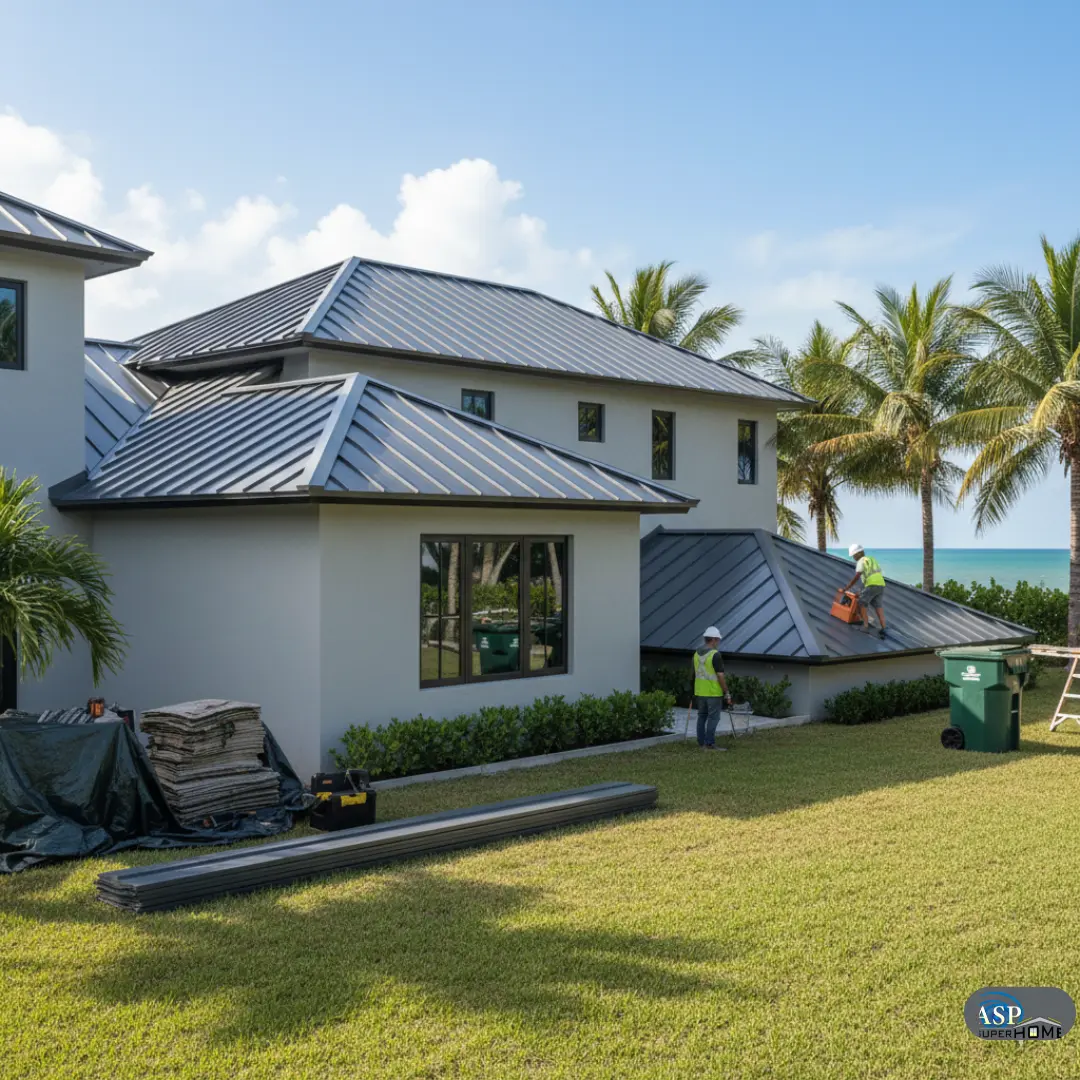
For South Florida homeowners, a metal tile roof combines the classic tile look with the strength and longevity of metal. It stands up to salt air, UV exposure, and high winds while lasting decades longer than standard shingles.
Does Homeowners Insurance Go Down With a Metal Roof?
Yes, homeowners insurance often goes down with a metal roof. According to GM Exteriors, many insurance companies offer discounts of 5% to 35% for newer roofs made from durable, impact-resistant materials. Metal roofs are particularly attractive to insurers because of their fire resistance, wind rating, and long lifespan.
In Florida, where hurricanes are a major risk factor, a roof that meets the latest building code for wind resistance can unlock significant premium reductions. Pairing a new metal roof with impact windows and doors can stack those discounts further, since both upgrades reduce the insurer's risk of paying out a major claim.
The savings vary by carrier, location, and policy type. It is worth calling your insurance agent before starting a roof project to ask exactly which materials and features qualify for a discount. The annual premium savings over the life of a 50-year metal roof can add up to thousands of dollars.
Do I Have to Tell My Insurance Company I Got a New Roof?
Yes, you should tell your insurance company you got a new roof. Notifying your insurer allows them to update your policy to reflect the improved condition of your home, which can result in lower premiums. A new roof reduces the risk of water damage and storm-related claims, and most insurers will adjust your rate accordingly once they know the roof has been replaced.
If you file a claim later and your insurer discovers you replaced the roof without notifying them, it could create complications with your coverage. Keeping your policy up to date protects you and makes sure you are getting every discount you qualify for.
How to Tell If Your Roof Is Good
You can tell if your roof is good by checking for a few visible signs from the ground and inside your attic. Start by looking at the shingles. If they are lying flat, uniform in color, and free of curling, cracking, or missing pieces, that is a good sign. Check your gutters for granule buildup, which looks like coarse black sand. Heavy granule loss means the shingles are breaking down.
Inside the attic, look for daylight coming through the roof boards, water stains on the underside of the decking, or any signs of mold or moisture. According to Ridge Top Exteriors, if the decking feels soft or spongy when pressed, there may be rot underneath that is not visible from the outside.
A professional inspection gives you the most accurate picture. According to Angi, a roof inspection costs about $240 on average and can catch problems early before they become expensive. We recommend scheduling an inspection at least once a year, and always after a major storm, to stay ahead of any damage.
How to Spot a Bad Roofer
You can spot a bad roofer by watching for a few common red flags. A contractor who demands full payment upfront before any work begins is a major warning sign. Reputable contractors follow a payment schedule tied to project milestones, not a lump sum before the first nail is driven.
Other red flags include no written estimate or contract, no proof of licensing or insurance, pressure to sign immediately, and an unwillingness to provide references. According to HomeGuide, you should always choose insured and bonded companies with at least five years of experience and verify their reviews on multiple platforms.
According to RoofingCalculator.com, if a quote seems too low compared to other bids, the contractor may be using subpar materials, planning to skip critical steps like deck inspection, or intending to add surprise charges once the old roof is off. Getting at least three detailed, itemized estimates is the best protection against both overcharging and underdelivering. A quality commercial roofing or residential roofing project requires a contractor who puts everything in writing.
What Temperature Is Too Cold to Replace a Roof?
Temperatures below 40 degrees Fahrenheit are generally too cold to replace a roof with asphalt shingles. According to Columbus Roofing, asphalt shingles need temperatures of at least 40 degrees for the adhesive strip on each shingle to activate and seal properly. If shingles are installed in cold weather without proper handling, they can crack, fail to bond, and blow off in the first strong wind.
Metal and tile roofs are less temperature-sensitive and can be installed in cooler conditions, though extreme cold still makes the work slower and more difficult for crews. In South Florida, cold weather is rarely a factor. Temperatures stay well above 40 degrees year-round, which gives homeowners here the flexibility to schedule work in any season.
The bigger concern in warm climates is rain and humidity. Scheduling during the dry season or during a window of clear weather helps the job go smoothly and protects the exposed deck during tear-off.
Can You Negotiate Roof Replacement Cost?
Yes, you can negotiate roof replacement cost. Getting multiple quotes is the most effective negotiating tool because it gives you a clear picture of what the market rate is for your specific roof. If one contractor is significantly higher than the others for the same scope of work, you can ask them to explain the difference or match a competing bid.
Timing is another powerful lever. According to GM Exteriors, scheduling work during late summer and fall, when contractors are busiest, can inflate labor costs by 15% to 25%. Booking during the off-season, when crews have open availability, often gets you a better rate for the same quality of work.
Cash payment, flexible scheduling, and bundling multiple projects can also help. If you need both a roof and home remodeling work, doing them with the same contractor can sometimes lower the total cost. Just make sure any negotiated discount does not come at the expense of material quality or skipped steps.
Frequently Asked Questions
Is $25,000 a Lot for a New Roof?
Whether $25,000 is a lot for a new roof depends on the material and size. For standard asphalt shingles on an average home, $25,000 is on the high side. For metal, tile, or slate roofing, or for a larger home with a complex roof, $25,000 is within normal range. According to FoxHaven Roofing, the cost of a new roof in 2026 ranges from $9,800 to $41,800 for a 2,000-square-foot home, with material choice being the biggest variable.
What Is the 25% Rule for Roofing?
The 25% rule for roofing is a guideline that says if more than 25% of your roof is damaged, a full replacement is usually more cost-effective than patching individual areas. Repeated spot repairs on an aging roof can approach the cost of a full replacement while leaving you with a patchwork surface that is more vulnerable to future leaks and storm damage.
What Is the Cheapest Time of Year to Get a New Roof?
The cheapest time of year to get a new roof is late winter or early spring, before the busy roofing season begins. According to GM Exteriors, labor demand during late summer and fall can inflate costs by 15% to 25%. In South Florida, where mild temperatures allow year-round installation, scheduling during the slower months can save you a meaningful amount without any weather risk.
What Decreases Property Value the Most?
A damaged, aging, or visibly failing roof is one of the top things that decreases property value. Buyers see a bad roof as a major expense waiting to happen and will either offer less or walk away entirely. According to FoxHaven Roofing, homes with new roofs sell 30% faster and command higher asking prices. Other value killers include foundation problems, outdated electrical systems, and poor curb appeal.
Is It Cheaper to Put New Shingles Over Old Shingles?
Yes, it is cheaper to put new shingles over old shingles because you save $1,000 to $3,000 in tear-off and disposal costs. However, most roofing professionals recommend against it. According to Ridge Top Exteriors, overlaying prevents inspection of the deck for rot, adds excessive weight, and can void manufacturer warranties. A full tear-off and replacement gives you a longer-lasting, more reliable roof.
What Color Roof Makes a House Look Bigger?
Lighter roof colors like light gray, beige, or soft white make a house look bigger by reflecting more light and creating a sense of openness. Darker roofs can make a home look smaller but often add a sense of weight and sophistication. The best choice depends on your home's architecture, siding color, and the overall look of your neighborhood.
Does a New Roof Increase Home Value?
Yes, a new roof increases home value. According to the 2025 Journal of Light Construction Cost vs. Value report, a new asphalt shingle roof offers a 68% return on investment at resale. A new metal roof offers about 50% ROI but delivers far greater energy savings and longevity. According to FoxHaven Roofing, a new roof typically adds 60% to 70% of its replacement cost to the home's market value.
Putting It All Together
Estimating a roof replacement cost comes down to four things: your roof's size and complexity, the material you choose, your local labor market, and the condition of the structure underneath. Getting at least three itemized estimates, comparing scope (not just price), and asking about hidden costs upfront will protect you from surprises. Roofing costs are not expected to come down, so planning ahead and scheduling during slower months gives you the most control over your budget.
If your roof is showing signs of age or you just want to know where it stands, ASP SuperHomes can help with a thorough inspection and a clear, honest estimate. Call us at 786-933-9815 to schedule yours.
Meet With a Project Manager
Your first conversation is with a Project Manager who takes the time to understand your goals, walk you through your options, and stays connected throughout your project — from the initial consultation through the final walkthrough.
.avif)
.avif)
.avif)
%201.avif)
Insights & Resources
Stay informed with expert tips on roofing materials, hurricane codes, repairs, and South Florida construction standards.


%201.avif)
%201%20(1).avif)
%201.svg)
%201%20(1)%20(1).png)
.png.png)
.png%20(1).png)
.png%20(2).png)
.avif)
.avif)


.png)
.svg)
.png)