


Solar Power and High Electric Bills
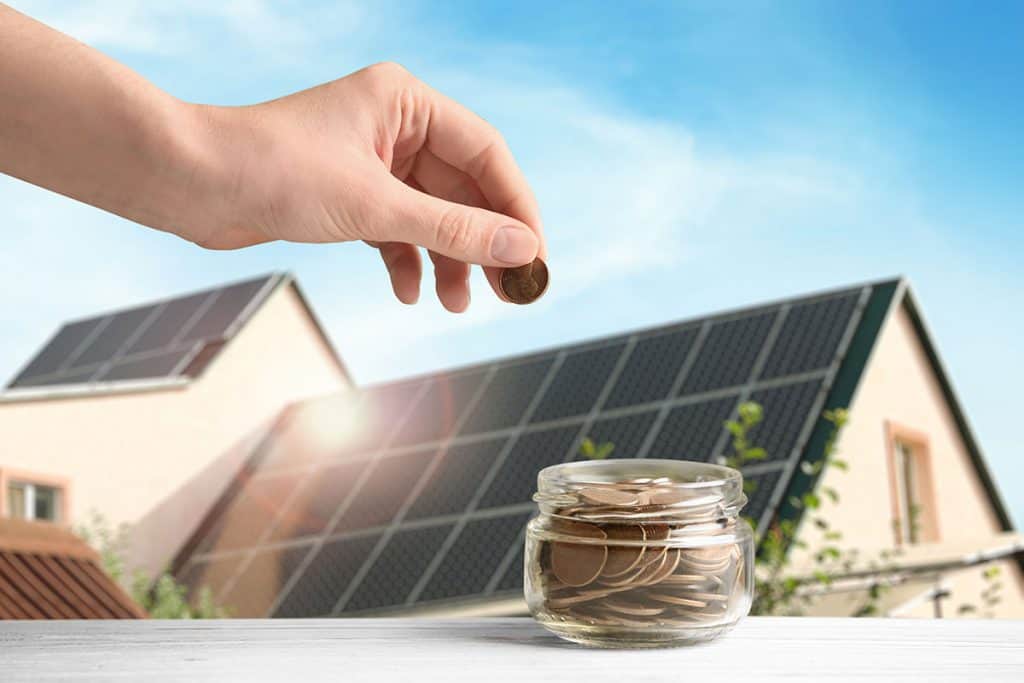

Solar power can still leave you with a high electric bill if your system is undersized, your energy use has grown since installation, shading or soiling is cutting production, or your utility charges fixed fees and time-of-use rates that solar credits cannot fully offset. Most grid-tied solar homeowners still receive a monthly utility bill. The goal of a properly designed system is to reduce that bill by 75% to 100%, not to eliminate the utility relationship entirely. If your bill is still uncomfortably high after going solar, one or more specific causes are almost always responsible, and all of them are fixable.
Why Is My Electric Bill Still High Even With Solar Panels?
Your electric bill is still high even with solar panels for one or more of the following reasons: your system is not producing enough electricity to cover your consumption, your energy use has increased since installation, you are paying high-rate grid power at night when your panels produce nothing, your utility applies fixed charges that solar credits cannot offset, or a component issue is causing your system to underperform. According to Solar.com, there are two core mechanics at work: either your panels are not generating enough electricity during the day, or the value of the electricity you export to the grid is lower than what you pay when you pull power back at night.
The first diagnostic step is to open your solar monitoring app and compare your system's actual monthly kWh production to your monthly kWh consumption on your utility bill. These two numbers tell the whole story. If your system is producing 600 kWh per month and your home is using 1,200 kWh, you are only offsetting half your load. If production matches what was projected but your bill is still high, the issue is consumption, not the panels. If production is significantly below projections, the panels or equipment need attention.
You Are Using More Electricity Than When the System Was Installed
One of the most common and overlooked reasons for a high solar bill is increased electricity consumption after installation. Solar systems are sized based on your historical usage at the time of design. If you add an electric vehicle, a pool, a hot tub, extra HVAC zones, or just more people in the household after installation, your system can no longer offset 100% of your consumption. According to EcoFlow, many homeowners are surprised to find they are using 30% to 50% more power than when their system was installed.
There is also a well-documented behavior called the "solar rebound effect." When people know they are generating their own power, they naturally become less careful about energy use. The AC gets set a little colder. Lights stay on longer. Appliances run more freely. The problem is that solar savings only exist to the extent your system can cover the load. Extra consumption beyond the system's designed offset goes straight to the grid at full retail rates.
Your System Is Undersized for Your Home
System undersizing is a widespread cause of disappointing solar bills. Some installers design systems that intentionally cover only 70% to 80% of a home's needs in order to offer a lower quote that wins the sale. Others simply size based on your bills from a slow month rather than your annual peak. Either way, the shortfall shows up every month on your utility statement.
The fix is to compare your system's designed output against your 12-month energy history. If you consistently use 1,100 kWh per month in summer and your system was sized to produce 900 kWh, you have a 200 kWh monthly gap that the grid fills at full price. Adding panels or a battery that stores midday surplus for evening use are the two main ways to close that gap. The same principle applies to businesses: a commercial solar system that underproduces relative to facility usage creates the same ongoing cost problem at a larger scale.
Night Use and the Timing Problem
A properly sized system can still leave you with a significant bill if most of your consumption happens after dark. Solar panels generate zero power at night. Yet the evening hours from about 5 PM to 10 PM are exactly when most households use the most electricity: cooking dinner, running the dishwasher, doing laundry, charging devices, and running the HVAC on a timer. EcoFlow estimates that during those peak evening hours, a typical household draws 15 to 25 kWh from the grid, all at full retail rates.
For homes with standard net metering, daytime solar credits offset nighttime purchases on a rolling basis. But if your utility has moved to time-of-use (TOU) pricing, where evening power costs 25% to 50% more than midday power, you are selling your midday solar at a low export rate and buying back expensive peak-hour power at night. That math erodes savings fast. A solar battery backup solves this directly by storing surplus daytime generation for use during the expensive evening hours, capturing the full value of every kWh your panels produce.
Fixed Utility Charges That Solar Cannot Eliminate
Even a solar system that offsets 100% of your annual electricity consumption will not bring your bill to zero. Every utility charges mandatory fixed fees that apply regardless of how much solar you produce. These typically include a customer service charge, a distribution and delivery fee, and various regulatory charges. According to SolarTech, these fixed charges typically run $10 to $30 per month and are completely unavoidable for grid-tied customers. This is normal and expected. If your bill is exactly $15 to $25 every month after solar, that is likely just the minimum service fee, which means your system is doing its job.
Shading, Soiling, and Equipment Issues
Physical factors that reduce production are a common but underdiagnosed cause of high bills. Partial shading from a tree branch that has grown in the months since installation can reduce an entire string of panels' output by 30% to 50%, according to solar performance research. Pollen, dust, bird droppings, and salt air residue (especially near the coast) can reduce output by 5% to 15% when they accumulate on panel surfaces.
Equipment failures are less common but not rare. A failed microinverter, a failing string inverter, or a loose DC connection can cause one or multiple panels to produce at a fraction of their rated output without triggering an obvious alarm. The monitoring app may show lower-than-expected production that gradually worsens over weeks. If your system's monthly kWh output has dropped noticeably compared to the same months in previous years without a clear weather explanation, contact your installer for an inspection. A solar panel repair or component replacement caught early costs far less than months of elevated utility bills.
How Much Should My Electric Bill Be If I Have Solar?
How much your electric bill should be if you have solar depends on whether your system was sized to cover 100% of your annual usage and whether your utility offers full retail-rate net metering. According to SolarTech, bills for grid-tied solar homeowners typically drop from an average of $154 per month to around $15 to $45, with most of the remaining charges being unavoidable fixed fees. The U.S. Energy Information Administration puts the average American monthly electricity bill at around $154 in 2025, up about 6% to 7% year over year, with further increases expected.
In Florida, net metering remains available but the export credit rate is declining. From January 2024 through December 2025, excess solar exported to the grid earned credits at 75% of the retail rate. That rate dropped to 60% in 2026 and will decline to 50% in subsequent years. This makes battery storage more financially valuable each year for Florida homeowners, because stored solar used at home is worth the full retail rate while exported surplus earns progressively less.
If you have a loan on your solar system, your monthly payment is part of the picture. A $120 per month solar loan combined with a $25 utility fixed charge means your total energy cost is $145 per month. If you were paying $200 before going solar, you are still saving $55 per month. As utility rates continue rising while your loan payment stays flat, that gap grows over time. We offer flexible financing options including PACE and traditional solar loans so homeowners can go solar with $0 down and start saving from month one.
Does Solar Really Lower Your Electric Bill?
Yes, solar really does lower your electric bill for the vast majority of homeowners. According to EnergySage, most solar customers save between $37,000 and $154,000 on electricity over the 25-year life of their system. The average U.S. household saves approximately $1,500 per year in electricity costs after going solar, based on data from EcoFlow and SolarReviews. Florida homeowners can expect to avoid roughly $51,000 to $53,000 in total utility costs over 25 years, based on EnergySage and ConsumerAffairs data, which works out to about $170 to $210 per month in avoided costs.
The savings are most powerful in states with high electricity rates, strong net metering policies, and abundant sunlight. Florida hits all three marks, with electricity rates above the national average, 230 to 250 sunny days per year, and a production ratio of 1.5 to 1.6 that means panels here generate significantly more value per dollar installed than in less sunny states.
There is a critical gap between what solar can do and what it actually delivers when a system is designed, installed, or maintained poorly. We see this regularly with homeowners who came to us after purchasing a system from a national door-to-door sales company that undersized the array or disappeared after installation. A properly designed solar energy system, sized to your actual 12-month consumption, monitored after commissioning, and supported by a real service team, delivers the savings it promises.
Comparing Solar Bills: What to Expect at Each Coverage Level
System Coverage LevelTypical Monthly Utility BillWhat This Means100% annual offset (1:1 net metering)$15 – $30Only fixed charges remain; panel array fully covers annual kWh use80% annual offset$35 – $6020% of consumption still purchased from the grid, plus fixed fees60% annual offset$60 – $90Significant grid draw, usually due to undersizing or high AC load100% offset + battery storage$10 – $20Minimum fixed fees only; battery eliminates most nighttime grid drawLeased system (PPA)Varies widelyUtility bill reduced but a separate monthly lease or PPA payment applies
Sources: SolarTech, "Electric Bill Before and After Solar Panels" (2026); Solar.com, "Why Is My Electric Bill So High With Solar Panels?"; EnergySage, "How Much Is Your Electric Bill After Going Solar?"; EcoFlow, "What Is the Average Monthly Electric Bill With Solar Panels?" (2026). Figures assume Florida net metering, a properly sized system, and average residential energy use.
Why Is My Electric Bill So High All of a Sudden in 2026?
Your electric bill is high all of a sudden in 2026 for several reasons that are affecting homeowners broadly, not just solar owners. According to Solar.com, the average U.S. residential electricity rate increased 6.7% from June 2024 to June 2025, outpacing inflation for food, shelter, and services over the same period. That translated to roughly $13.50 more per month for the average household using the same amount of electricity as the year before. Florida Power and Light's new four-year rate settlement, which took effect in January 2026, added another increase layer for FPL customers specifically.
Beyond rate increases, electricity demand across the country is surging due to the growth of AI data centers and grid-scale computing, which are placing enormous strain on regional grids. Utilities are passing those infrastructure costs on to residential customers through rate hikes. According to the EIA Short-Term Energy Outlook and BloombergNEF forecasts, retail electricity prices are expected to rise 2% to 4% annually through 2030. For homeowners without solar, that compounds each year. For solar owners with a properly sized system, those rate increases have almost no impact because they are not buying much power from the grid.
What Is the Biggest Problem With Solar Panels?
The biggest problem with solar panels is the high upfront cost combined with the complexity of verifying that a system was sized and installed correctly. According to SolarReviews, solar panels are not worth it for homeowners who pay less than $75 per month on electricity, have limited suitable roof space, or plan to move within a few years. For homes with high electric bills, good roof orientation, and long-term ownership plans, the investment makes strong financial sense. But the industry has a persistent problem with aggressive sales tactics, intentional undersizing to hit price points, and poor post-installation support.
The second most significant ongoing problem is shading and soiling. A tree branch that was not an issue on installation day can shade a critical panel row two years later as it grows. Salt air deposits, pollen seasons, and bird activity all gradually erode output in ways that are not dramatic enough to trigger obvious monitoring alerts but significant enough to noticeably reduce savings over months. Regular cleaning, annual inspections, and monitoring app reviews are the solution.
What Is the Downside of Solar Panels on a House?
The downside of solar panels on a house includes the high upfront cost (typically $18,000 to $30,000 before any available incentives), the ongoing grid connection for nighttime power, the need for battery storage to achieve real energy independence, and potential complications when selling a home if the system was financed or leased rather than owned. The federal 30% Residential Clean Energy Credit (Section 25D) expired on December 31, 2025, per the One Big Beautiful Bill Act, which makes the cost of new cash or loan purchases higher in 2026 than in prior years for buyers who cannot access third-party owned credits through lease or PPA arrangements.
From a practical standpoint, panels mounted on a roof do require removal if the roof itself needs to be replaced or repaired later. This is one reason many homeowners pair solar with a roof replacement at the same time. Installing a durable, long-lived standing seam metal roof before or alongside solar panels eliminates the likelihood of needing to remove and reinstall the array during the system's 25 to 30-year life, saving both money and hassle down the road.
Is 10kW Enough to Run a House?
Yes, 10 kW is enough to run most houses in the United States. Under ideal conditions, a 10 kW solar system produces 30 to 45 kWh per day, translating to 11,000 to 17,000 kWh per year. According to the U.S. Energy Information Administration, the average American household uses about 10,791 kWh of electricity per year. In Florida, with 5.77 average peak sun hours per day, a 10 kW system easily covers 100% of the average home's annual needs and can even generate a meaningful surplus in spring and fall months when air conditioning demand drops.
For homes with higher-than-average energy use, including those with pools, EV chargers, multi-zone HVAC, or large households using above 1,250 kWh per month, a 10 kW system may offset 80% to 90% of consumption rather than 100%. IntegrateSun's analysis shows that a 10 kW system is ideal for homes using 900 to 1,250 kWh monthly, covering families of 3 to 5 occupants with typical Florida air conditioning loads. Homes using more than that benefit from a 12 to 15 kW array.
The right answer for any specific home depends on reviewing 12 months of actual utility bills, accounting for planned changes like an EV or pool addition, and running the sizing calculation against local production data. Our team at ASP Super Home does this assessment at no charge before recommending any system size.
What Are Two Cons of Using Solar Panels?
The two most significant cons of using solar panels are the high upfront cost and the dependence on nighttime grid power for homes without battery storage. The upfront cost of $18,000 to $30,000 or more for a complete residential system requires either a large cash outlay or a financing commitment. While payback periods in Florida are among the shortest in the country at 5 to 10 years, the initial barrier is real, and financing with interest increases the total cost by a meaningful amount over the loan term.
The second con is that panels stop generating the moment the sun goes down. Without a battery, every kilowatt-hour consumed from approximately 6 PM to 7 AM comes from the grid at full retail rates. In Florida, where air conditioning often runs through the night, this nighttime grid dependency can limit how much of the total bill solar actually offsets. Adding a battery backup system directly addresses this by storing daytime surplus for overnight use, and it also provides protection when hurricanes and tropical storms take the grid down, which happens regularly in South Florida.
Why Are People Getting Rid of Their Solar Panels?
People get rid of their solar panels most commonly because they are selling a home where the system is leased rather than owned, because the roof beneath the panels needs replacement and the homeowner decides not to reinstall an aging array, or because the system failed to deliver expected savings and no installer was available for service or repair. These situations almost exclusively affect leased or PPA-financed systems, not owned ones.
Owned solar panels in good condition on a home with strong production are almost never removed voluntarily. A 2025 SolarReviews study found that homes with owned solar systems sold for an average of 6.9% more than comparable non-solar homes, which means owned solar is a financial asset at sale time. The challenges arise almost exclusively with leased systems, where buyers may not want to assume the remaining payment obligation. This is a strong argument for financing solar through a loan that gives you ownership rather than a lease that leaves the system in the installer's name throughout the term.
We offer residential solar panel installations with clear ownership through purchase or loan financing, along with our own in-house service team that supports the system after commissioning. This addresses the most common post-installation frustrations homeowners report: no communication, no monitoring guidance, and no service response when something goes wrong.
Frequently Asked Questions
Why Is My Bill So High If I Have Solar?
Your bill is high if you have solar for one of these reasons: you are using more electricity than your system produces, your utility charges fixed fees that solar credits cannot offset, you are drawing expensive peak-rate grid power at night, your system is underperforming due to shading or a hardware issue, or your energy consumption increased after installation. Check your monitoring app and compare actual monthly production to your utility bill's kWh usage. That comparison tells you whether the problem is the system or the consumption. Most solar performance issues are diagnosable and fixable.
Does Solar Really Lower Your Electric Bill?
Yes, solar really lowers your electric bill. According to EnergySage, most U.S. homeowners who go solar save between $37,000 and $154,000 on electricity over 25 years. The average American saves roughly $1,500 per year, and Florida homeowners can expect to avoid $51,000 to $53,000 in total utility costs over the life of a system. The savings are strongest in states with high electricity rates and abundant sunlight, which makes Florida one of the best markets for solar economics in the country.
What Happens After 25 Years of Solar?
After 25 years of solar, your panels continue to produce electricity but at slightly reduced efficiency. According to the National Renewable Energy Laboratory, most panels degrade at an average rate of 0.5% to 0.8% per year. A system that produced 10,000 kWh in its first year would still produce approximately 8,200 to 9,400 kWh in year 25. The manufacturer's performance warranty typically guarantees at least 80% of rated output for 25 years. After that point, panels often continue working for years longer. The inverter, not the panels, is more likely to need replacement, typically around the 10 to 15 year mark at a cost of $1,500 to $3,000.
Why It Is So Hard to Sell a House With Solar Panels?
It is hard to sell a house with solar panels when the system is leased or tied to a power purchase agreement, because the buyer must take over the remaining contract. Many buyers decline, which can slow or complicate the sale. Owned solar panels, by contrast, make a home easier to sell. According to a 2025 SolarReviews study, homes with owned solar panels sold for an average of 6.9% more than comparable non-solar homes and spent 13.3% less time on the market. Owning your system outright, rather than leasing, is the most important factor in whether solar helps or complicates a future sale.
What Is the Biggest Problem With Solar Panels?
The biggest problem with solar panels for most homeowners is the high upfront cost combined with poor industry practices that include aggressive sales tactics, deliberate undersizing, and weak post-installation support. Systems that are properly sized, correctly installed by licensed crews, and monitored and maintained after commissioning consistently deliver the savings they are sold on. The technology itself is proven, with panels lasting 25 to 30 years or more. The problems arise in the business practices surrounding installation, not in the solar panels themselves.
What Is the Downside of Solar on a House?
The downside of solar on a house includes the high upfront investment, the continued need for grid power at night without battery storage, declining net metering export credits in states like Florida, and complications when selling a home if the system was leased rather than owned. For homes with good sun exposure, strong electricity rates, and a long-term ownership plan, these downsides are significantly outweighed by 25 years of lower bills, increased home value, energy resilience during outages, and protection against grid rate increases that have averaged 2.79% annually over the past two decades according to the Bureau of Labor Statistics.
Why Can't You Throw Away Solar Panels?
You cannot throw away solar panels in regular trash because they contain materials that require careful disposal handling, including silicon, silver, copper, and in some thin-film models, small amounts of cadmium. The U.S. EPA has been developing universal waste regulations specifically for solar panels to standardize recycling. The International Renewable Energy Agency estimates cumulative solar panel waste in the United States could reach between 170,000 and 1 million tons by 2030 as early installations reach end of life. Most panel manufacturers and certified installers can point you toward certified recycling programs. Proper recycling recovers valuable metals and prevents environmental contamination from improper disposal.
The Takeaway
Solar power absolutely lowers electric bills, but only when the system is designed for your actual consumption, installed correctly, monitored after commissioning, and supported when problems arise. If your solar bill is still high, the solution usually lies in one of a handful of diagnosable causes: undersizing, increased usage, shading, equipment issues, or the timing mismatch that battery storage resolves. None of these are permanent problems, and all of them can be addressed.
Rising grid electricity rates are not slowing down. According to the EIA, average retail rates rose 6.7% in the year ending June 2025, and projections show continued annual increases through 2030. Every year that passes with an undersized or underperforming solar system is a year of avoidable utility spending.
If your current system is not delivering the savings you were promised, or if you are exploring solar for the first time, ASP Super Home provides free system assessments, honest sizing based on your actual 12-month utility bills, and in-house installation crews who are accountable from permit to commissioning and beyond.
Meet With a Project Manager
Your first conversation is with a Project Manager who takes the time to understand your goals, walk you through your options, and stays connected throughout your project — from the initial consultation through the final walkthrough.
.avif)
.avif)
.avif)
%201.avif)
Insights & Resources
Stay informed with expert tips on roofing materials, hurricane codes, repairs, and South Florida construction standards.


%201.avif)
%201%20(1).avif)

%201.svg)
%201%20(1)%20(1).png)
.png.png)
.png%20(1).png)
.png%20(2).png)
.avif)
.avif)


.png)
.svg)
.png)