


How to Find a Commercial Roofing Company in Miami
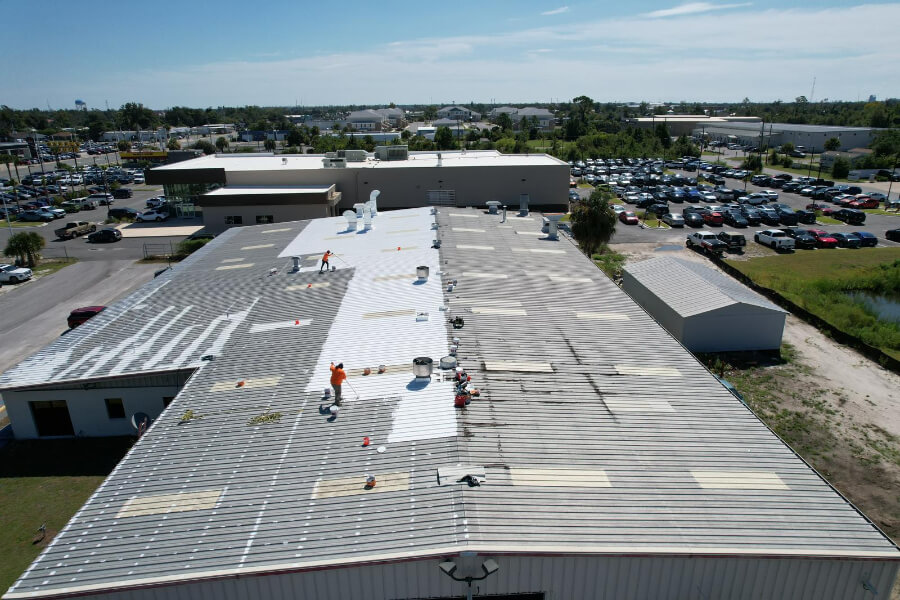
To find a reliable commercial roofing company in Miami, start by verifying that the contractor holds an active Florida Certified Roofing Contractor (CCC) license through the DBPR portal at MyFloridaLicense.com, confirming they carry adequate insurance, and checking that they have documented experience with commercial projects in the High Velocity Hurricane Zone. Miami sits in the strictest wind-resistance building code zone in the United States, which means commercial roofing work here requires products with Miami-Dade Notice of Acceptance (NOA) approval, HVHZ-specific fastening schedules, and multiple in-progress inspections that many out-of-area contractors are not equipped to handle. The U.S. roofing contractors market reached $92.5 billion in 2026, according to IBISWorld, with over 101,000 roofing businesses operating nationwide. In a market that large, knowing how to separate a qualified commercial roofer from an unqualified one protects your building, your budget, and your business.
Key Takeaways
- Verify the contractor's Florida CCC (Certified Roofing Contractor) license on MyFloridaLicense.com before signing any contract. The license status should show "Current, Active" with no open disciplinary actions.
- Commercial roofing in Miami-Dade and Broward counties falls within the High Velocity Hurricane Zone (HVHZ), which requires Miami-Dade NOA-approved products and stricter installation standards than anywhere else in the state.
- Ask for manufacturer certifications from the membrane or metal system they plan to install. Certified installers offer manufacturer-backed warranties that cover both materials and workmanship.
- Request at least three references from completed commercial projects of similar scope and building type, not just residential jobs.
- Get written quotes from at least three contractors and compare them line by line, not just on total price. The scope of work, materials specified, warranty terms, and payment schedule should all be clearly documented.
- Avoid contractors who knock on your door after storms, demand full payment upfront, or offer to waive your insurance deductible, all of which are red flags for roofing fraud in Florida.
- The Florida Attorney General received thousands of contractor fraud complaints after Hurricane Ian in 2022, and the DBPR opened hundreds of enforcement cases against unlicensed and fraudulent operators.
How to Find a Commercial Roofing Company in Miami
Finding a commercial roofing company in Miami requires a structured vetting process that confirms licensing, insurance, local code expertise, commercial project experience, and manufacturer certifications before you request a quote or sign a contract. The process takes more diligence than hiring a residential roofer because commercial projects involve larger budgets, stricter code requirements, and longer warranty periods that amplify the cost of choosing the wrong contractor.
Start by identifying contractors who specifically list commercial roofing as a core service rather than an occasional add-on to their residential work. A contractor whose website, Google Business Profile, and references all center on commercial projects is more likely to have the systems, crew size, and code knowledge that commercial work demands. A residential roofer who occasionally takes a commercial job may lack experience with the membrane systems, drainage engineering, and multi-stage inspection process that flat and low-slope commercial roofs require.
The Roofing Contractors Association of South Florida (RCASF) maintains a searchable directory of member contractors. Trade association membership is not a guarantee of quality, but it does indicate that the contractor has invested in professional affiliation and is subject to the association's membership standards. Online platforms like Google Reviews, the Better Business Bureau (BBB), and industry-specific review sites provide additional data points about the contractor's reputation, responsiveness, and complaint history.
How to Verify a Commercial Roofer's License in Florida
You verify a commercial roofer's license in Florida by searching their name or license number on MyFloridaLicense.com, the official database of the Florida Department of Business and Professional Regulation (DBPR). A legitimate roofing contractor should show a status of "Current, Active" with a license type of either CCC (Certified Roofing Contractor) or CRC (Registered Roofing Contractor).
The distinction between CCC and CRC matters. A Certified Roofing Contractor (CCC) holds a state-issued license that is valid anywhere in Florida. The contractor passed the state certification exam, met statewide financial responsibility requirements, and carries the insurance minimums required by the state. A Registered Roofing Contractor (CRC), by contrast, holds a county-specific license that is only valid in the county or counties where they are registered. If your commercial property is in Miami-Dade County and the contractor holds a CRC registered only in Broward County, they cannot legally pull a permit for your project.
Beyond verifying that the license is active, check the DBPR record for disciplinary history. Open complaints, past suspensions, fines, or probationary conditions appear on the contractor's license detail page. An open complaint means a prior customer or the DBPR has filed a formal grievance that is still under investigation. Multiple complaints or a history of disciplinary actions should disqualify the contractor from your consideration regardless of their price.
What Is the Difference Between a Certified and Registered Roofing Contractor?
A Certified Roofing Contractor (CCC) holds a statewide license issued by the Florida DBPR that allows them to work anywhere in the state. A Registered Roofing Contractor (CRC) holds a county-level license that restricts their work to the specific jurisdictions where they are registered. For commercial projects in the HVHZ, which covers Miami-Dade and Broward counties, working with a CCC-licensed contractor simplifies the process because their license covers the entire state without jurisdictional limitations.
Both license types require the contractor to carry workers' compensation insurance and general liability insurance. However, Miami-Dade and Broward counties may impose higher insurance minimums than the state standard, including requirements for additional coverages like pollution liability. Confirm that the contractor's insurance meets the local requirements for your county, not just the state minimum.
What Certifications Should a Commercial Roofer Have?
A commercial roofer should have manufacturer certifications from the roofing system brands they install, in addition to their state roofing license. Manufacturer certifications matter because they unlock warranty coverage that non-certified installers cannot offer.
Major roofing manufacturers, including GAF, Owens Corning, CertainTeed, Carlisle, and Firestone, offer tiered certification programs that require the contractor to complete training on proper installation techniques, pass examinations, and meet minimum experience requirements. A GAF Master Elite certification, for example, places the contractor in the top 2% of roofing contractors nationwide, according to GAF. Contractors with manufacturer certifications can offer manufacturer-backed warranties that cover both materials and workmanship for 15 to 30 years, depending on the system and warranty tier.
A non-certified installer can still purchase and install the same roofing products, but the manufacturer warranty will typically cover only the materials, not the installation labor. If the roof leaks because of a workmanship defect rather than a material defect, the manufacturer's warranty provides no coverage unless the installer held the appropriate certification at the time of installation. For a commercial roofing investment that may cost $50,000 to $200,000 or more, the difference between a materials-only warranty and a full system warranty represents significant financial protection.
What Questions Should You Ask a Commercial Roofing Contractor?
The questions you should ask a commercial roofing contractor before signing a contract cover licensing, insurance, experience, materials, warranties, the installation process, and the payment schedule.
- What is your Florida roofing license number, and is it a CCC or CRC? Verify the answer independently on MyFloridaLicense.com.
- Can you provide a current certificate of insurance showing general liability and workers' compensation coverage? The certificate should be issued within the last 30 days and list your property as an additional insured for the duration of the project.
- How many commercial roofing projects have you completed in the past 12 months? Ask for specific references from projects of similar size, building type, and roofing system.
- Which roofing system do you recommend for my building, and why? A qualified contractor evaluates your building's structure, drainage, equipment loads, and wind exposure before recommending a specific system. A contractor who recommends the same system for every building may be limited in their product knowledge.
- What manufacturer certifications do you hold for the system you are recommending? Confirm the certification directly with the manufacturer if possible.
- What does your warranty cover, and for how long? Understand the difference between the manufacturer's material warranty and the contractor's workmanship warranty. Ask what maintenance is required to keep the warranty valid.
- Who pulls the building permit, and who manages the inspection schedule? The contractor should handle all permitting and inspections. In the HVHZ, commercial roofing permits and inspections require product submittals, NOA documentation, and multiple in-progress inspections that the contractor must coordinate.
- What is your payment schedule? A reputable contractor uses staged payments tied to project milestones, with the final payment due only after the work passes its final inspection. Never pay the full amount upfront.
What Are the Red Flags When Hiring a Roofer in Miami?
The red flags when hiring a roofer include unsolicited door-to-door contact after a storm, demands for full payment upfront, offers to waive your insurance deductible, inability to provide a license number, no physical business address, and pressure to sign a contract immediately.
Florida leads the nation in roofing fraud, according to RoofVista's 2026 industry analysis. After Hurricane Ian in 2022, the Florida Attorney General received thousands of consumer complaints related to contractor fraud, and the DBPR opened hundreds of enforcement cases against unlicensed and fraudulent contractors. The pattern repeats after every major storm: out-of-state operators flood into affected areas, collect deposits, and disappear before completing the work.
Offering to waive your insurance deductible became illegal in Florida as of January 2025. Any contractor who makes this offer is either unaware of current law or deliberately operating outside it, both of which disqualify them from your project. The Florida Attorney General has also sued roofing companies accused of promising homeowners they would "only pay their deductible" and then sending surprise bills and filing liens against the property. Under Florida's Construction Lien Law (Chapter 713), subcontractors and material suppliers can place a lien on your property even if you already paid the general contractor in full.
A legitimate commercial roofing contractor has a physical business address you can visit, a verifiable CCC license, a track record of completed commercial projects with references, and a willingness to provide a detailed written proposal without pressuring you to sign on the spot. We hold a certified roofing contractor license (CCC1333787) and a general contractor license (CGC1513274), carry over $2 million in insurance coverage, and have 19 years of commercial and residential roofing experience across all of South Florida. You can learn more about our team and credentials before requesting a quote.
Why HVHZ Experience Matters for Commercial Roofing in Miami
HVHZ experience matters because Miami-Dade and Broward counties operate under the most stringent wind-resistance building codes in the United States, and commercial roofing projects in these counties must meet requirements that do not apply anywhere else in the state.
The High Velocity Hurricane Zone requires that every product used on a commercial roof, from the membrane and insulation to the fasteners and edge metal, carries a Miami-Dade Notice of Acceptance (NOA) or a Florida Product Approval with a specific HVHZ designation. The NOA specifies exactly how the product can be installed, including fastener type, spacing, embedment depth, and testing protocols. Deviating from the NOA specifications voids the product approval and can result in a failed inspection.
Commercial roofing in the HVHZ also requires multiple in-progress inspections at key stages of installation: substrate preparation, insulation attachment, and final membrane application. A contractor unfamiliar with this multi-stage inspection process can cause costly delays by failing to schedule inspections at the right time or by installing materials in a sequence that does not match the approved assembly. A standing seam metal roof on a commercial building in the HVHZ must be engineered for the building's specific height, exposure category, and design wind speed, with fastening patterns verified by calculation and tested per the product's NOA.
What Types of Commercial Roofing Do Miami Contractors Offer?
Miami commercial roofing contractors offer TPO (thermoplastic polyolefin), standing seam metal, built-up roofing (BUR), modified bitumen, EPDM, PVC, and protective roof coatings for flat and low-slope commercial buildings.
SystemLifespanBest ForTPO Single-Ply20 to 30 yearsCost-effective flat roofs; reflects UV; reduces cooling costsStanding Seam Metal40 to 70 yearsLong-term value; hurricane zones; coastal buildingsBuilt-Up Roofing (BUR)20 to 40 yearsHeavy foot traffic; industrial facilitiesModified Bitumen15 to 25 yearsBudget projects; complex layouts with many penetrationsPVC Single-Ply20 to 30 yearsChemical resistance; restaurants and food processing
The right system depends on the building's structure, use, equipment loads, and the owner's budget and ownership timeline. A warehouse that the owner plans to hold for 30 years benefits from a metal roof installation that outlasts the building's other systems. A retail property leased to tenants on a 10-year cycle may be better served by a TPO system with a 20-year warranty that matches the owner's investment horizon. Buildings with steep-slope sections may require tile roofing solutions that meet both aesthetic and wind-resistance requirements. A qualified contractor evaluates these factors and recommends the system that produces the best return for the specific building, rather than defaulting to the system they install most often.
How to Compare Commercial Roofing Quotes
To compare commercial roofing quotes accurately, you need to evaluate them line by line on the same criteria: scope of work, materials specified, warranty terms, payment schedule, and what is explicitly excluded.
A detailed commercial roofing quote should specify the roofing system by manufacturer and product name, the insulation type and R-value, the attachment method (mechanically fastened or fully adhered), the edge metal profile, the number and type of fasteners, the drainage modifications included, and the warranty coverage for both materials and workmanship. A quote that says "install new TPO roof" without these details gives you no basis for comparison and no accountability if the installed system does not match what you expected.
Compare what each quote includes and excludes. Some quotes include tear-off and disposal of the existing roof; others list it as an additional charge. Some include deck repairs; others exclude them and bill separately if damage is found during tear-off. Permit fees, inspection coordination, crane rental, and waste hauling should all appear clearly in the quote. The lowest total price often excludes line items that other quotes include, making the comparison misleading without a careful item-by-item review.
We provide detailed, line-item proposals for every commercial roofing project that specify every material, every labor component, and every warranty term so property owners can compare our quote directly against any competitor on equal terms. We also offer financing options through PACE programs and traditional lenders to help business owners manage the investment without depleting operating capital.
What Warranties Should a Commercial Roofer Offer?
A commercial roofer should offer both a manufacturer's material warranty and a separate workmanship warranty, with clear documentation of what each covers, how long each lasts, and what maintenance is required to keep coverage valid.
Manufacturer warranties on commercial roofing systems typically run 15 to 30 years depending on the product and warranty tier. The highest-tier warranties, often called NDL (No Dollar Limit) warranties, cover the full cost of repair or replacement without depreciation for the duration of the warranty. Lower-tier warranties may prorate coverage after a certain number of years, meaning the manufacturer pays a decreasing percentage of the repair cost as the roof ages.
Workmanship warranties from the contractor cover installation defects that the manufacturer's warranty does not. A seam that was not properly welded, a flashing that was not correctly terminated, or a fastener that was driven through the membrane are all workmanship defects. The contractor's workmanship warranty should cover these issues for at least 5 to 10 years. Some manufacturers' extended warranty programs require that the installing contractor hold a current certification and that the installation pass a manufacturer's inspection before the warranty takes effect.
Ask the contractor to provide the warranty documents before the project starts, not after. Review the maintenance requirements carefully, because most commercial roof warranties require documented biannual inspections and timely repairs as a condition of continued coverage. A roof maintenance program that meets the warranty's requirements protects your coverage and extends the roof's service life.
Frequently Asked Questions
Where Can I Find Commercial Roofing Services in Miami?
You can find commercial roofing services in Miami through the DBPR contractor license search at MyFloridaLicense.com, the Roofing Contractors Association of South Florida (RCASF) member directory, Google Business Profile searches filtered to commercial roofing, and referrals from other commercial property owners or property management companies. Start with the license search to confirm any contractor you are considering is properly licensed and has no open disciplinary actions before evaluating their experience and pricing.
How to Choose a Commercial Roofer?
Choose a commercial roofer by verifying their CCC license, confirming adequate insurance, checking manufacturer certifications for the system they recommend, requesting references from at least three completed commercial projects, comparing line-item quotes from multiple contractors, and reviewing warranty terms for both materials and workmanship. Prioritize contractors with documented HVHZ experience if your property is in Miami-Dade or Broward County.
What Type of Roof Lasts the Longest?
Standing seam metal roofing lasts the longest at 40 to 70 years for commercial applications, according to JR&CO and Leverage Roofing. Metal roofing offers superior wind resistance, minimal maintenance requirements, and strong performance in coastal environments. TPO and PVC single-ply membranes last 20 to 30 years. Modified bitumen lasts 15 to 25 years. The longest-lasting system for your building depends on the structure, wind exposure, foot traffic, and budget.
How Old Should a Roof Be Before You Replace It?
A commercial roof should be replaced when it reaches the end of its expected material lifespan or when repair costs over the next five years would approach the cost of replacement. Modified bitumen roofs typically reach end of life at 15 to 25 years. TPO and PVC reach end of life at 20 to 30 years. Metal roofs can last 40 to 70 years before replacement. Insurance carriers have been shortening acceptable roof ages to 15 to 20 years for coverage purposes, which may force replacement sooner than the material's technical lifespan.
How Frequently Should You Replace a Roof?
Roof replacement frequency depends on the roofing material, maintenance history, climate exposure, and insurance requirements. A building owner who installs a TPO roof today should plan for replacement in 20 to 30 years. For properties with shingle roofing, the replacement cycle is shorter at 15 to 25 years depending on the product quality and maintenance history. A roof audit every three to five years tracks the roof's condition over time and helps the owner budget for replacement before emergency failure forces an expensive, unplanned project.
What Is the Florida 25% Roofing Rule?
The Florida 25% roofing rule states that if more than 25% of the roof covering is repaired or replaced within any 12-month period, the entire roof must be brought up to the current Florida Building Code. This means the remaining 75% of the roof that was not originally part of the repair scope must also be upgraded to meet current wind resistance, insulation, and product approval requirements. For commercial property owners, this rule can turn a partial repair into a full replacement if the scope exceeds the 25% threshold.
The Bottom Line
Finding a commercial roofing company in Miami comes down to verifying credentials, confirming local code expertise, and comparing detailed proposals from contractors who specialize in commercial work. The HVHZ requirements that apply to Miami-Dade and Broward counties are the strictest in the country, and only contractors with documented experience in this zone can reliably deliver a code-compliant, properly warranted commercial roof.
Take the time to verify the license, check for complaints, confirm the insurance, review commercial references, and compare line-item quotes before making your decision. The contractor you choose will be responsible for protecting your building, your tenants, and your investment for the next 20 to 50 years depending on the system you select. That decision deserves more than a quick Google search and a handshake.
If your commercial property needs a roof assessment, repair, or replacement, call us at 786-933-9815 or visit ASP SuperHome to schedule a consultation.
Meet With a Project Manager
Your first conversation is with a Project Manager who takes the time to understand your goals, walk you through your options, and stays connected throughout your project — from the initial consultation through the final walkthrough.
.avif)
.avif)
.avif)
%201.avif)
Insights & Resources
Stay informed with expert tips on roofing materials, hurricane codes, repairs, and South Florida construction standards.


%201.avif)
%201%20(1).avif)
%201.svg)
%201%20(1)%20(1).png)
.png.png)
.png%20(1).png)
.png%20(2).png)
.avif)
.avif)


.png)
.svg)
.png)