


How Often Should You Repaint the Exterior of a House


You should repaint the exterior of a house every 5 to 10 years on average. The exact timeline depends on your siding material, paint quality, local climate, and how much direct sunlight your walls receive. Wood siding needs repainting every 3 to 7 years, while fiber cement siding can go 10 to 15 years between jobs.
In this guide, we cover how long exterior paint lasts by siding type, what causes paint to fail early, how to spot the signs that your home needs repainting, and what you can do to extend the life of your next paint job.
How Often Should You Repaint the Exterior of a House by Siding Type?
How often you should repaint the exterior of a house depends primarily on the siding material. Different materials hold paint for very different lengths of time. According to Angi, exterior paint can last anywhere from 3 to 20 years depending on the surface it covers.
The table below shows how often each siding type needs repainting based on industry data from Angi, SISU Painting, and Bluff City Exteriors.
Siding MaterialRepainting FrequencyKey NotesWood SidingEvery 3 to 7 yearsMost vulnerable to moisture, UV, and insectsAluminum SidingEvery 5 yearsProne to fading, chalking, and oxidation over timeStuccoEvery 5 to 6 yearsPorous surface absorbs more paint; can crack in heatVinyl SidingEvery 10 to 15 yearsDurable, but original finish dulls over timeFiber Cement (HardiePlank)Every 10 to 15 yearsVery stable; factory finishes can last 15+ yearsBrick (Painted)Every 15 to 20 yearsLongest paint life; unpainted brick needs no paint at all
Sources: Angi, SISU Painting, Bluff City Exteriors, Five Star Painting, and Dabella for siding-specific repainting data.
If your home has stucco or wood siding, you are on a shorter maintenance cycle. Staying on schedule with exterior painting protects the siding itself and prevents moisture damage from getting a foothold.
How Many Years Does Exterior House Paint Last?
Exterior house paint lasts 5 to 10 years on average when properly applied with quality materials. According to Five Star Painting, the general rule is that exterior paint holds up for 7 to 10 years under normal conditions. If low-quality paint or poor prep work was used, the paint can start failing in as little as 2 to 3 years.
Several factors shorten or extend that lifespan. UV exposure is one of the biggest. According to Five Star Painting, the south-facing and southwest-facing walls of your home take the most sun damage and are usually the first surfaces to show fading, chalking, and cracking. The north side of the home, which gets less direct sunlight, tends to hold its paint longer.
Climate matters too. Homes in hot, humid areas face a double threat. Heat accelerates paint breakdown, and humidity creates conditions for mold, mildew, and moisture intrusion beneath the paint film. Coastal homes near the ocean deal with salt air, which corrodes paint even faster. According to Sherwood Painting, homes near the beach face stronger sunlight and salt exposure that wears paint down much quicker than inland homes.
In South Florida, where average humidity hovers around 74% year-round according to the Florida Climate Center, exterior paint breaks down faster than in drier parts of the country. Homeowners here should lean toward the shorter end of the repainting schedule for every siding type.
What Are the Signs Your Exterior Needs Repainting?
The most common signs your exterior needs repainting are fading, chalking, peeling, cracking, bubbling, and visible mold or mildew growth on the surface.
Fading is the earliest and most gradual sign. If the color looks washed out compared to when it was first applied, the UV protection in the paint has broken down. Chalking happens when the paint's binder deteriorates and leaves a powdery white residue on the surface. You can test for chalking by rubbing your hand on the wall. If white powder comes off on your fingers, the paint is failing.
Peeling and cracking are more serious. They mean the paint has lost adhesion to the surface and is no longer protecting the siding from moisture. According to Angi, bubbling paint usually stems from moisture trapped beneath the surface or from painting in extreme heat. Any of these signs mean it is time to schedule a repaint before the damage spreads to the siding itself.
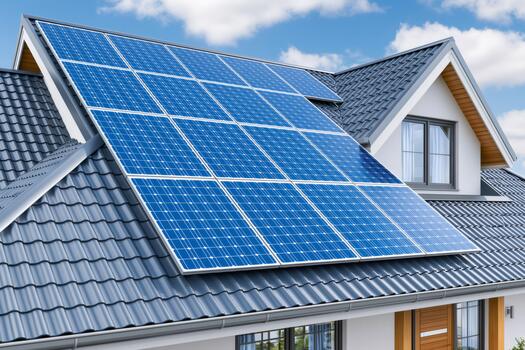
If your home also has an aging roof showing wear, addressing both the roof and the paint at the same time gives your entire exterior a unified refresh.
What Color Exterior Paint Lasts the Longest?
The exterior paint colors that last the longest are lighter shades like white, cream, beige, light gray, and pale yellow. Lighter colors reflect sunlight rather than absorbing it, which slows down UV degradation and heat-related fading.
Darker colors absorb more heat and more UV radiation, which causes them to fade and break down faster. According to Five Star Painting, darker colors tend not to last as long because they absorb more sunlight and heat throughout the day. RGSNC Painting confirms that lighter colors are more reflective and extend the overall lifespan of the paint job.
This does not mean you cannot use dark accents. Dark trim, shutters, and front doors hold up fine because those surfaces are smaller and easier to touch up. The body of the home is where lighter colors make the biggest difference in longevity. Choosing the right colors also ties into resale strategy. According to the Zillow Paint Color Analysis, homes with greige exteriors sold for $3,496 more than expected.
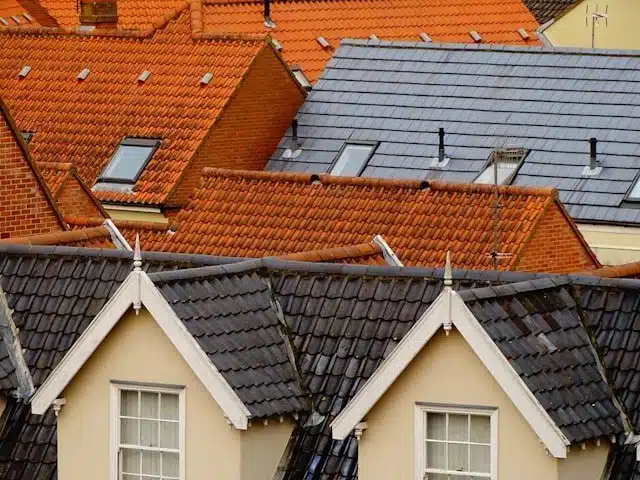
Coordinating your paint color with your roof color creates the most polished look. Popular metal roof colors in warm tones pair beautifully with neutral and light exterior paint shades.
Is It Better to Spray or Brush Exterior Paint?
It is better to use a combination of spraying and brushing for exterior paint. Spraying covers large surfaces quickly and creates a smooth, even coat. Brushing works the paint deeper into the surface and provides better adhesion on trim, edges, and detailed areas.
According to Fine Homebuilding, spray painting is much faster than brush and roller work, but it requires extensive masking of windows, landscaping, and adjacent surfaces to prevent overspray. Brush application requires less masking but takes significantly more time. The best professional crews use a technique called back-brushing, where paint is sprayed onto the surface first and then immediately worked into the grain with a brush for maximum penetration and adhesion.
For the main body of the home, spraying delivers the most uniform finish in the shortest time. For trim, doors, window frames, and corners, brushwork gives better control and a cleaner result. A quality painting crew knows when to switch between methods to get the best outcome on every surface.
Why Don't Painters Use Sprayers for Everything?
Painters don't use sprayers for everything because spraying requires heavy masking of all surrounding surfaces, produces overspray that can drift onto cars, landscaping, and neighboring homes, and does not work well on windy days. According to Fine Homebuilding, the time saved by spraying can be offset by the time needed to mask and protect everything in the spray zone.
Spraying also applies a thinner coat than brush and roller work. On textured surfaces like rough wood or stucco, a sprayed coat may not penetrate deeply enough on its own. That is why professionals often spray the surface and then immediately back-brush it, combining speed with penetration. Brush and roller methods remain the preferred approach for trim, tight corners, and any surface where precision matters more than speed.
How Do Professional Painters Paint So Fast?
Professional painters paint fast because they use commercial-grade sprayers for large surfaces, work in coordinated teams with assigned roles, and follow a systematic process that eliminates wasted motion. One crew member handles masking and prep. Another runs the sprayer. A third follows behind with a brush to back-brush and clean up edges.
According to Angi, a professional painting company can typically complete a full exterior job in 3 to 4 days for an average-sized home. DIY painters doing the same job often take two to three weeks because they work alone, stop frequently, and spend extra time learning as they go. Professional crews also use paint specifically formulated for faster drying, which allows them to apply second coats the same day.
What Are the Most Common Painting Mistakes?
The most common painting mistakes are skipping surface prep, painting in the wrong weather conditions, using cheap paint, applying too thin of a coat, and failing to use primer where it is needed.
Poor prep work is the number one cause of paint failure. If old, loose paint is not scraped off, cracks are not caulked, and surfaces are not cleaned before painting, the new coat will peel and bubble within a year or two. According to Five Star Painting, the surface must be free of debris, loose paint must be removed, and the paint must be applied on a completely dry surface for the job to hold.
Weather is another frequent mistake. The EPA recommends painting when temperatures are between 50 and 85 degrees Fahrenheit and humidity is below 50%. Painting in rain, extreme heat, or freezing temperatures causes the paint to cure improperly, leading to cracking, peeling, and poor adhesion.
Hiring an experienced exterior painting team eliminates these mistakes because professionals follow a proven process for every job.
Can I Just Paint Over Old Exterior Paint?
You can paint over old exterior paint only if the existing paint is in good condition. The surface must be clean, dry, and firmly bonded to the siding. If the old paint is peeling, flaking, cracking, or bubbling, it must be scraped, sanded, and primed before any new paint is applied.
Skipping this step is one of the most expensive mistakes a homeowner can make. New paint applied over a failing surface will peel off just as fast as the old coat did, wasting both time and money. A thorough power wash followed by scraping and spot-priming bare areas is the minimum preparation needed for a paint job that actually lasts.
What Exterior Paint Lasts 25 Years?
No standard exterior house paint lasts 25 years on its own. However, factory-applied finishes on fiber cement siding, like James Hardie's ColorPlus Technology, are engineered to last up to 15 years or more with minimal fading, according to Bluff City Exteriors. Painted brick exteriors can hold their finish for 15 to 20 years because brick is a stable, non-porous surface once sealed.
To get the closest thing to a 25-year exterior, you need a combination of the right siding material, premium paint, professional application, and consistent maintenance. Fiber cement siding with a factory finish, kept clean and touched up as needed, is the longest-lasting painted exterior option available today.
Many homeowners who want a decades-long exterior invest in a complete home renovation that upgrades siding, roofing, and paint all at once. That approach gives every surface the same starting point and the same maintenance timeline.
The siding material does most of the heavy lifting. Pairing durable siding with other long-lasting exterior materials like a metal roof creates a home exterior that holds up for decades with very little maintenance.
How to Make Exterior Paint Last Longer
Making exterior paint last longer comes down to five things: proper prep work, quality paint, professional application, routine maintenance, and controlling moisture around the home.
Start with thorough preparation. Every professional painter will tell you that prep work is more important than the paint itself. Power washing, scraping loose paint, filling cracks, caulking gaps, and priming bare areas creates the foundation for a long-lasting finish.
Use premium exterior paint from a reputable brand. According to SD Custom Painting, premium paints at $50 to $80 per gallon last significantly longer than budget paints at $25 to $35 per gallon. The extra cost per gallon is small compared to the cost of repainting the entire house three years earlier than you should have.
Hire professionals who apply the right number of coats with the right technique. Two coats of quality paint over a properly primed surface is the standard for a job that lasts 7 to 10 years or more.
While you are refreshing the exterior, it is also worth considering interior painting at the same time. Interior paint delivers a 107% ROI according to Angi, and doing both projects together saves on mobilization and scheduling.
Keep trees and bushes trimmed back from the walls. Plants that touch the siding trap moisture and create shade that encourages mold and mildew growth. Clean your siding once a year with a garden hose or gentle power wash to remove dirt, pollen, and mildew before they degrade the paint.
Control moisture from the inside too. Homes with older, leaky windows let humid air escape through the walls, which pushes moisture outward and damages paint from behind. Upgrading to sealed impact windows eliminates this problem and protects both your interior and your exterior paint.
Frequently Asked Questions
Does the Direction a Wall Faces Affect How Fast Paint Fades?
Yes, the direction a wall faces affects how fast paint fades. South-facing and southwest-facing walls receive the most direct sunlight and UV exposure, so they fade and deteriorate faster than north-facing walls. According to Five Star Painting, these sun-exposed surfaces are usually the first areas that need repainting on any home.
How Long Does Stucco Paint Last in Hot Climates?
Stucco paint lasts 5 to 6 years in hot climates, according to SISU Painting. Stucco is porous and absorbs more paint, which means the coating wears down faster than it would on smoother surfaces. In very hot or humid regions, elastomeric coatings can stretch and contract with the stucco, which extends the life of the finish by a few extra years.
Can I Extend the Life of My Paint by Choosing Lighter Colors?
Yes, lighter exterior colors last longer than darker ones. Light colors reflect sunlight instead of absorbing it, which reduces UV damage and heat stress on the paint film. Darker shades absorb more heat and break down faster, especially on south-facing walls that get all-day sun exposure.
How Much Does It Cost to Repaint the Exterior of a House?
The average cost to repaint the exterior of a house is $1.50 to $4.50 per square foot, according to Angi and HomeGuide. For a typical 2,000 square foot home, the total ranges from $3,000 to $8,000 depending on the siding type, surface condition, number of stories, and paint quality.
Should I Repaint Before Selling My Home?
Yes, repainting before selling is one of the highest-return improvements you can make. The NAR 2025 Remodeling Impact Report found that 50% of realtors recommend painting the entire home before listing. According to HomeLight, exterior paint increases a home's value by 2% to 5% and makes it sell faster by improving curb appeal and listing photos.
Is One Coat of Exterior Paint Enough?
No, one coat of exterior paint is not enough for a lasting finish. The standard for professional exterior painting is two coats of paint over a properly primed surface. One coat may look acceptable at first, but it will fade and wear through much faster than a two-coat application, especially on sun-exposed walls.
What Happens If I Wait Too Long to Repaint?
If you wait too long to repaint, the paint will crack, peel, and expose the bare siding to moisture, UV damage, insects, and mold. Exposed wood siding can begin to rot. Exposed stucco can crack and absorb water into the wall cavity. The longer you wait, the more prep work the next paint job requires, which increases the cost significantly. Staying on a regular repainting schedule saves money and protects your home's structure.
Putting It All Together
Repainting the exterior of your home every 5 to 10 years protects the siding, maintains curb appeal, and keeps your property value strong. The exact schedule depends on your siding material, with wood needing the most frequent attention and brick and fiber cement lasting the longest between coats.
Quality prep, premium paint, professional application, and routine cleaning are the four factors that make the biggest difference in how long your paint lasts. Cutting corners on any of these will shorten the life of the job and cost you more in the long run.
If your home is showing signs of fading, chalking, or peeling, it is time to get ahead of the damage before it reaches the siding itself.
ASP Super Home handles exterior painting along with roofing, windows, and complete home renovations.
Call us at 786-933-9815 or request a free estimate to get started.
Meet With a Project Manager
Your first conversation is with a Project Manager who takes the time to understand your goals, walk you through your options, and stays connected throughout your project — from the initial consultation through the final walkthrough.
.avif)
.avif)
.avif)
%201.avif)
Insights & Resources
Stay informed with expert tips on roofing materials, hurricane codes, repairs, and South Florida construction standards.


%201.avif)
%201%20(1).avif)
%201.svg)
%201%20(1)%20(1).png)
.png.png)
.png%20(1).png)
.png%20(2).png)
.avif)
.avif)


.png)
.svg)
.png)