


Future of Solar Panel Technology
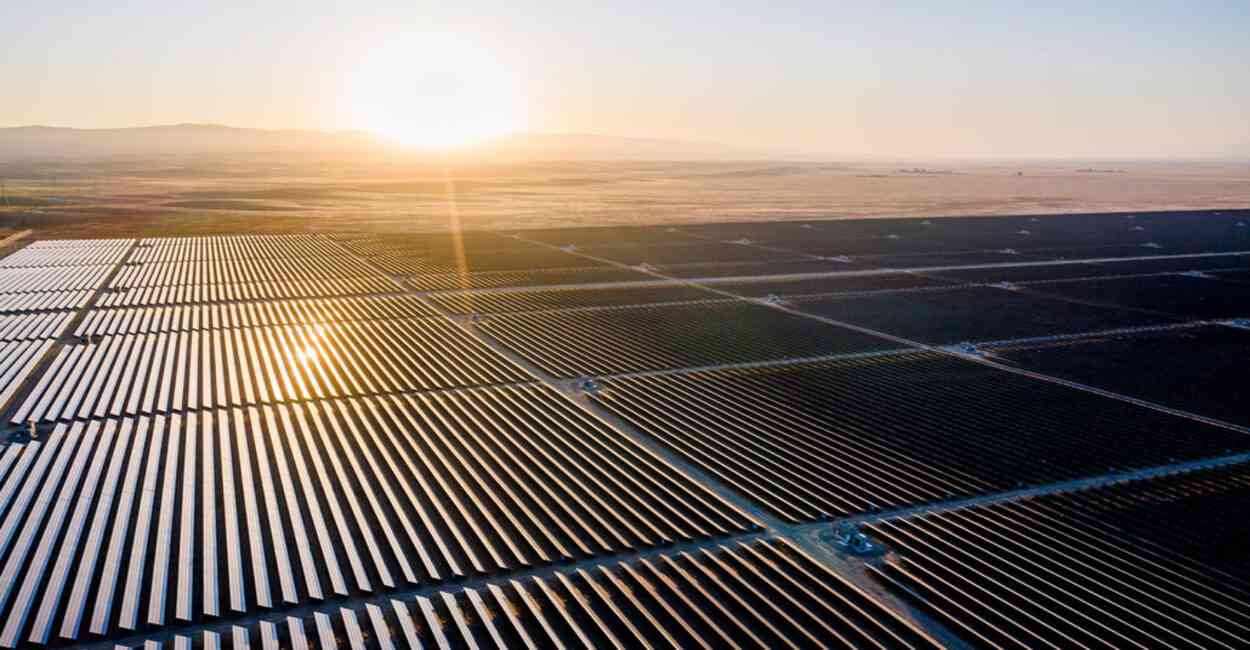

The future of solar panel technology is advancing faster than most homeowners realize. Today's best panels already hit 24% to 26% efficiency in commercial production, compared to just 15% in 2010. Perovskite-silicon tandem cells have already broken 34% efficiency in certified lab conditions. Solar panels that generate power from both sides are shipping at scale. Transparent solar windows that generate electricity from ordinary glass are moving from research labs into real buildings. And AI-powered monitoring is making solar systems smarter by the year. This article covers the newest solar panel technology available today, what is coming for homes in the next few years, and what it all means for homeowners thinking about going solar.
What Is the Newest Solar Panel Technology Available Right Now?
The newest solar panel technology widely available to homeowners right now is TOPCon, which stands for Tunnel Oxide Passivated Contact. According to SolarTech research, TOPCon now dominates approximately 75% of new solar panel production globally and accounts for roughly 50% of all panel shipments in 2025 and 2026. It is a direct upgrade from the older PERC technology that dominated for most of the last decade. TOPCon panels achieve 24% to 26% efficiency in commercial production, compared to 20% to 22% for standard PERC panels, and they degrade more slowly over time.
Right behind TOPCon in the market is Heterojunction Technology, commonly called HJT. HJT panels deliver 24% to 26% efficiency as well, but they handle heat better. According to A1 SolarStore, HJT panels have a temperature coefficient of just -0.24% per degree Celsius, meaning they lose less performance on hot days compared to standard panels at -0.35% per degree. For homeowners in South Florida, where panels sit in intense heat and humidity for most of the year, that difference is meaningful. Our solar team selects panels with heat performance in mind for every South Florida installation.
What Is the Latest Solar Panel Technology Coming to Homes?
The latest solar panel technology on its way to homes is perovskite-silicon tandem panels, which have already crossed the threshold from research into limited commercial production. In April 2025, LONGi achieved a certified efficiency record of 34.85% on a perovskite-silicon tandem cell, verified by the U.S. National Renewable Energy Laboratory (NREL). Oxford PV shipped its first commercial perovskite-silicon tandem modules to a U.S. utility-scale project in September 2024, with 24.5% module efficiency. Hanwha Qcells achieved 28.6% efficiency on production-scale cells and has commercial production planned for 2026 and mass production by early 2027.
For residential buyers, mainstream perovskite tandem panels with full 25-year warranties are realistically expected between 2027 and 2030, according to SurgePV analysis. Most homeowners shopping for solar today will still find traditional silicon-based panels, specifically TOPCon and HJT. Those are the right choice for 2026 installations. Waiting for perovskite means waiting several more years for technology that, even when it arrives at scale, will come at a premium price before manufacturing catches up to demand.
What Is Perovskite Solar Panel Technology?
Perovskite solar panel technology uses a class of crystal materials that can convert sunlight into electricity more efficiently than silicon alone, and at a lower manufacturing cost. When a perovskite layer is stacked on top of a standard silicon cell to create what researchers call a tandem cell, the two layers absorb different parts of the light spectrum together. The perovskite top layer captures higher-energy blue and green light. The silicon bottom layer catches lower-energy red and infrared light that passes through the top. Together they harvest more of the sun's energy than either material could alone.
According to Nature Reviews Clean Technology, perovskite single-junction solar cells reached 27% efficiency in laboratory conditions in 2025, while perovskite-silicon tandem devices exceeded 34.5% efficiency. Silicon-only cells have a theoretical maximum of about 29%, a ceiling that single-material panels can never break. Tandem designs bypass that limit entirely.
The durability challenge has slowed commercialization. Early perovskite layers degraded quickly when exposed to heat, moisture, and oxygen. The industry made significant progress in 2025, with advanced encapsulation techniques and self-healing chemical additives pushing projected lifespan targets toward the 20-year mark by 2028. Japan announced a major national investment in 2025 to commercialize ultra-thin perovskite solar cells, reflecting how seriously governments view this technology as the next wave of solar manufacturing.
How Efficient Are Perovskite Solar Panels Compared to Standard Panels?
Perovskite-silicon tandem solar panels are already more efficient than standard silicon panels in both lab records and early commercial modules. Standard monocrystalline silicon panels available to homeowners today deliver 20% to 24% efficiency. Oxford PV's first commercial tandem modules achieve 24.5% module efficiency, with 26% targeted in 2026. LONGi's NREL-certified lab record stands at 34.85%. In practical terms, a tandem panel producing 30%+ efficiency in real-world conditions would generate the same electricity as today's best panels while using significantly less roof space, which matters for homes where roof area is limited.
For reference, the average solar panel efficiency has already improved from about 15% in 2010 to over 22% in commercial production by 2025, according to Lawrence Berkeley National Laboratory. That is a 47% improvement in roughly 15 years. The shift to tandem technology in the late 2020s is likely to produce gains that are just as large in a much shorter window.
What Are Bifacial Solar Panels and How Do They Work?
Bifacial solar panels are panels that generate electricity from both the front and the back surface instead of just the front. The front side captures direct sunlight the same way any standard panel does. The back side captures reflected light bouncing off the ground, water, white roofing surfaces, or any nearby reflective material. According to the International Energy Agency (IEA), bifacial panels now account for 35% of global solar installations and are projected to reach 60% by 2030. The bifacial solar market, valued at over $19.2 billion in 2024, is growing at 16.8% annually through 2030, according to PS Market Research.
The additional output from the rear side adds 5% to 30% more energy compared to a standard single-sided panel, depending on installation conditions. Solar farms with highly reflective ground surfaces see the largest gains, typically 20% to 30%. Residential rooftop installations see more modest gains of 5% to 10%, but that is still meaningful over a 25-year system lifespan. In South Florida, white or light-colored roofing materials are common, which increases the rear-side reflectivity and makes bifacial panels a strong fit for residential installations.
Are Bifacial Solar Panels Worth It for a Home?
Bifacial solar panels are worth it for most home installations, particularly when the roof surface is light-colored or the panels are installed at an elevated angle where the back side can capture reflected light. According to Couleenergy, bifacial panels now cost nearly the same as traditional single-sided panels, which means the extra energy they produce is essentially free. On a residential rooftop, a 5% to 10% output boost on a system that already costs $19,000 to $22,000 translates to meaningful additional savings over decades without any increase in installation footprint. For ground-mounted systems or pergola-mounted setups, the gain climbs even higher because the angle and ground clearance allow maximum rear-side light capture.
HJT panels are naturally bifacial by design, giving homeowners who choose HJT technology the dual benefit of strong heat performance and built-in bifacial energy capture. Our residential solar panels options include both bifacial-capable and standard configurations based on the specific needs of each home and roof.
Solar Panel Technology Types: How Do They Compare?
Solar panel technology types differ most significantly in efficiency, heat performance, degradation rate, and cost. The table below compares the primary panel technologies available to homeowners today and what is coming next.
Sources: A1 SolarStore 2026 Solar Cell Guide, SolarTech 2025 Technology Report, Couleenergy 2025 Solar Panel Technology Guide, SurgePV Perovskite Analysis 2026, IEA Solar PV Data 2025, Lawrence Berkeley National Laboratory.
What Is the Future of Solar Panels for Home Use?
The future of solar panels for home use includes higher efficiency in smaller footprints, smarter AI-powered monitoring, solar panels built directly into building materials, and eventually transparent solar windows that generate electricity while you look through them. According to the IEA's Renewables 2025 report, global renewable power capacity is projected to increase by nearly 4,600 gigawatts between 2025 and 2030, with solar accounting for approximately 80% of that growth. Distributed solar applications, meaning residential and commercial rooftop systems, will represent 42% of all new solar installations through 2030. The future is residential as much as it is utility-scale.
For homeowners, the most practical near-term advances are threefold. First, higher efficiency panels like TOPCon and HJT mean you need fewer panels to achieve the same output, reducing roof space requirements. Second, falling panel costs continue. According to IEA data, global solar module manufacturing capacity surpassed 1,100 gigawatts by 2024, well above projected demand, which keeps driving prices down. Third, pairing solar with battery storage is becoming the standard installation model rather than an upgrade. According to SolarReviews, 92% of residential solar installers offered energy storage as part of their installation packages in 2024.
Are There New Solar Panels That Work at Night?
There are new solar panel concepts that can generate electricity at night, though they are still in research and early prototype stages rather than available for home installation. Researchers at UC Davis published a concept paper in ACS Photonics describing thermoradiative cells that work by radiating heat into the night sky rather than absorbing light from the sun. Under ideal conditions, such a device could theoretically generate up to 50 watts of power per square meter at night, roughly one quarter of what a conventional solar panel produces during daytime.
Separately, researchers at Korea University developed a transparent solar window system that generates electricity from indoor lighting at night in addition to sunlight during the day. The system combines a distributed Bragg reflector with bifacial silicon solar cells and can generate power continuously around the clock. These technologies remain in the research phase for now. The practical solution available today for overnight power is a solar battery backup system that stores excess daytime production and releases it during evening hours when panels are not producing.
What Are Transparent Solar Windows and How Close Are They?
Transparent solar windows are glass panels that generate electricity while still allowing visible light to pass through, functioning as both a window and a solar panel simultaneously. Several real installations already exist. Copenhagen International School in Denmark is covered in 12,000 semi-transparent solar panels that serve as building windows while generating power. A Netherlands-based company called Physee has installed its SmartWindows in office buildings across Europe, with the technology projected to cut building energy costs by up to 30%.
Research teams at MIT, Korea University, and Nanjing University are all advancing different approaches to transparent solar coatings. MIT's version transmits more than 70% of visible light, within the range of tinted glass used in commercial buildings today. In September 2025, Nanjing University researchers published a prototype of a clear coating that can be applied to any standard window to redirect sunlight to the window's edges, where photovoltaic cells convert it to electricity without affecting the window's clarity. The technology remains a few years from residential scale, but it represents a genuine coming shift in how buildings generate power.
How Has Solar Panel Efficiency Improved Over Time?
Solar panel efficiency has improved dramatically over time, nearly doubling in practical commercial terms over the past 15 years. The average panel efficiency sat around 10% to 15% in the early 2000s. By 2010, most residential panels were near 15%. By 2025, commercial monocrystalline panels routinely deliver 22% to 25% efficiency, with premium HJT models reaching 26%. According to Lawrence Berkeley National Laboratory data cited by SolarTech, the average panel efficiency improved by approximately 33% from 2010 to 2025. Combined with a 70% reduction in panel costs over the same period, the economics of solar have transformed entirely.
The efficiency gains from new technology also compound with other improvements. Smarter inverters, better racking designs that reduce shading between rows, and AI-powered monitoring systems that identify underperforming panels all increase the real-world output of a system beyond what the panel efficiency rating alone suggests. A modern 22% efficient system installed with optimal racking, smart monitoring, and battery storage delivers more usable energy per dollar than a 25% efficient panel would have if installed with the technology available in 2015.
What Is the Future of Solar Panels' Efficiency?
The future of solar panels' efficiency points toward 30% to 35% commercial module efficiency by the late 2020s to early 2030s, driven by perovskite-silicon tandem technology reaching mass production scale. According to SolarTech projections, perovskite-silicon tandem cells are on a path to achieve 35% to 40% efficiency by 2028 to 2030 in laboratory conditions, with commercial modules trailing lab records by roughly 5 to 7 percentage points. Silicon-only cells are fundamentally capped near 29% by physics, making tandem architecture the only viable route past that barrier for the foreseeable future.
Even within silicon technology, improvements continue. TOPCon cells have already surpassed 25% in laboratory settings, and mass production modules routinely achieve 22.5% or better. The practical ceiling for silicon-based panels is getting closer, which makes the development timeline for perovskite tandem technology genuinely important for the next decade of solar.
How Will Solar Technology Change for Homeowners by 2030?
Solar technology will change for homeowners by 2030 in four specific ways. Panels will produce more power in less space as tandem cells transition from limited commercial products to mainstream availability. Battery storage will become a standard part of nearly every residential installation rather than an add-on, driven by the erosion of net metering programs across states and the growing demand for backup power resilience. AI-integrated monitoring will make solar systems self-diagnosing, alerting homeowners and installers to underperforming panels before they cause months of hidden production losses. And building-integrated photovoltaics, meaning solar built directly into roofing materials, siding, and eventually windows, will give homeowners options beyond traditional rooftop panel arrays.
The IEA projects global solar capacity will grow by 2.6 times its 2022 level by 2030, with distributed residential and commercial applications accounting for 42% of all new solar added through the end of this decade. South Florida's year-round sun and high electricity rates position it as one of the strongest residential solar markets in the country for the years ahead. Homeowners who install solar energy systems now with modern TOPCon or HJT panels will have systems built on the strongest technology available today while perovskite tandem options mature toward mass availability.
Frequently Asked Questions
What Is the Most Efficient Solar Panel Technology for Home Use in 2026?
The most efficient solar panel technology for home use in 2026 is HJT, which delivers 24% to 26% commercial module efficiency and the best temperature performance of any mainstream panel type. TOPCon is a close second at 22.5% to 25% efficiency and offers broader availability at a lower price point. For most homeowners, TOPCon is the practical choice because it delivers near-HJT efficiency at a lower cost. HJT is the right choice for homes with limited roof space where maximum power per square foot is the priority, or for South Florida installations where heat tolerance during long summer months is critical.
When Will Perovskite Solar Panels Be Available for Homes?
Perovskite-silicon tandem solar panels will be available for homes with full 25-year warranties realistically between 2027 and 2030, according to SurgePV industry analysis. Limited commercial shipments have already started for utility-scale projects, with Oxford PV and Hanwha Qcells leading production. The gap between lab records and a warranted residential product is significant and requires years of field data, yield improvement, and manufacturing scale-up. Homeowners who wait for perovskite will miss several years of energy savings that today's TOPCon and HJT systems could already be delivering.
Do Modern Solar Panels Work on Cloudy Days?
Modern solar panels do work on cloudy days, though at reduced output. According to Couleenergy, solar panels generate approximately 10% to 25% of their rated power under heavy cloud cover and 50% to 80% under light cloud cover. TOPCon panels perform well in diffused light due to their advanced passivation layer. HJT panels are especially effective in low-light conditions. Germany, one of the cloudiest countries in Europe, generates substantial solar power because modern panel technology is sensitive enough to operate on ambient daylight, not just direct sunshine.
What Is the Lifespan of the Newest Solar Panel Technology?
The newest solar panel technology has an expected lifespan of 25 to 35 years under standard performance warranties. TOPCon panels degrade at approximately 0.5% per year, meaning they retain about 87% to 90% of their original output at year 25. HJT panels degrade even more slowly at approximately 0.4% per year, guaranteeing 90% output at year 25 for top-tier models. Some HJT manufacturers are already offering 35-year performance warranties, reflecting their confidence in long-term durability. These degradation rates are a genuine improvement over the older PERC generation at 0.7% to 0.8% per year.
How Will AI Change Solar Panel Systems for Homes?
AI will change solar panel systems for homes by enabling real-time monitoring that identifies underperforming panels, predicts maintenance needs before failures occur, and automatically adjusts system behavior to maximize production based on weather forecasts and usage patterns. According to SolarReviews, 52% of solar installers reported that monitoring, communication, and connectivity problems were among the most common post-installation issues they handled in 2024. AI-powered systems address this directly by providing homeowners with clear performance dashboards and by flagging issues automatically rather than requiring manual inspection. Smart inverters paired with AI monitoring are already available and will become standard features of new residential installations through 2030.
What Is Building-Integrated Photovoltaics and Is It Available Now?
Building-integrated photovoltaics, often called BIPV, refers to solar technology that is built directly into building materials such as roof tiles, facades, skylights, and windows rather than installed as separate panels on top of a structure. Some forms are available now. Solar roof tiles that replace standard roofing material exist commercially, though they are more expensive per watt than conventional panel installations. Transparent solar window technology remains in commercial early stages for office buildings and is several years away from mainstream residential use. The direction of the technology is clear: solar generation will increasingly be embedded in the building envelope itself rather than added as a separate system.
Is Now a Good Time to Install Solar or Should I Wait for New Technology?
Installing solar now with TOPCon or HJT panels is a better financial decision than waiting for perovskite tandem technology for most homeowners. The federal residential solar tax credit expired at the end of 2025 for homeowner-owned systems, making 2026 installations more expensive than they would have been a year ago. Every year of delay is a year of full-rate utility bills that a solar system could be offsetting. By the time perovskite panels reach mainstream residential availability with full warranties around 2027 to 2030, today's TOPCon or HJT system will already have delivered three to five years of energy savings and begun its payback period in earnest.
Putting It All Together
The future of solar panel technology is genuinely exciting. Perovskite-silicon tandem cells are breaking efficiency records that silicon alone could never reach. Bifacial panels are already generating power from both sides of the module. Transparent solar windows are moving from research labs into real buildings. AI-powered monitoring is making systems smarter and more reliable. And the global solar industry, which the IEA projects will account for 80% of all new renewable energy capacity added through 2030, is only accelerating.
For homeowners today, the right technology is already in the market. TOPCon and HJT panels deliver efficiency, durability, and heat performance that makes sense for South Florida's demanding climate. Pairing them with battery storage makes a system that works around the clock, not just when the sun is up. If you want to talk through which configuration makes sense for your home, ASP SuperHomes is ready to help you build a system that is built on today's best technology and ready for tomorrow's.
Meet With a Project Manager
Your first conversation is with a Project Manager who takes the time to understand your goals, walk you through your options, and stays connected throughout your project — from the initial consultation through the final walkthrough.
.avif)
.avif)
.avif)
%201.avif)
Insights & Resources
Stay informed with expert tips on roofing materials, hurricane codes, repairs, and South Florida construction standards.



%201.avif)
%201%20(1).avif)
%201.svg)
%201%20(1)%20(1).png)
.png.png)
.png%20(1).png)
.png%20(2).png)
.avif)
.avif)


.png)
.svg)
.png)